Andromedas Edge
What lies beyond the edge of Andromeda?
Andromeda’s Edge invites us to uncover the mysteries of the Andromeda Galaxy. Throughout the game, we’ll explore new planets, expand our fleet, build space installations, develop our module board, climb the euro tracks, and battle other players and space invaders.
However, even though it sounds pretty ameri, it’s actually a euro game mixed with a touch of trash. What’s more, it’s not just a trashy mix of silly random mechanics typical of the genre (shout-out to Marek). In Andromeda’s Edge, it’s presented in a very polished way, and in this review, I’ll tell you how it all plays out.
Why it was worth standing on the edge:
First of all, I love the asymmetry that Andromeda offers. There are 11 factions, each with unique special abilities and ship upgrades. These abilities can significantly influence gameplay and guide us toward what we should focus on. The Welden Forgefolk will collect modules, the Pulsewar Refugees faction will focus on playing tactics cards, and the Plutonian Empire will surprise us mechanically with its clock.
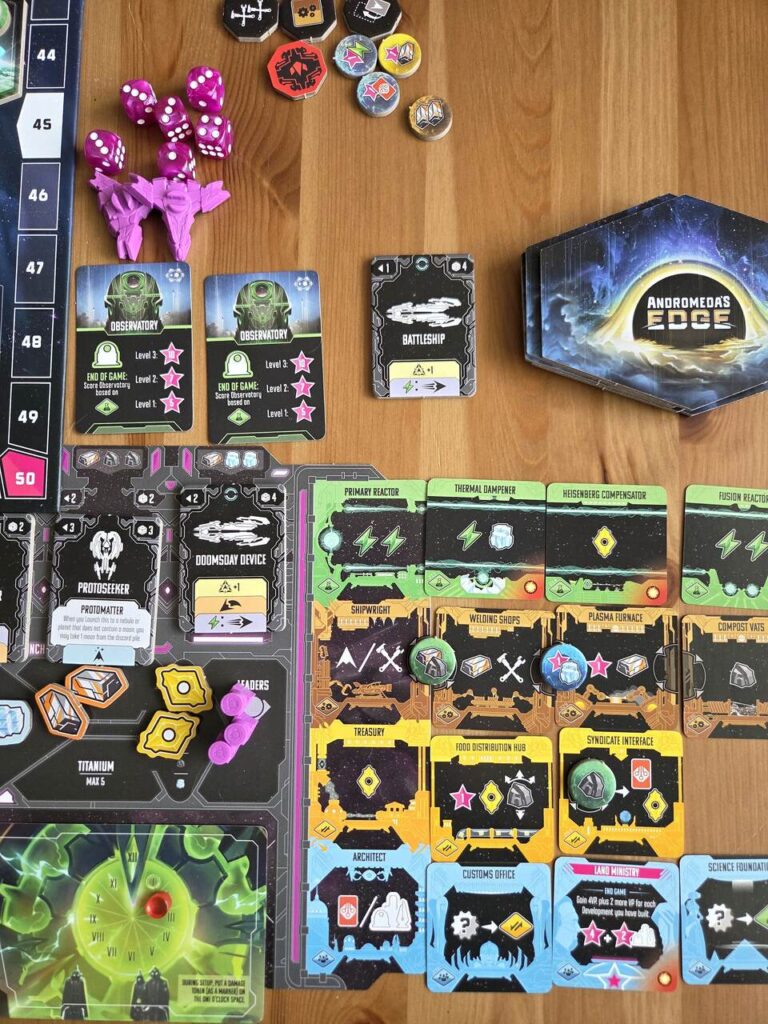
I’ve recently noticed a trend of combining euro games with ameritrash mechanics. I have to say, I really like it. It adds a bit of atmosphere to the dry euros and that slight hint of excitement I look for in such games.
The core mechanic of Andromeda is worker placement. What adds a nice twist, however, is that we perform actions using our ships. We can also modify these units, and that’s exactly what makes Andromeda so unique. The most interesting part is that each player has completely different development options. Suddenly, it turns out that I can fly directly to the conflict zone or make a long-range jump. In every game, we gain access to different upgrades, which greatly enhances Andromeda’s replayability. Additionally, the dynamics of conquering the galaxy are also influenced by the tile layout, the presence of star invaders, and the objectives we can pursue.
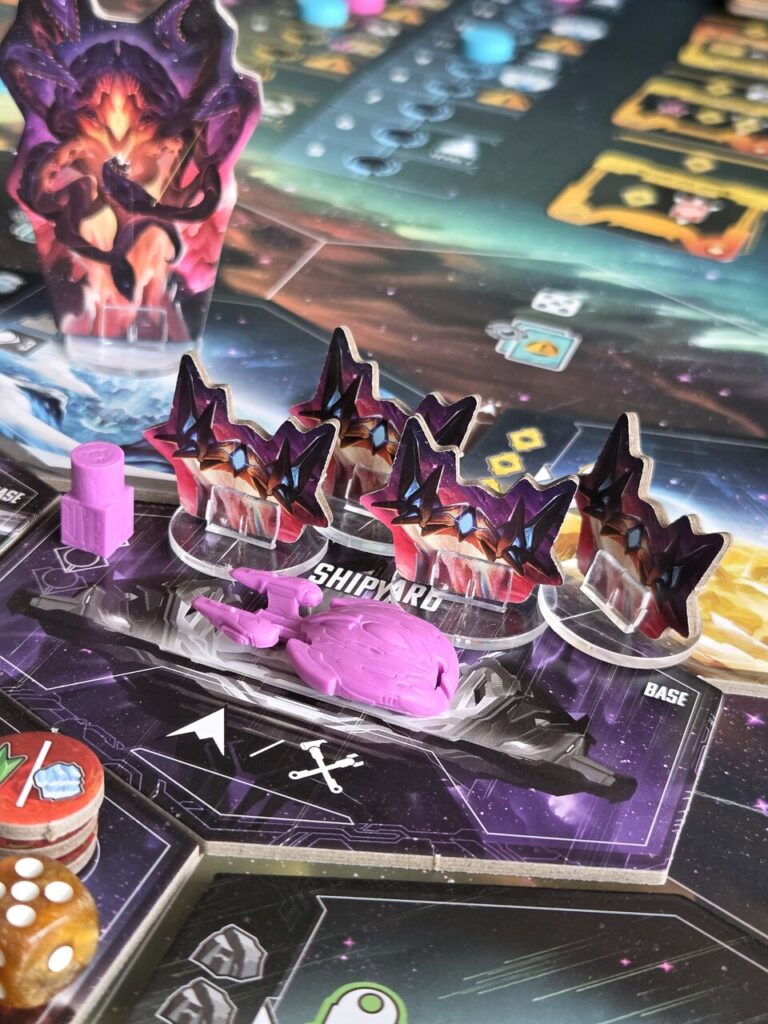
In my opinion, the combat is also a plus. This might be a somewhat controversial take, given its random nature. Imagine this scenario: you have 3 ships and roll 6 dice, while your opponent has only 1 transport ship and rolls 1 die and you could still lose. However, we’re not entirely at the mercy of blind chance. First, the number of ships affects our rolls. On top of that, we can play tactic cards, which also influence the final outcome. Unit abilities will help us with this as well. Because of this, every clash will be accompanied by that hint of uncertainty, and we’ll always have a chance to win.
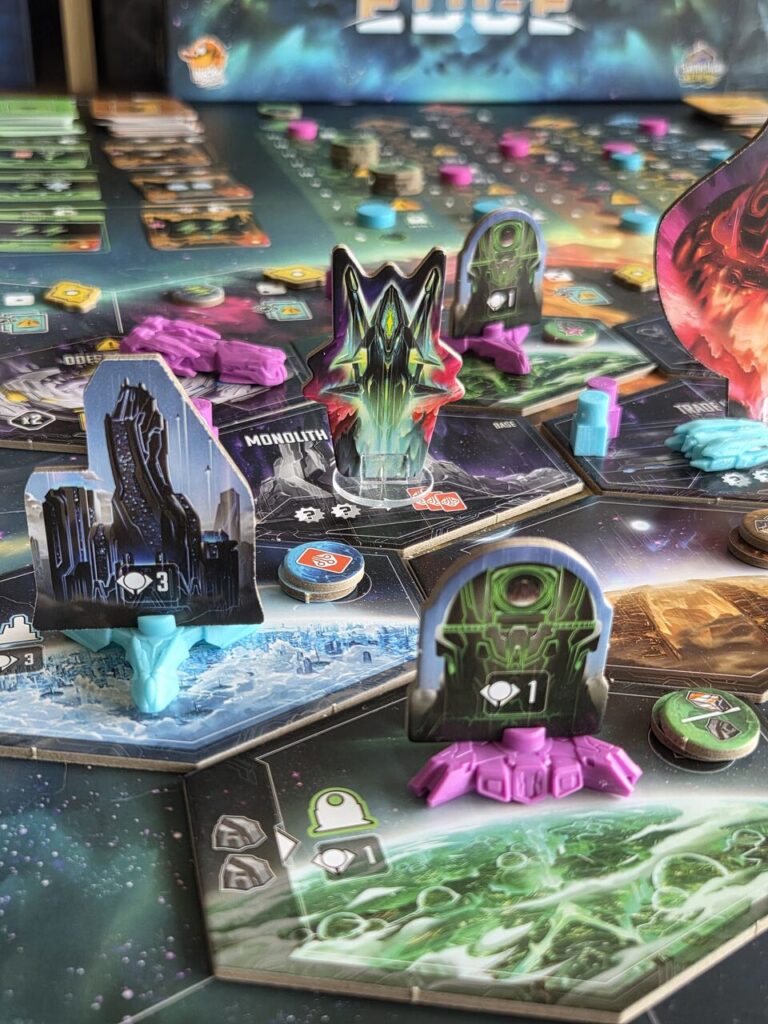
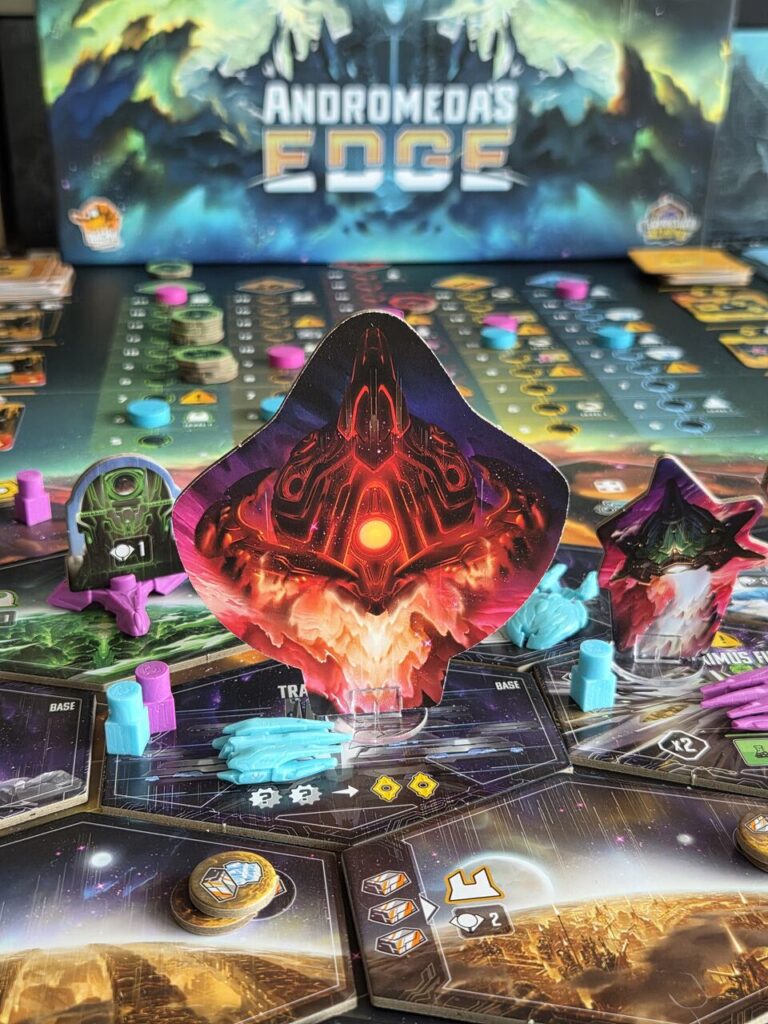
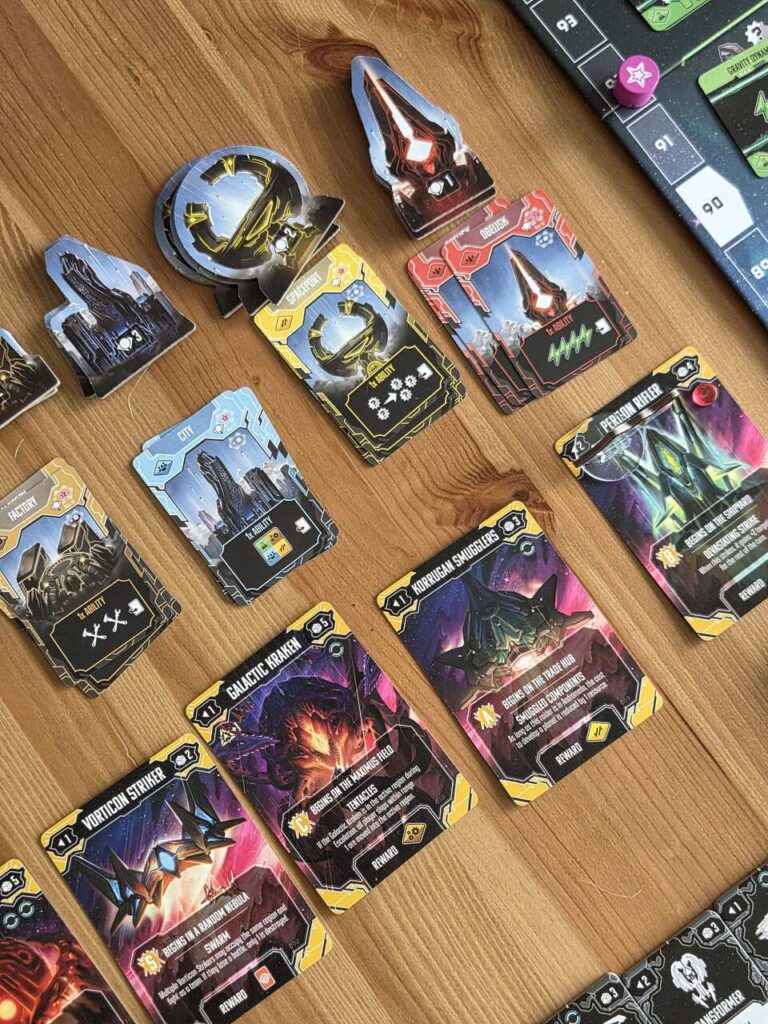
However, the greatest strength of space battles is that the game motivates/forces us to engage in them. Space on the map is limited, and we want to buy new modules for our base. That’s why we’ll often have no choice but to simply fight. Neutral invaders, whose abilities modify our ship placement, also push us into combat. I especially like the Kraken, which draws players from neighboring tiles straight onto the battlefield. Some people didn’t like that (shout-out to Mark).
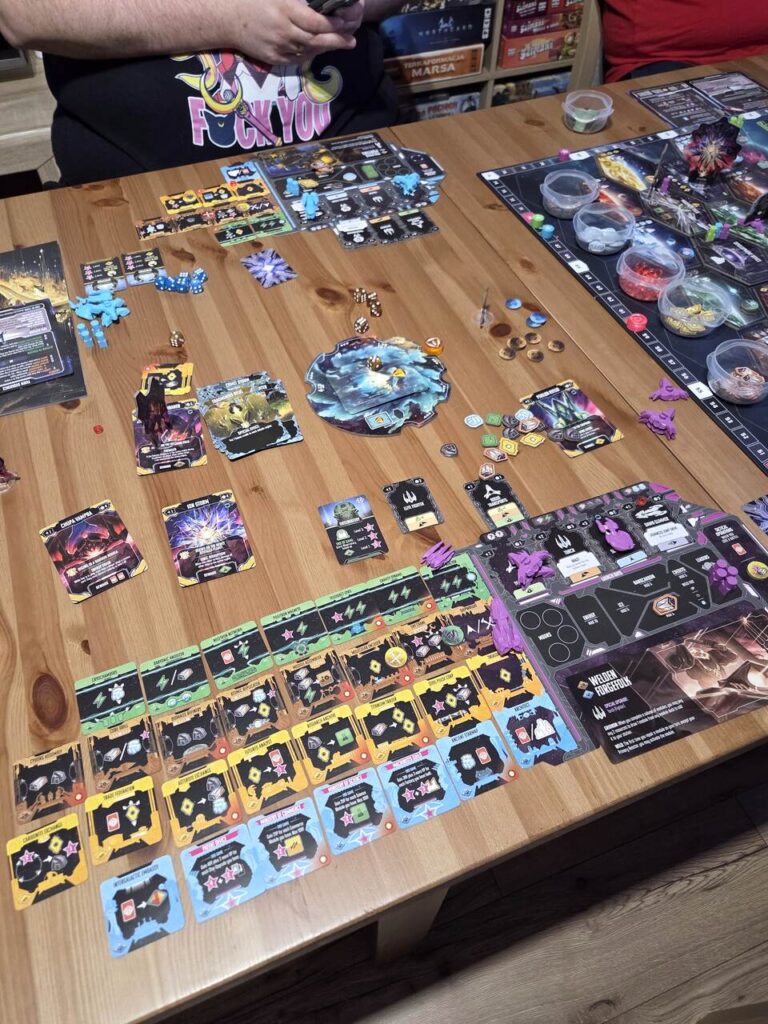
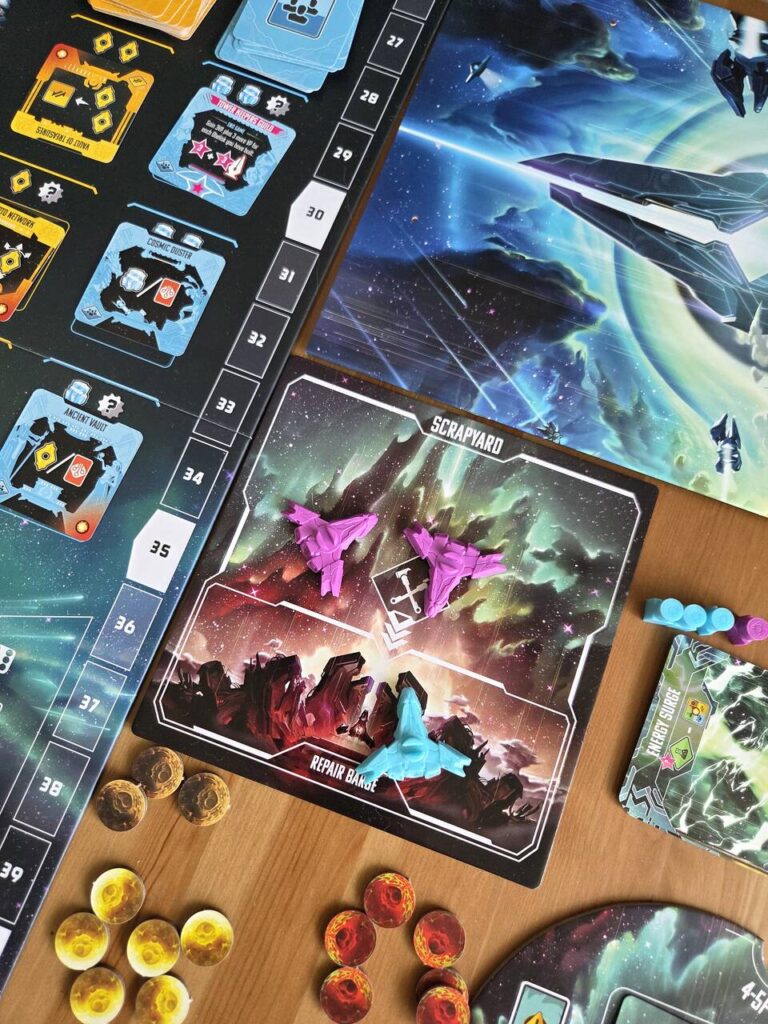
And what are the consequences of losing? Basically none. Well, okay, the ship goes to the scrapyard, but we’ll get it back anyway. What’s more, for losing, we still get a tactics card or resources from the moon. Life’s good! There’s even a faction that climbs the supremacy track for a loss. So it’s safe to say that losing isn’t so bad after all.
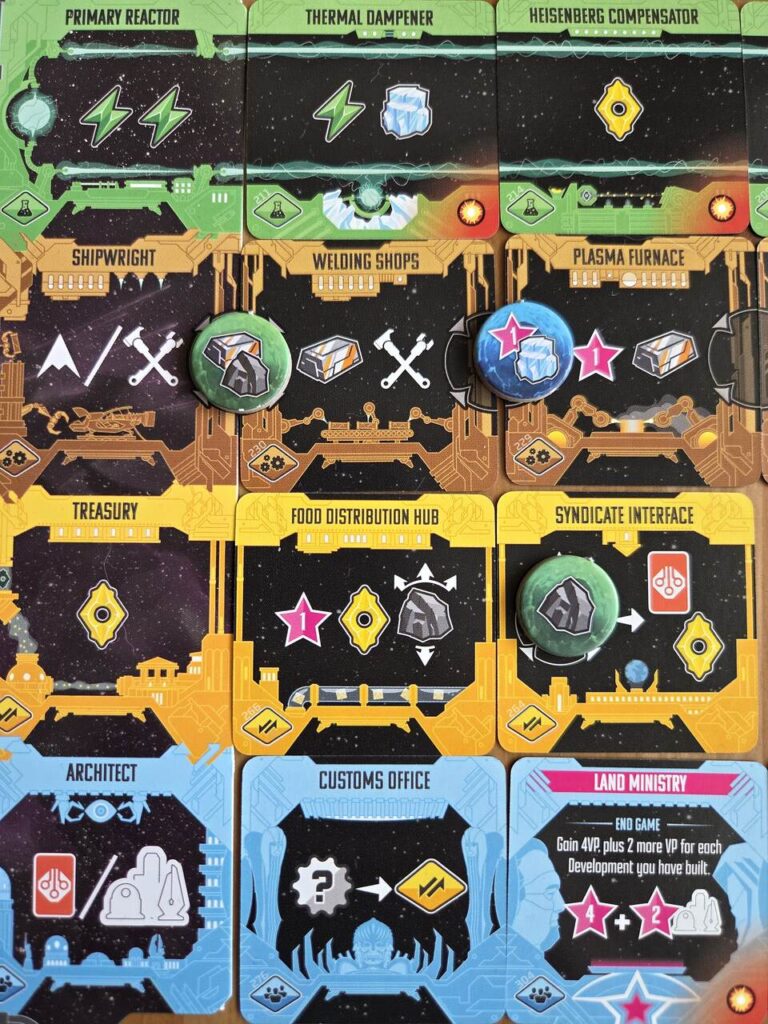
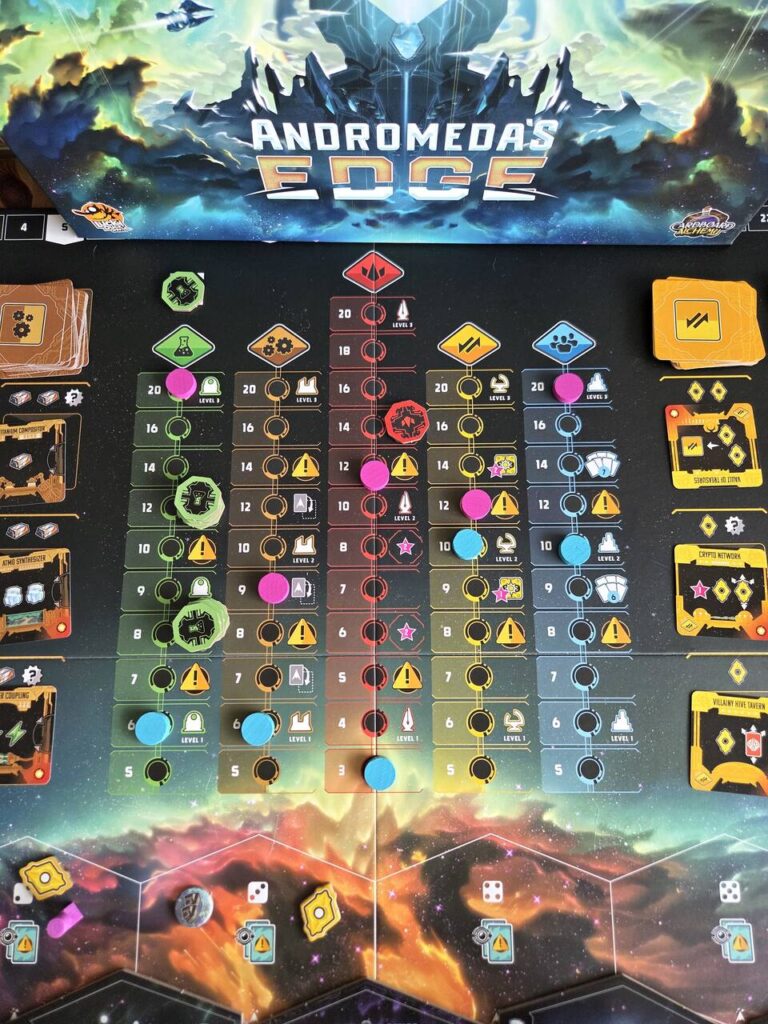
Another feature and in my opinion, the most interesting one is the ability to expand our module board. These modules are the real driving force behind Andromeda, as they provide resources, end game points, and other perks. Each type of module works a little differently, and we activate them when our ships return from the board. The more modules we have, the greater the benefits we can reap. Expanding this board is incredibly satisfying, and the boost in resources it provides keeps us playing. It works brilliantly, and alongside a healthy dose of asymmetry, this is the best aspect of Andromeda’s Edge for me.
What pulled me back from the edge:
Modules are great, aren’t they? Have you ever watched a player spend several minutes arranging their ships to activate them, only to change their mind every few moments? In most cases, when someone does that, you can just keep playing. However, if their modules provide resources to all players, it might change our plans a bit. That’s why you have to be patient.
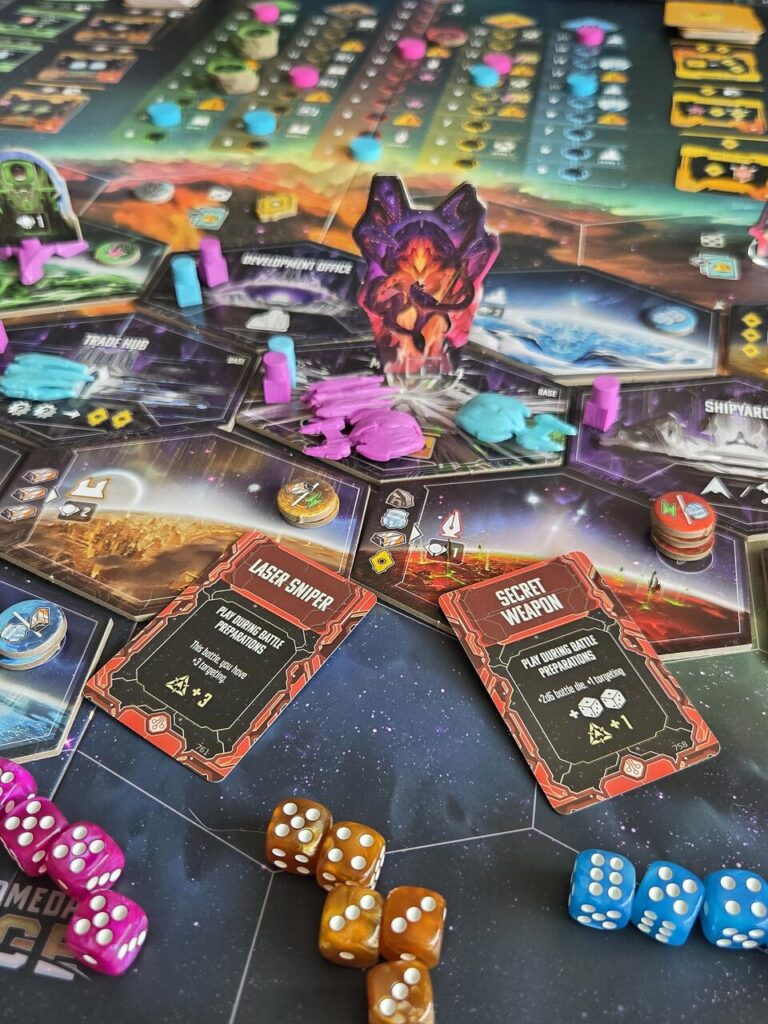
I mentioned tactic cards earlier. Many of them can really shake things up on the board. The problem is that we receive them in a fairly random manner. Whether a given effect will be useful to us depends entirely on the type of card, and these are divided into combat and economic cards. It’s that situation where you need resources, but instead you draw three combat cards that are completely useless to you at that moment. Of course, nothing goes to waste, since the cards themselves can serve as resources. However, the very act of drawing them can be frustrating, because we never know what will end up in our hand.
This could have been handled much better, as is the case, for example, in Revenant. There, we have three separate piles organized by specific types, and we know, for instance, that we’ll draw a frigate upgrade though its exact effect remains a surprise.
The second issue is the huge disparity in the power of the tactic cards themselves. There are both weak cards and ones that make you clutch your head in disbelief when you see the benefits your opponent gets. The range of rewards is enormous, which can make the game feel unfair at times. Life is brutal and full of tactikas.
Number of Players and Game Duration
First of all, the number of players has a significant impact on exploring Andromeda. With 4 players, conflicts occur more frequently, and invaders are more inclined to… invade. It’s simply better that way. In the two-player variant, things are more laid-back, because everyone can fly wherever they want, and if an invader hides in a corner, we might not even run into them.
As for playtime, I’ve heard that Andromeda’s Edge takes quite a while to play. Some people have even mentioned 4 or 5 hours. That’s probably including breaks for lunch at a restaurant a few kilometers away. With 4 players, the game wraps up neatly in 3 hoursor maybe even faster and it’s time truly well spent. Another plus is that you can adjust the length of the game by choosing when to end it.
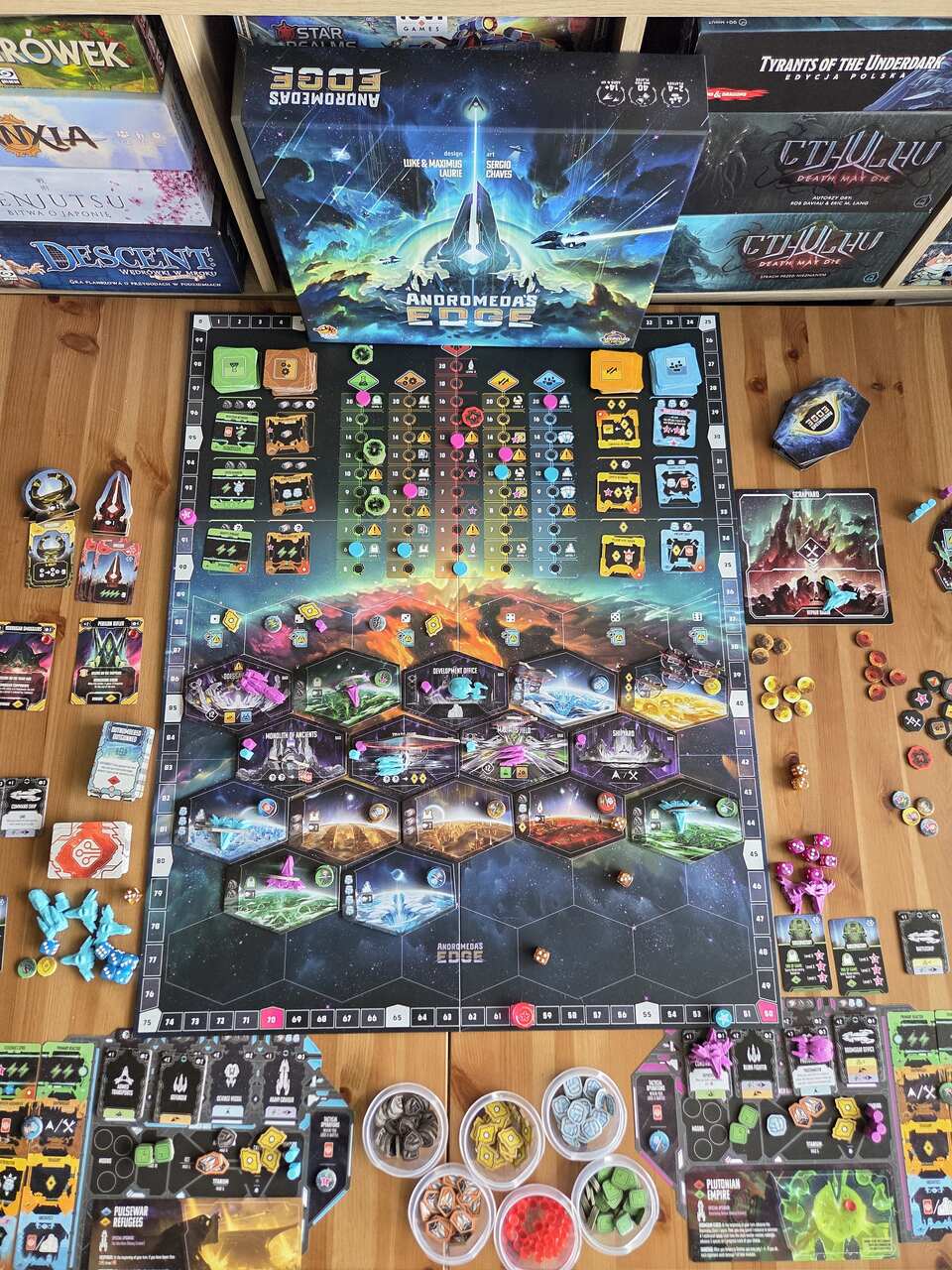
The situation is a bit different when it comes to the time needed to set up and put away the game. With so many components, it takes a while. It’s not quite on the level of Voidfall, of course, but I certainly wasn’t bored during the 30 minutes it took to get ready to start.
Quality and Components
Continuing on the topic of components, you’re probably thinking they can be neatly arranged in the box, right? Well, no. There’s only a makeshift compartment here that holds the upgrade tiles and cards. Unfortunately, we can’t count on any better organization.
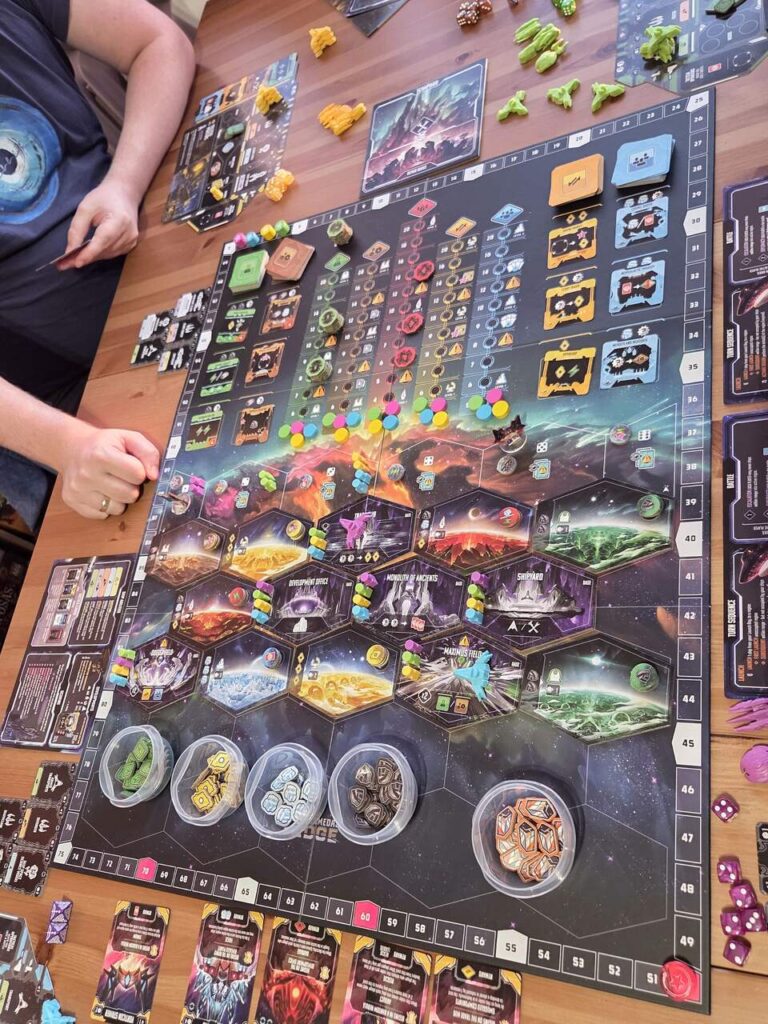
What we can count on, though, is the game’s visual appeal, which looks truly out-of-this-world. The colorful spaceships dazzle with their colors, the cardboard invaders look simply cool, and their stands don’t detract from their appearance in the slightest. The cover caught my eye the very first time I saw it. Just awesome!
What slightly dampens these positive impressions are the flat player boards and the size of some of the tiles. Sometimes the space was too small, as we had to fit several players’ ships and a large invader stand on a single section. This universe is too small for the four of us.
Summary
You know that girl in the video who says she graduated from college, but then at the end shatters all your illusions and reveals that it’s actually Corn spelled with a P? I have the exact same feelings about Andromeda’s Edge. Because it’s really a Euro game with a dash of Ameritrash mechanics. However, I was mentally prepared for it. I knew what I was getting into, and I have to say it was one of the best board game purchases I’ve ever made.
I’m even wondering why it took me so long to take this step. Because Andromeda’s Edge has everything I like: asymmetric factions, engine-building, multiple paths to victory, random battles, and many other variables that positively impact gameplay.
I also have to say that I recently had the chance to play Revenant, and somehow that experience gave me a positive outlook on games that combine euro mechanics with an ameritrash-style gameplay. Andromeda’s Edge, much like Revenant, bridges these two worlds, which is why it really struck a chord with me, and I’m very much looking forward to exploring the edges of its galaxy.
Final verdict: It was worth standing on the edge of two worlds in Andromeda’s Edge.
Pros
Asymmetric factions
Euro-Ameri mix
Ship placement
Motivation to fight
Losing doesn’t hurt
Module building
Adjustable game length
Cons
Random tactics
Throw everything into the bag
Flat game boards
[self bought]