Kingdom Crossing
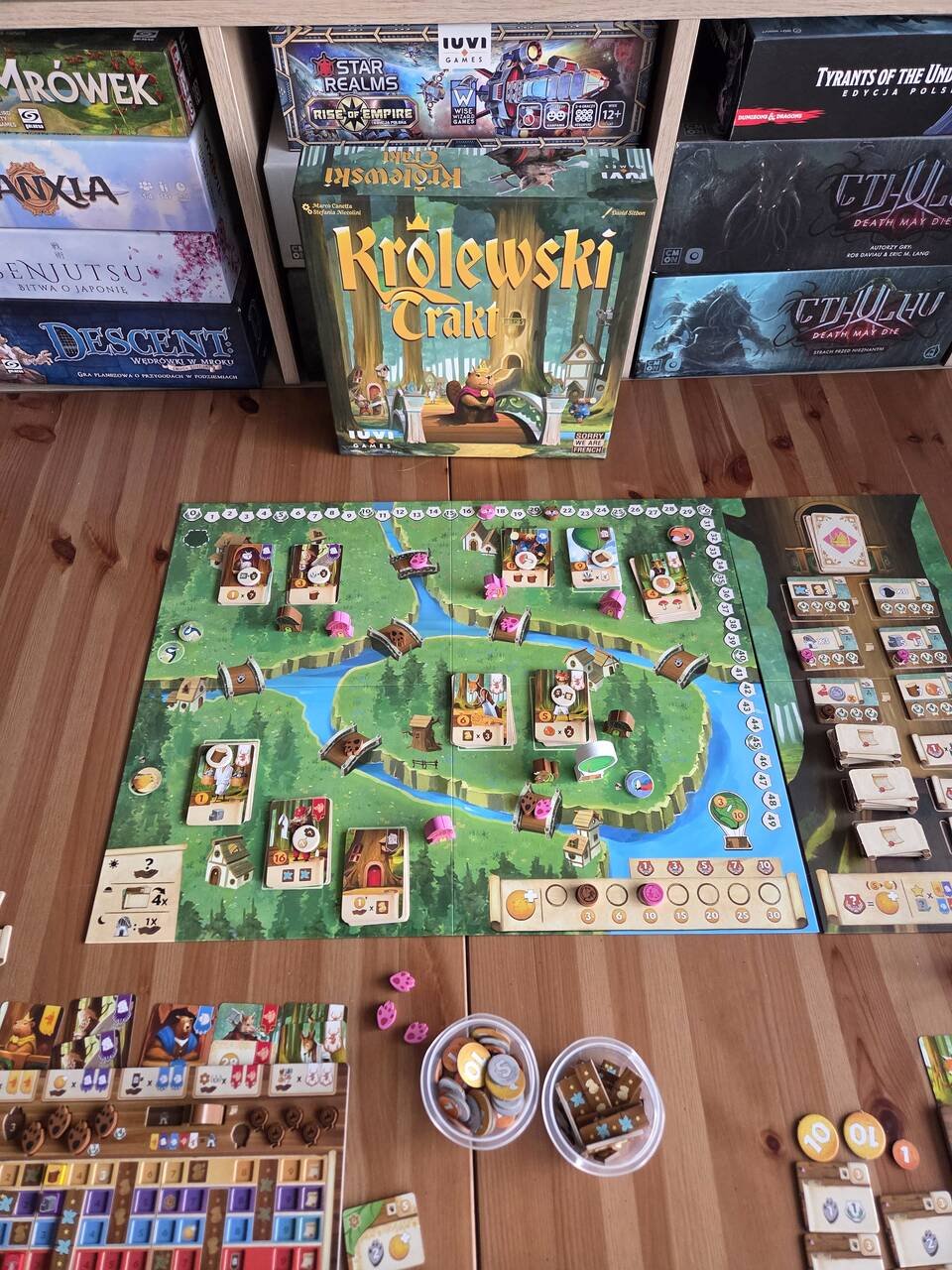
I invite you today to take a journey along the Kingdom Crossing. It’s time to sync up our beaver meters to count our paws.
In Kingdom Crossing, we take on the roles of busy beavers whose task is to build a new bridge for Queen Beavery. To erect this structure, we’ll need to gather the right materials, hire craftsmen, and build auxiliary constructions.
After 4 rounds of travel, we’ll determine the winner of this competition the beaver who best invested their steps.
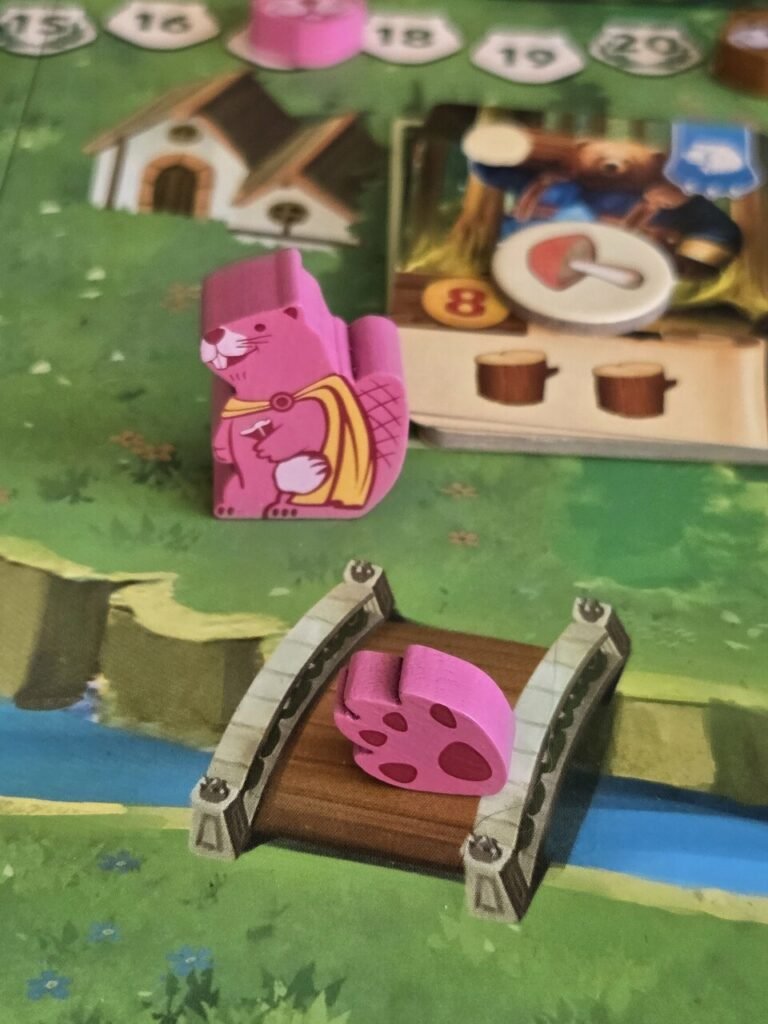
As is often the case in real life, there’s only one queen, but we have 7 bridges. And here’s the twist: we can cross each bridge only once per round. Just like in the Seven Bridges of Beaversberg dilemma and in the way my wife organizes our sightseeing trips. Because neither of them liked to walk the same path twice.
What got me Dam excited:
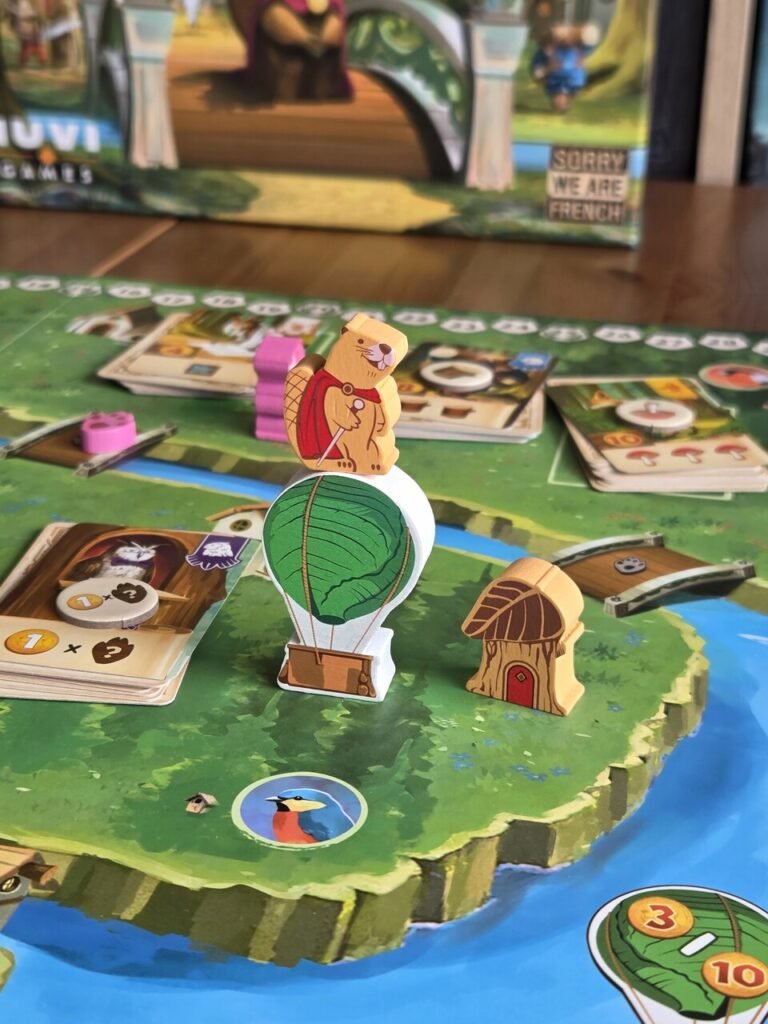
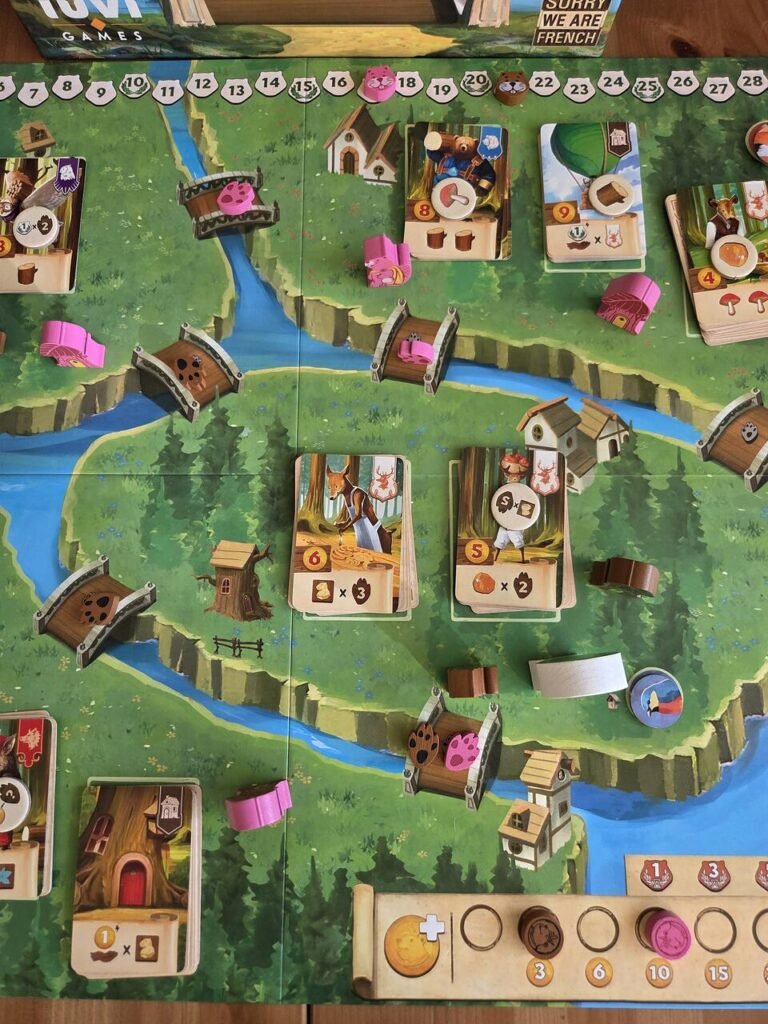
First of all, the inclusion of the Seven Bridges dilemma makes the game more strategic. We have to think through literally every move so as not to block ourselves in future turns. While we were playing, I often noticed my fellow players simulating their moves and counting each step out loud. It might have seemed funny, but I was doing the same thing! Even if we made a mistake, we could always call on the balloon to help us with our move.
Another plus of Kingdom Crossing is that the game requires us to manage our cash properly, mainly because we have to buy a card after every move. And if we couldn’t afford it, we had to take a nap. It’s cool that we get money for sleeping, just like some patostreamer, but that means we’ll get fewer cards. Considering that we only have 16 actions throughout the entire game, it’s still worth not sleeping through our turns.
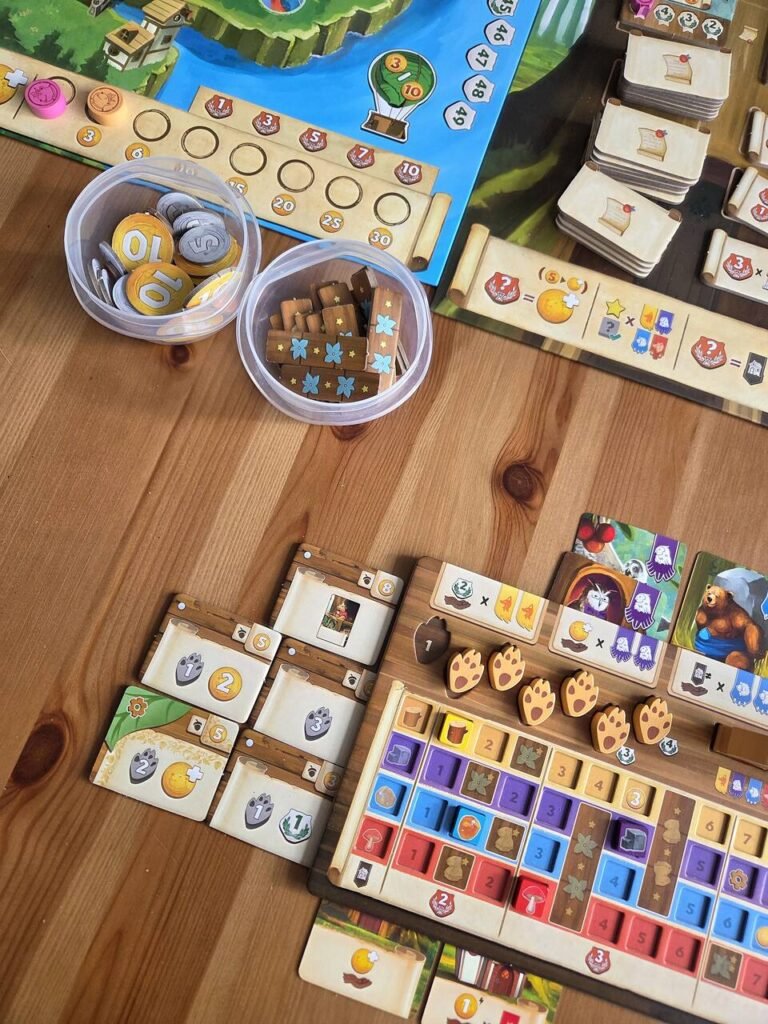
What definitely got our hearts racing was the fact that we had to work our tails off to keep our treasury from running dry. To do that, we increased our income, invested in beavercoins, and went birdwatching a hobby for millennials approaching forty…
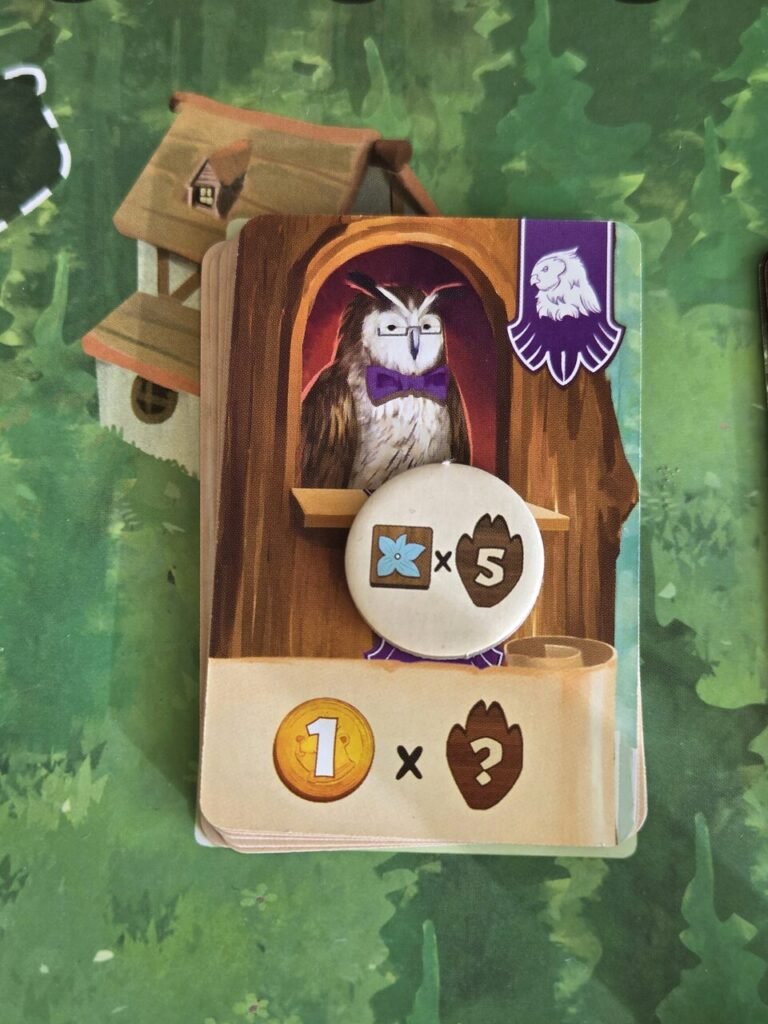
I also really like the fact that when visiting different birds, you have to choose the right moment. Because some of them will give you more cash if you visit them quickly, while others will give you more if you’ve taken more steps beforehand. This made planning our moves even more challenging.
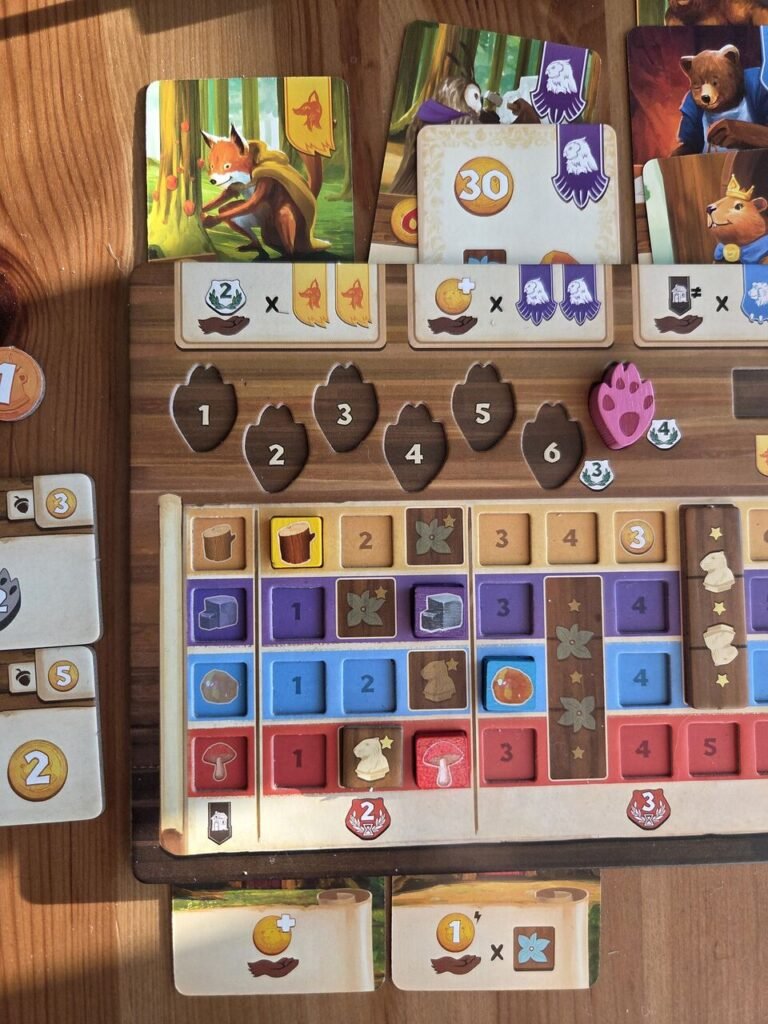
Inviting artisans and building structures is incredibly satisfying. Both options can increase the income we receive at the start of the round. There are many interdependencies between the individual guilds, and it’s precisely this expansion of our game board that made me eager to return to this path. Additionally, upgrading action tiles took my move planning to the next level.
What DAMpened my enthusiasm:
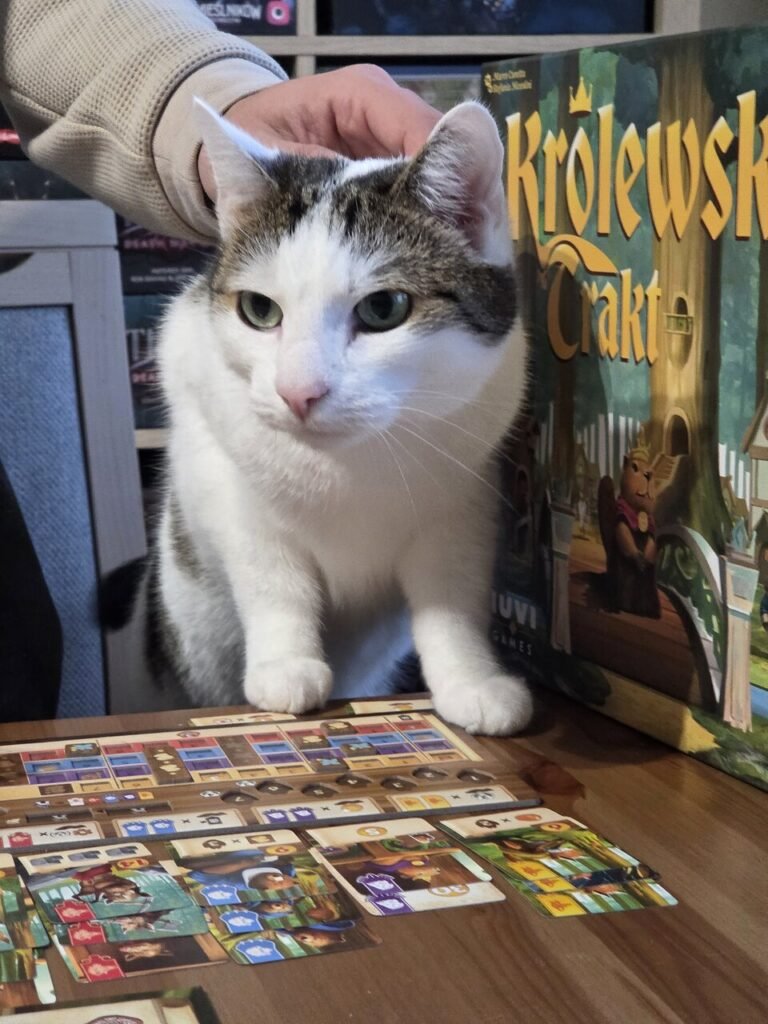
First of all, it’s a small thing, but I’m talking about the way we slide the cards onto our game board. The more cards we buy from a given guild, the more of a mess our space gets. Because in order to see their symbols, we have to keep rearranging everything. It might not be that bothersome, but it made things less than ideal.
Another minor downside is that it’s a shame there are so few bridge objectives available. I know they’re double-sided, but in most cases, the other side is just the same thing with increased requirements. After those five games, I had such a strong sense of déjà vu as we competed to fulfill those objectives. The situation is saved by the Queen’s favors, which offer a wide variety of scoring options, and because of that, I looked more favorably on future expeditions across the beaver kingdom’s bridges.
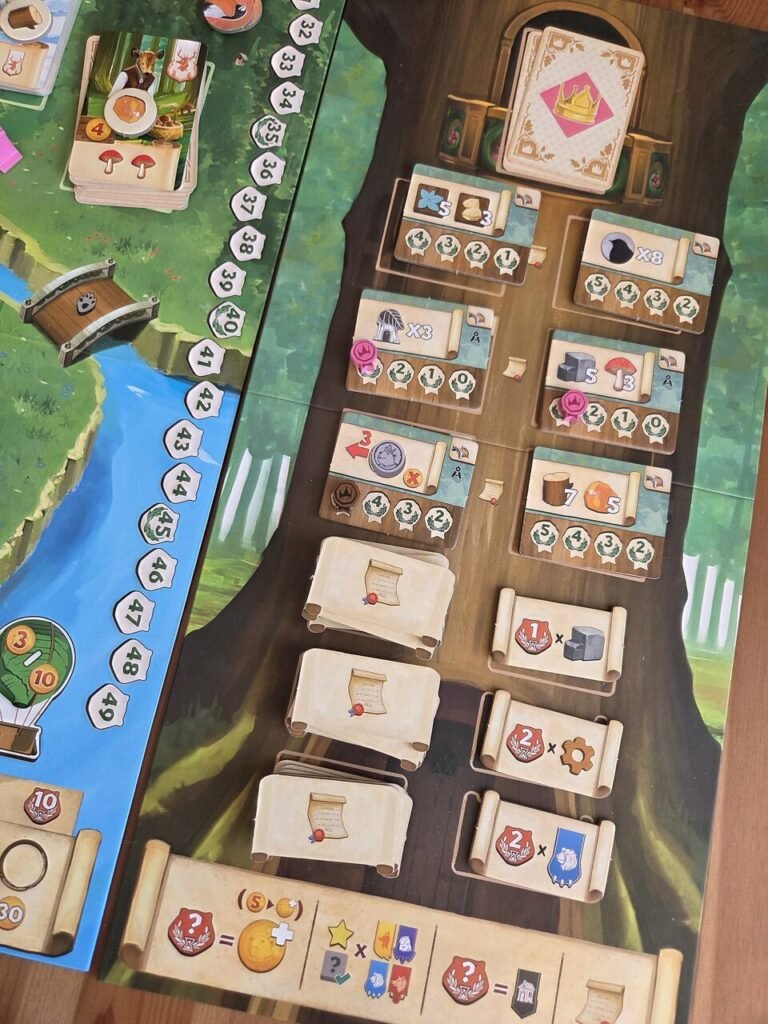
The types of guild cards available on the board appeared somewhat randomly, making it harder to complete sets. This was especially true with 4 players, where the pool of available cards rotated quite frequently. You’d often hear players complaining along the lines of: “You boor and simpleton, why did you take that card from me?” end of quote. This made it harder to complete the objectives for the bridges with flowers and beavers. In general, the scoring at the end of the game is quite counterintuitive, considering that we have to move the resource marker past the sculpture, then multiply the cards by the number of stars, etc. This definitely required another trip down the path so that players could understand these relationships between the sculptures and resources.
Graphics and Quality
Visually, it looks like a beautiful clone of Everdell, and in my opinion, that’s a huge plus. The components are also great. The meeples have printed illustrations, the boards have indentations for resources, and overall, I’m very impressed with the entire contents.
Playtime and Number of Players
Traveling along Kingdom Crossing is lightning-fast. With two players, a game takes less than an hour. It’s also very quick with more players. That’s why we won’t be keeping our beaver here for too long.
The number of players mainly affects the rotation of available cards and the game duration. That said, I enjoyed playing it in every configuration.
Summary
When I first saw this beaver, I thought it was just another game with cute animals. I certainly didn’t expect such a beast that made me think carefully about every move I made. However, it was precisely this dilemma of the seven bridges that had my beaver’s trowel working overtime with excitement. Plus, I love tight resource management in games, and that’s what drew me in the most when I ventured back onto the Kingdom Crossing.
Final verdict: Kingdom Crossing is un-beaver-lievable
Pros
Planning every move
The 7-paw dilemma
Great production quality
Tight economy
Combo multiple moves at once
Cons
It’s a shame there are so few bridge objectives
Slide in cards
[Game provided by IUVI Games]