Orloj
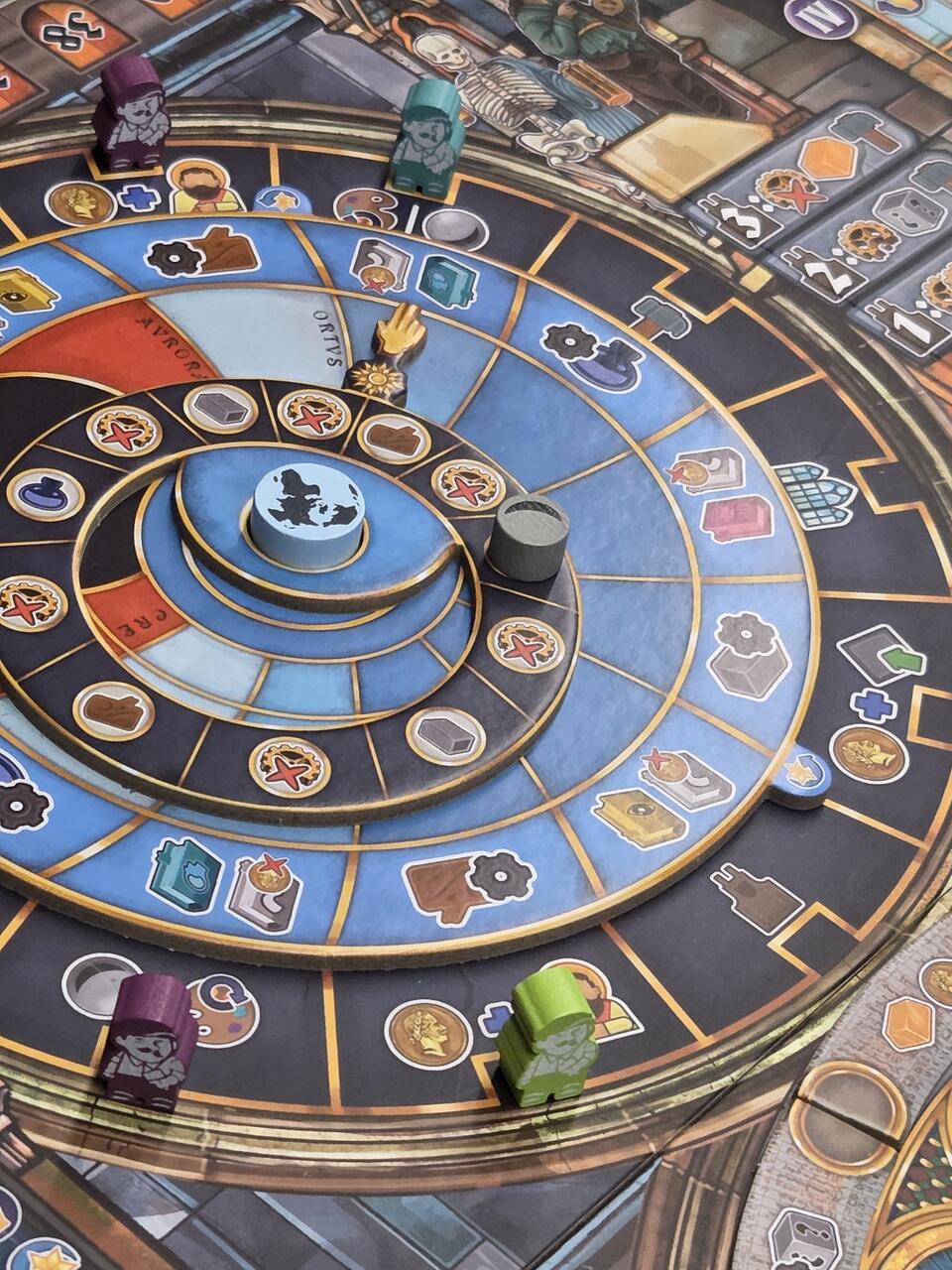
Do happy players keep track of time?
Orloj is a game in which players build a medieval astronomical clock. On their turn, a player moves the clock hand and places a worker on the action space where time has stopped. This allows players to acquire resources, hire assistants, invite apostles, install new stained-glass windows, and move along three tracks that increase the power of their actions.
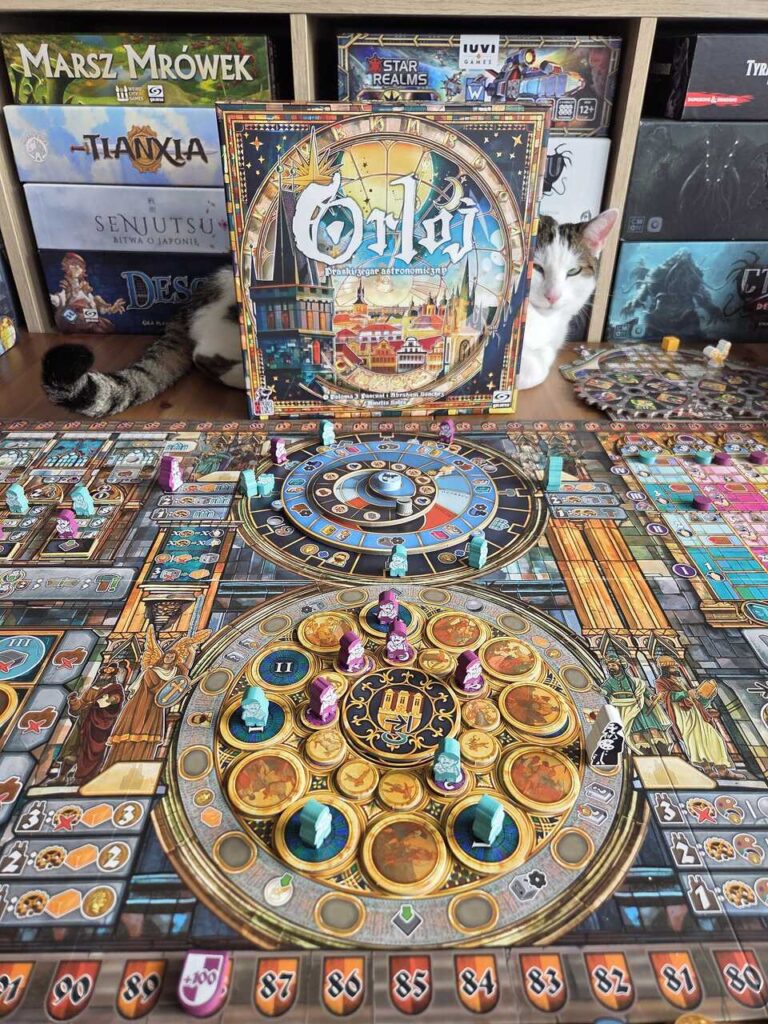
The goal of the game is to construct the calendar section of the clock and earn as many glory points as possible in the shortest amount of time.
Why Those Were Good Times
First of all, Orloj has an action rondel, and that was more than enough to convince me to play. Plus, we can manipulate that wheel just as if we were Marty McFly. This lets us perform whatever actions we want, so we don’t end up complaining that we’re returning to the same thing over and over.
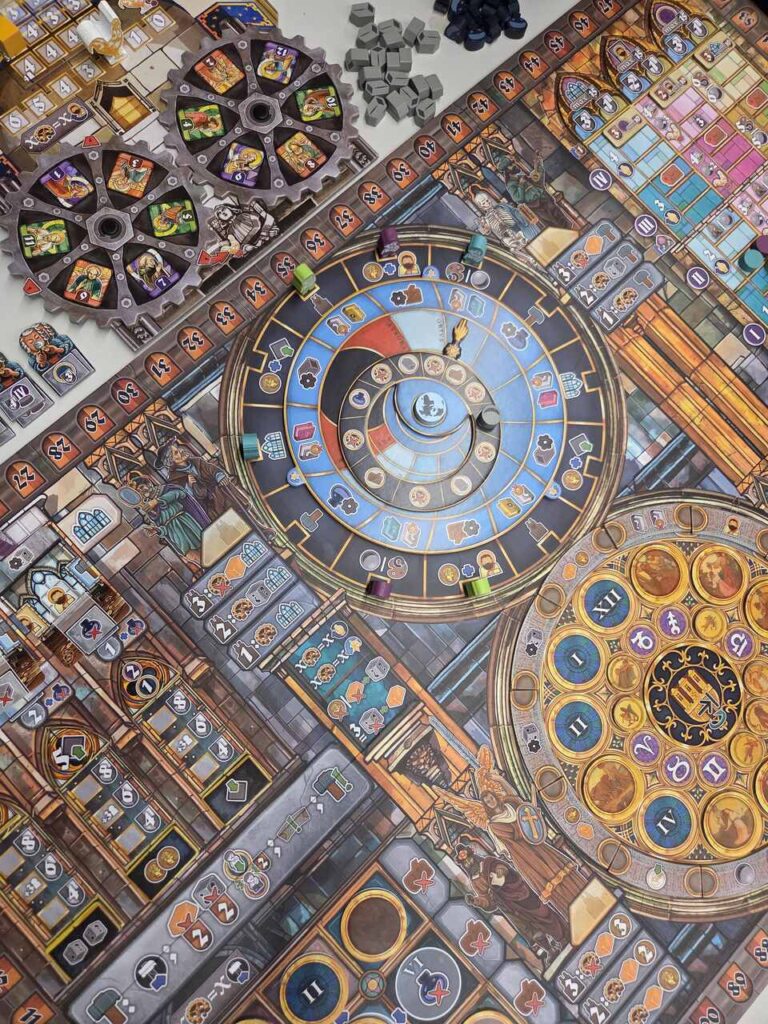
Another plus for me is that we’re constantly enhancing our actions, whether by increasing production on the board or climbing one of the tracks. Everything leads to our moves to become more optimized. Whenever a really powerful combo came up, I’d practically stand over the table as I executed the next sequences of my turn.
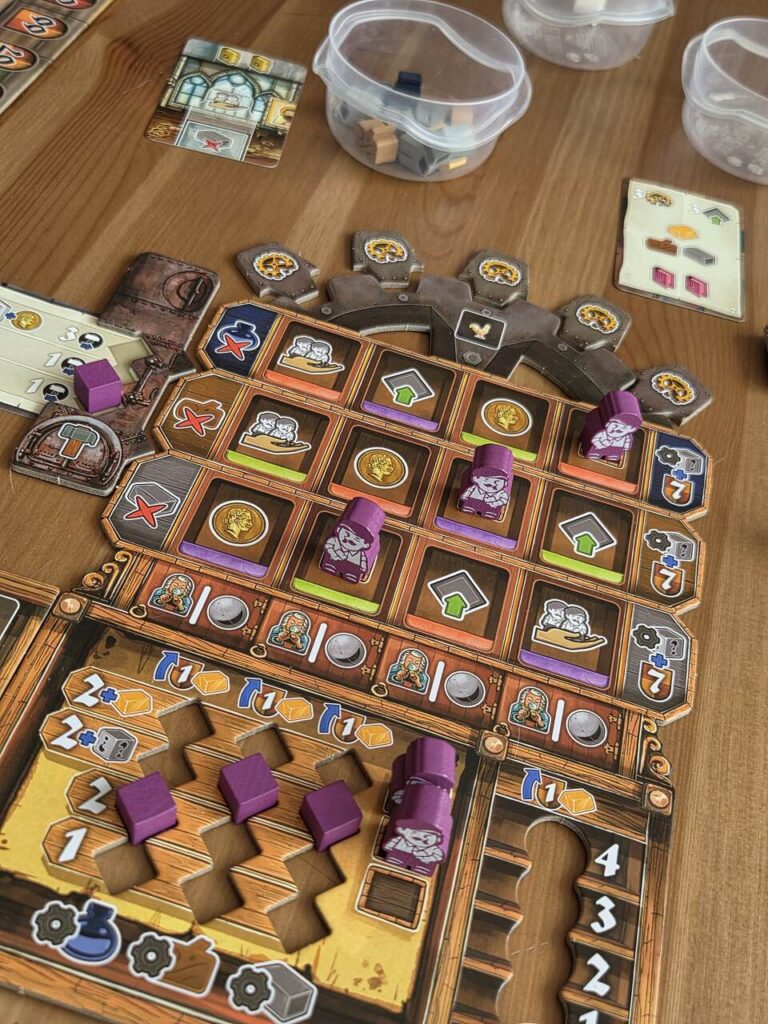
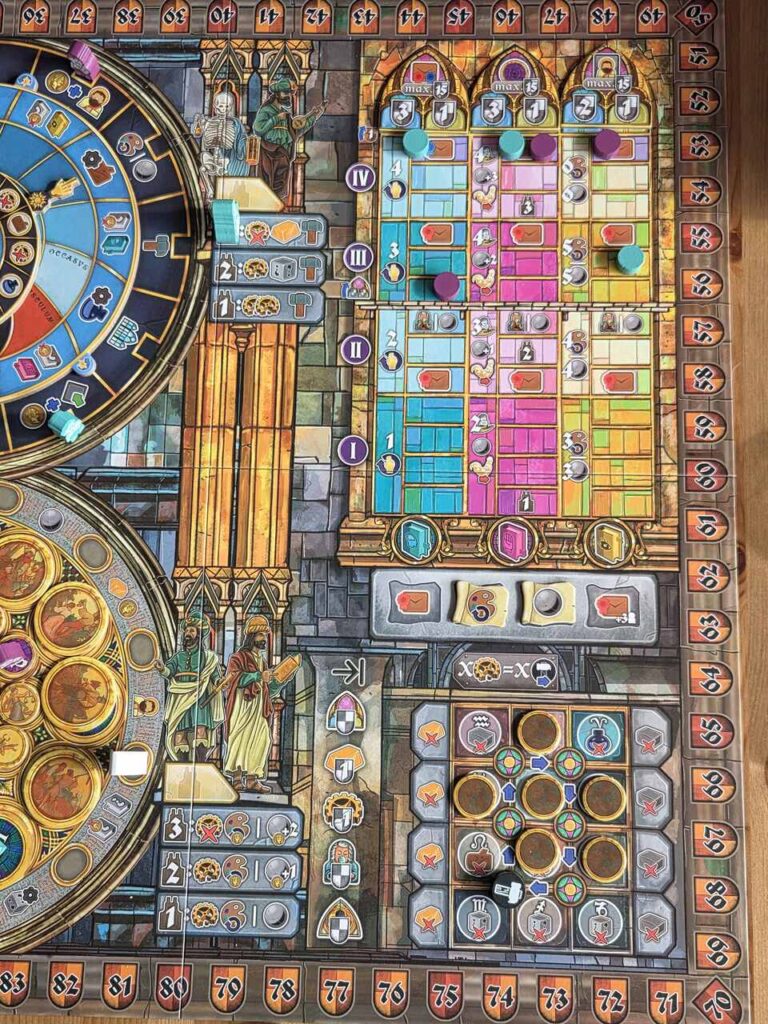
In Orloj, there’s also a bit of competition over who will be the first to reach the top of a track or fulfill a specific objective. This adds a touch of adrenaline and motivates you to keep an eye on what your rivals are doing, because the best rewards always go to the winners of this race.
Another strength of the game is the cogs, which let us manipulate various aspects of gameplay. We can use them practically all the time, because Orloj isn’t a game that punishes you for poor resource management. There’s always plenty of everything, we just have to organize it well so that everything meshes together.
I was a bit surprised by the game’s difficulty rating on Board Game Geek. It currently stands at 3.62/5. In my opinion, that’s definitely too high for Orloj. The actions are super simple, everything is clear, and it literally runs like clockwork…
A Few Bad Times
The first, minor downside is the game setup. This was something that bothered me mainly during my first few plays, because it took a long time to set everything up especially while I was learning the names of the individual components. Over time, however, when someone helped me set up the components, it went much more smoothly.
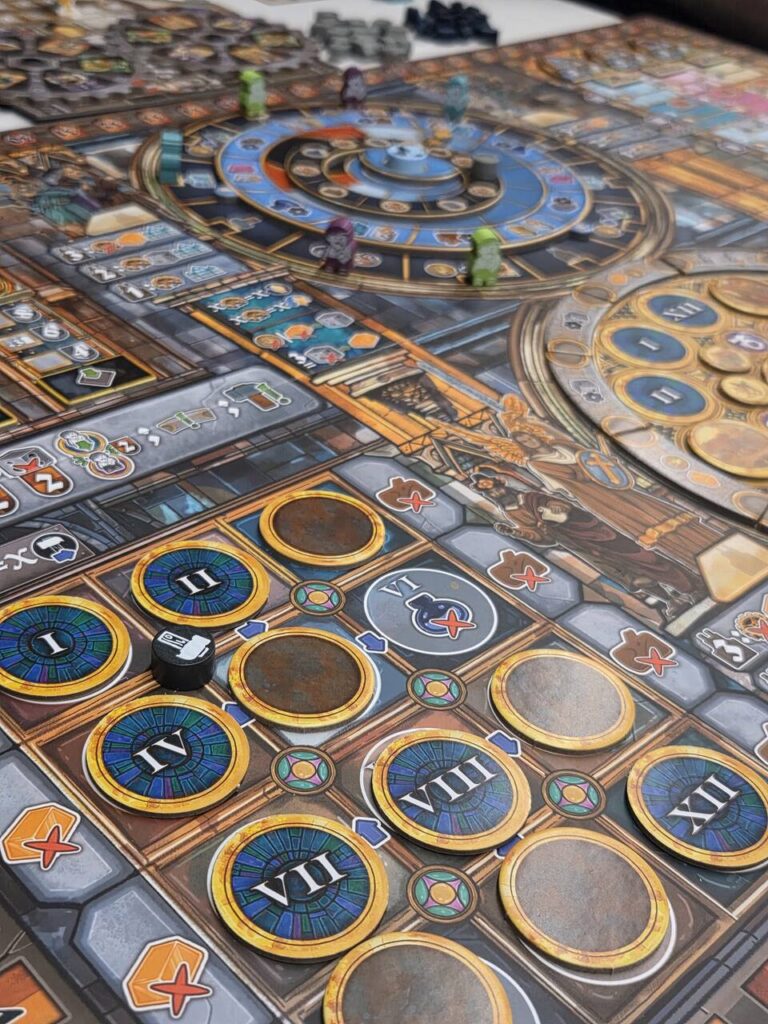
The Orloj theme didn’t appeal to me at all. I don’t feel like I’m building a clock at all, and the gameplay itself is as dry as a stick or as the time-related jokes in this review.
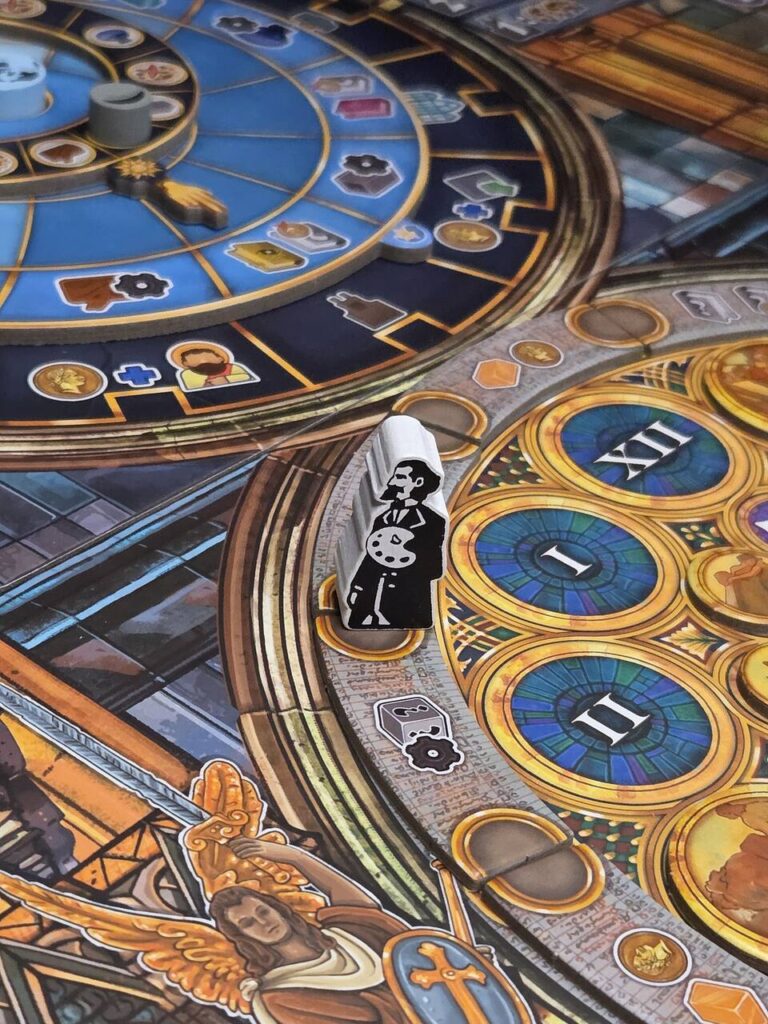
A rather strange aspect is that the game could go on forever. To move it forward, we have to pass or invite new apostles every so often. If we didn’t do that, we could play indefinitely, because the game doesn’t force us to end it in any way. That’s how our first game went. We just kept producing resources and climbing the tracks. At one point, we even ran out of gold tokens.
So the length of the game really depends entirely on us.
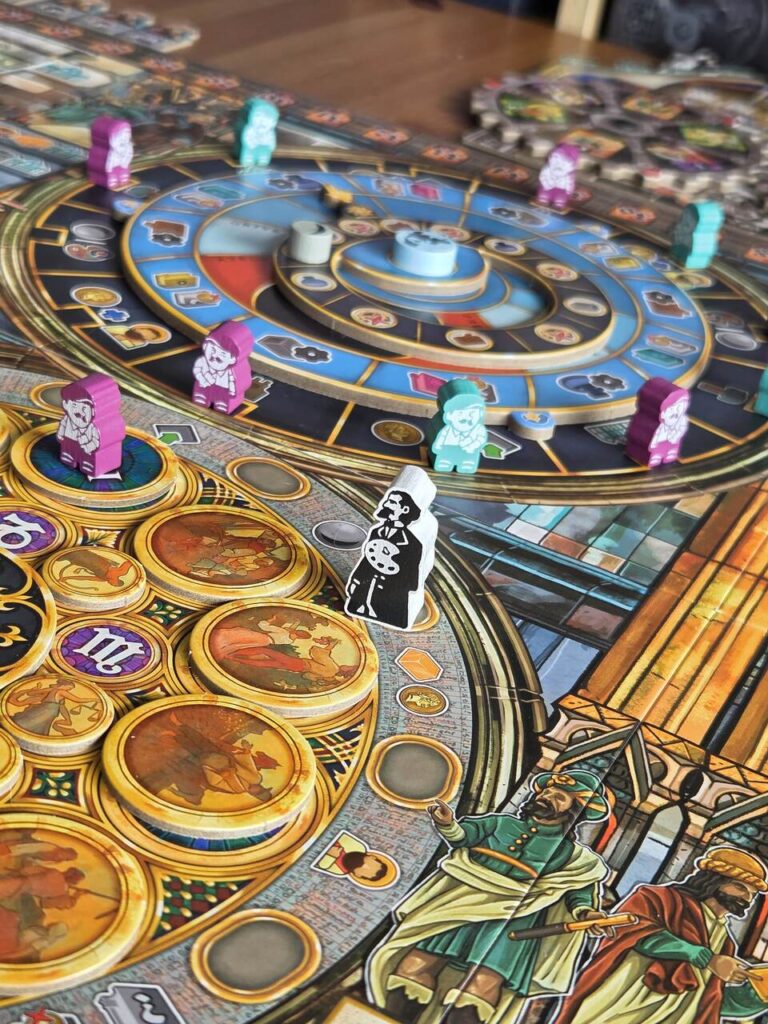
Players’ turns can be quick, but they can also last forever, especially when you end up with a few extra actions from placing assistants or climbing the tracks. Then you just find yourself looking at your watch and wondering what to do next. By the way, it’s pretty hard to plan your moves, considering that time is constantly ticking. You never know exactly where the needle will land, and after all, it’s what determines what you’ll be able to do on your turn.
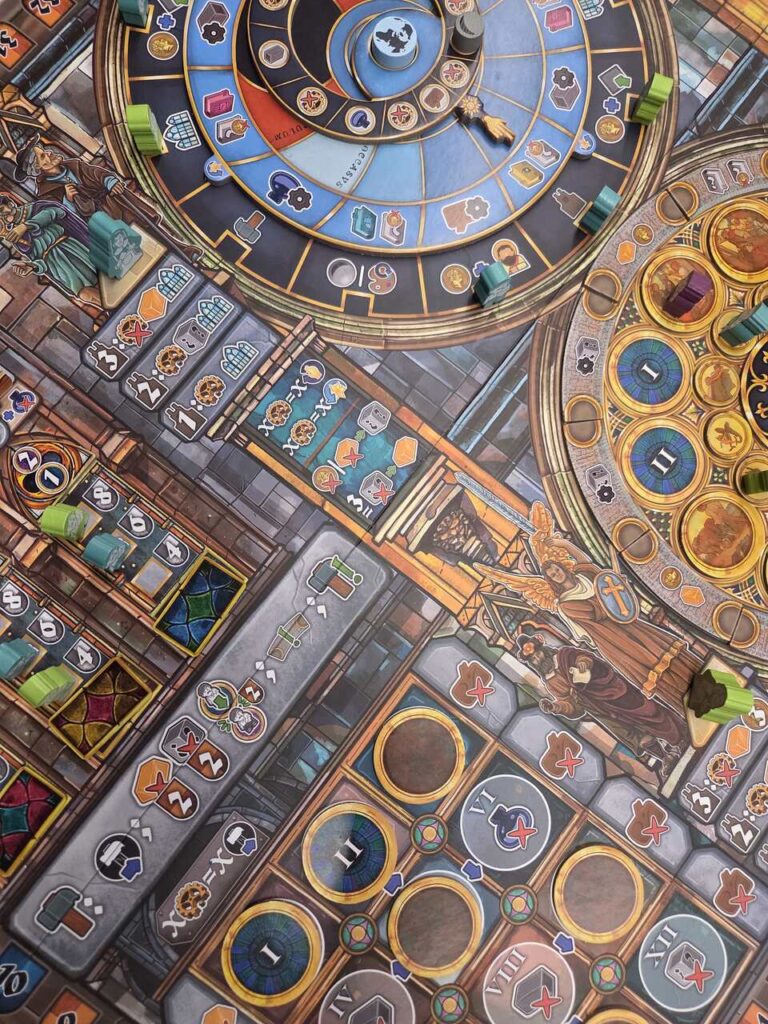
One thing that was quite counterintuitive for me, at least at first, was figuring out how many resources we had to spend to build a structure. That’s because you add modifiers from the columns and rows to the base cost, and it often happened that someone forgot something. Over time, however, it became second nature to me, just like the rule that gold and coins can replace any basic resource but cannot replace each other. Once you play, you’ll understand what I mean.
Game Duration and Number of Players
I mentioned earlier that the game’s duration depends on the players and how focused they are on recruiting apostles. Because of this, it’s hard to say exactly how long the building process will take. Let’s estimate about 2 hours.
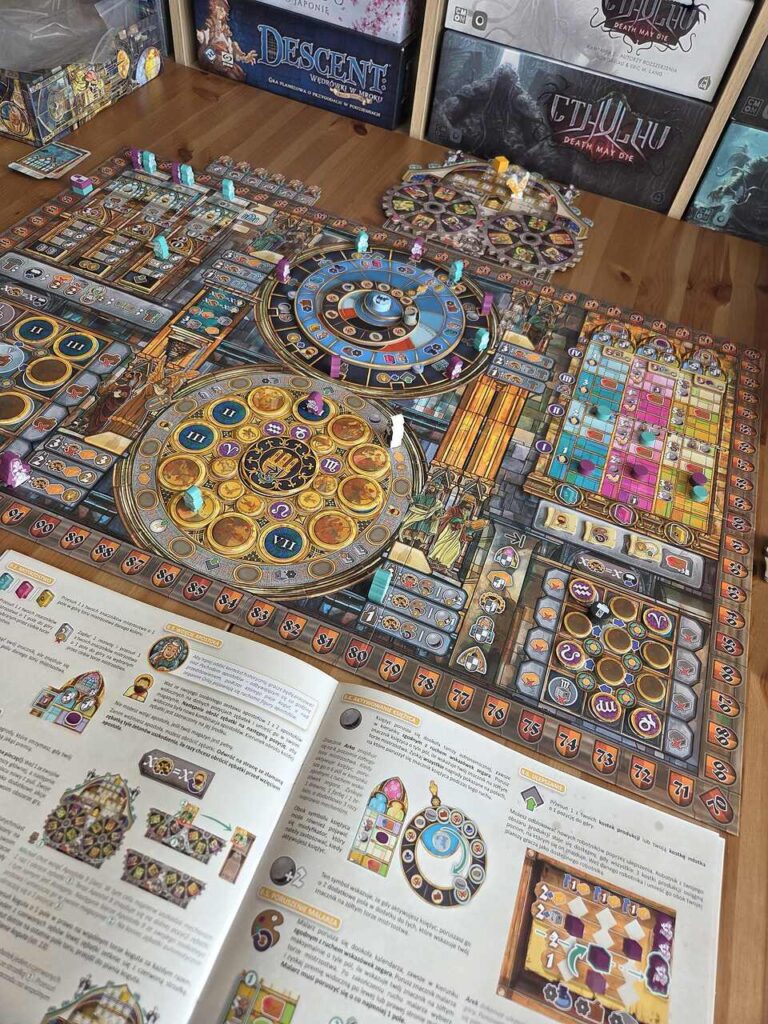
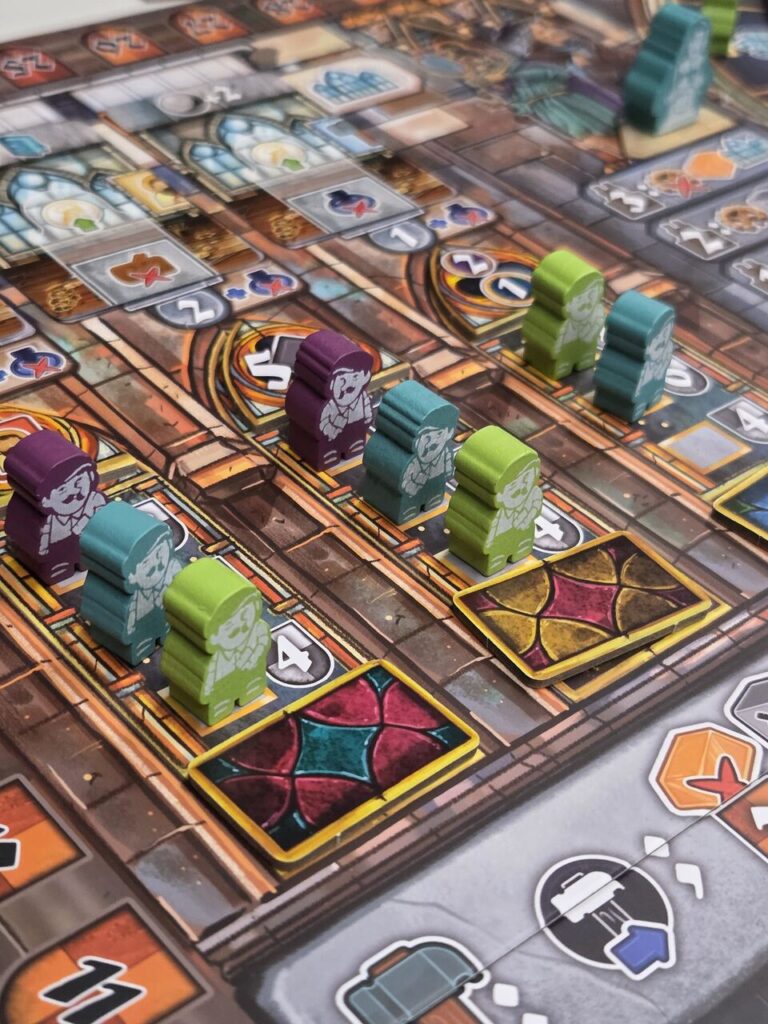
With two players, we tended to focus more on pushing our workers off the clock, and you could say we regularly made sure not to make the game too easy for the other player. With a larger group, this pushing was more random, because someone just happened to be in the right place at the right time. However, no matter how many players there were, it all worked very well.
Quality and Components
There were often complaints that the game is too colorful and visually overwhelming. However, once we sat down at the table and saw all the actions in play, the Orloj’s vibrant color scheme wasn’t a problem at all. In other words, it all looks better up close.
As for the components, I can say there are plenty of them. Of course, there’s no insert, but at least the box closes, so I won’t complain about that.
Summary
Orloj is yet another medium-weight Euro game where we do what we do in every Euro game. There’s a rondel, there are tracks, Euro points, resource conversion, and so on. The theme of time is just a bit of a gimmick here, but I didn’t really pay much attention to it. I simply tried to make my turns as optimal as possible and racked up those points while competing with other players to meet objectives and climb to the top of the tracks first. Mechanically, everything runs like clockwork here, and the fact that we can manipulate time encouraged me to keep coming back for more.
Final verdict: Happy people don’t count the time, and the rest play Orloj because it’s a solid game. It’s not that they’re unhappy or anything. They just have to keep an eye on the time, because after all, someone has to turn back time to invite all the apostles. Even Judas. That was a joke worth at least one HA. Time flies and I can’t remember more puns. Amen.
Pros
You spin my rondel round round
Production always moves forward
A little competition
Power gears
So simple, not too hard at all
Playing standing up out of excitement
Cons
The Last Supper that never ends. Is anyone ever going to finish this?
Not that eye-popping, but no insert
The theme might grow on you over time
Turns can be a bit long…
Set it up
[Game provided by Galakta]