The White Castle
Is it possible to be obsessed with a game?
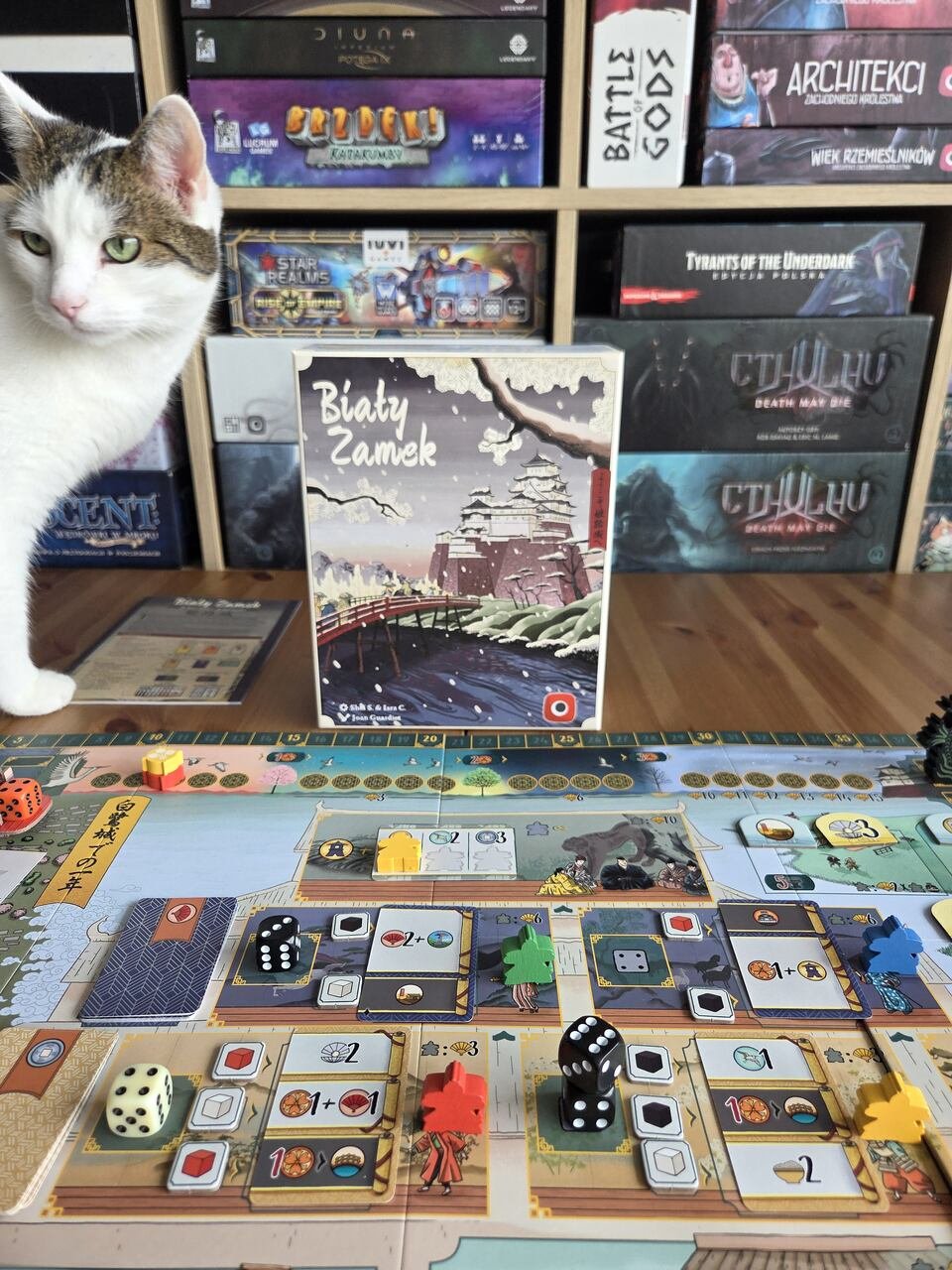
The White Castle is a euro-style game in which you perform three main actions and gather resources so that you can afford them. That’s a very simplified way to describe what this game is all about.
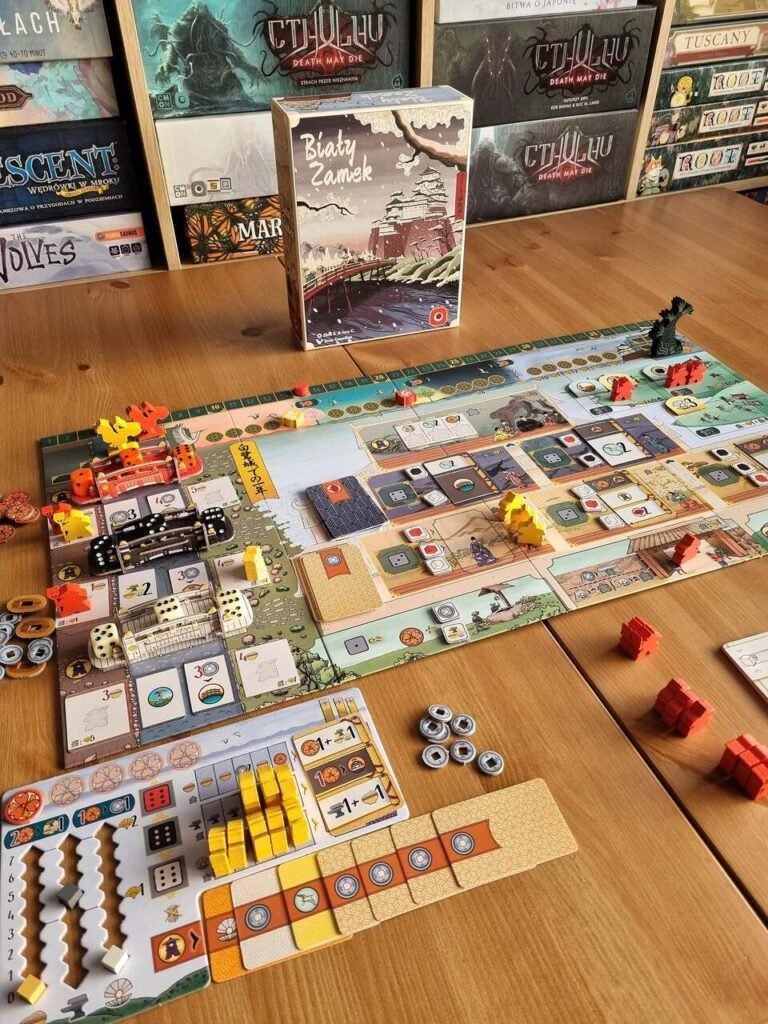
Mechanically, the game uses dice placement. On your turn, you take one die from one of the three bridges and place it on an empty space on the board. Then, you’ll perform all the actions corresponding to the color of the placed die. Additionally, if you take a die from the left side of the bridge, you’ll trigger your lantern’s ability, gaining more resources. These will come in very handy, considering just how incredibly cramped the castle’s corridors are.
You could say that’s all there is to the game itself, but there are a few things that really got me hooked as I explored the chambers of the White Castle.
The main reason I keep coming back to this game is that it’s super tight. Literally, the entire game consists of only 3 rounds, and in each one, a player places just 3 dice. That adds up to a total of only 9 actions for the entire game! Because of this, every turn has to be carefully optimized, and as you know, I love that kind of thing in board games.
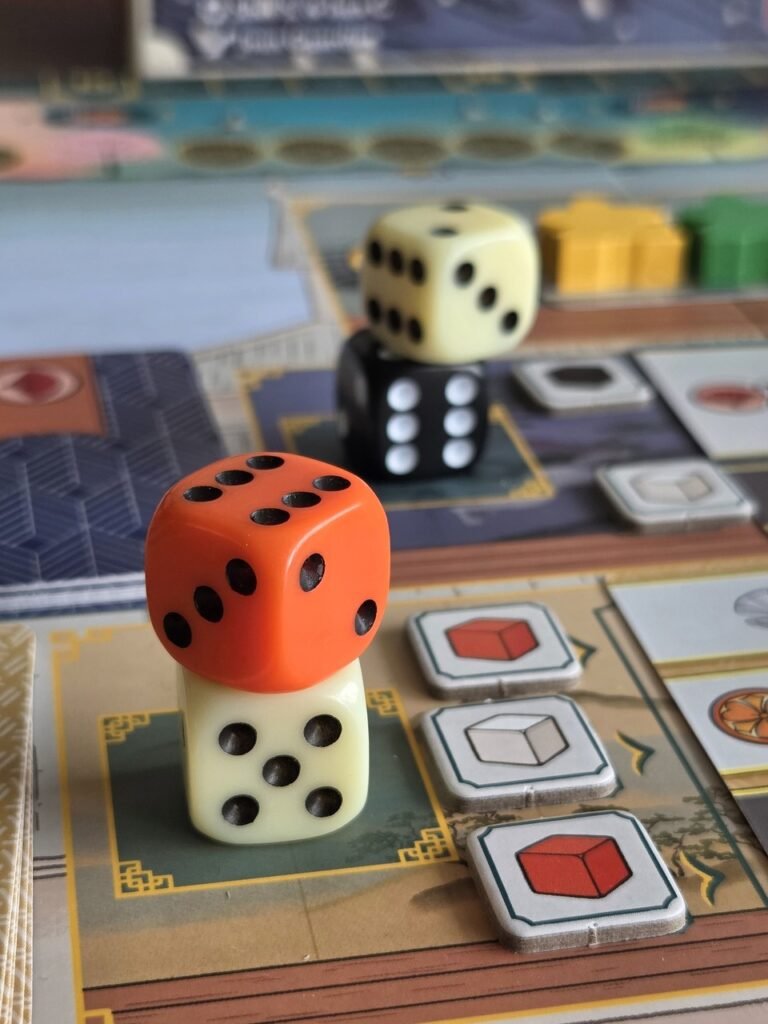
The key to this optimization is combining the available actions as effectively as possible. In short, the whole trick is to get the most out of placing a single die. Many spaces in the game allow you to activate another space or action, and when you manage to trigger a cascade of several moves in a row, it’s incredibly satisfying. That’s why I love coming back to the White Castle to create the best combos and action sequences possible.
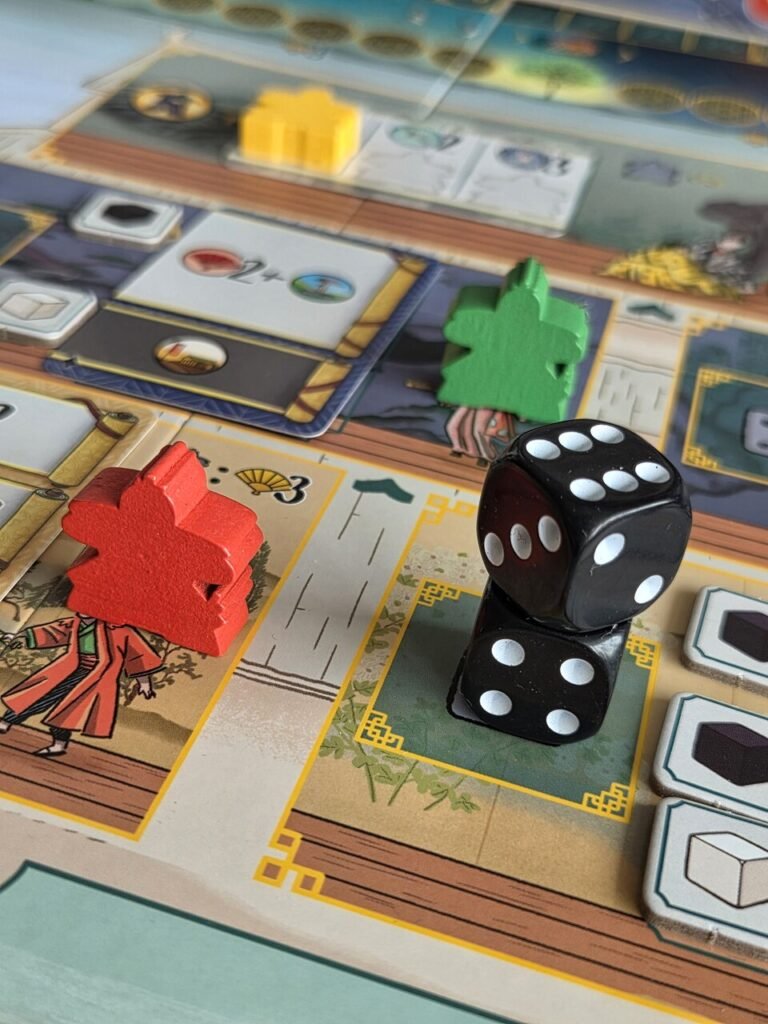
However, in order to afford such extravagance in our actions, we first have to gather resources. Because the game has such a limited budget, we literally count every grain of rice. This often forces us to think ahead during the game, because if we run out of resources on a particular action, we’ll have to go through the tedious process of gathering resources all over again. However, we can get around this by choosing the right action spaces.
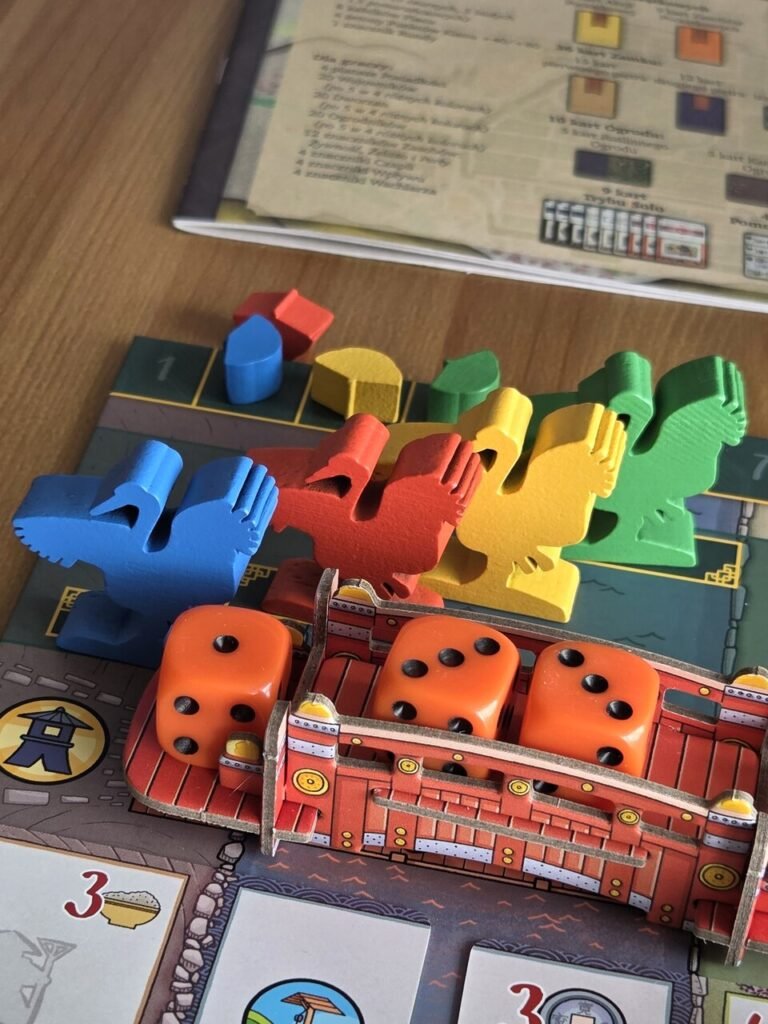
Our lantern helps us with this. By taking the die from the left side of the bridge, we’ll be able to activate all the lantern cards. They’ll provide a boost of resources, and most importantly, we’ll do this even before performing our main action. This takes the constant juggling of resources to the next level.
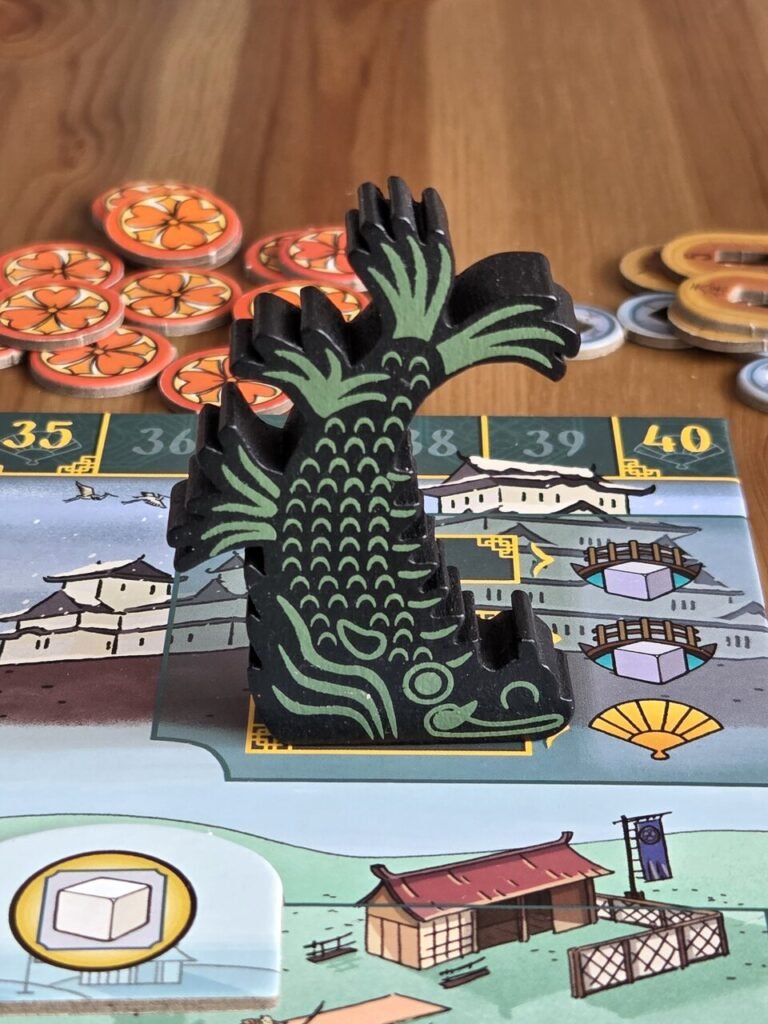
There’s also a minor drawback with the lanterns that I noticed after playing dozens of games. Unfortunately, not all starting lanterns are created equal. If you face an opponent who knows the game well and chooses a better lantern card, it’ll be easier for them to gather resources. This is also hugely important in solo play.
Solo Play
You could actually write a separate review just about solo mode in the White Castle. Because even though the mechanics are the same, you still have to adjust your approach to the game a bit. You have to closely watch the bot’s moves and minimize its chance of earning a higher point multiplier at the end of each round. That’s why moving along the heron track should be our priority. However, this still doesn’t guarantee a win. The bot is ruthless, and even on the lowest difficulty level, it can kick our walls.
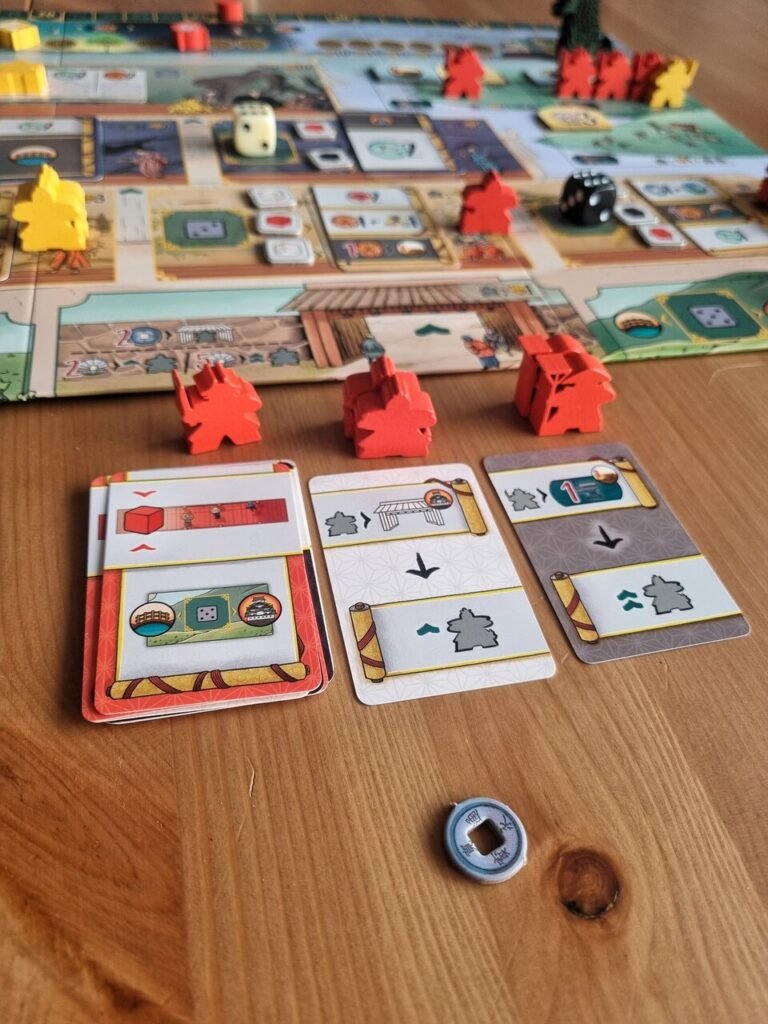
Operating the bot, on the other hand, is very simple. You just draw a card from its deck, check which die it wants to take, and see what actions it can perform. There’s no deep strategy involved here. When it’s missing its target die, you draw more cards from its deck, exponentially increasing its potential for actions. Often, you also don’t know which die the bot will manage to take, so you can’t be sure whether you’ll be able to use the gardener’s power at the end of the round. However, you can predict this by looking at the cards it has revealed.
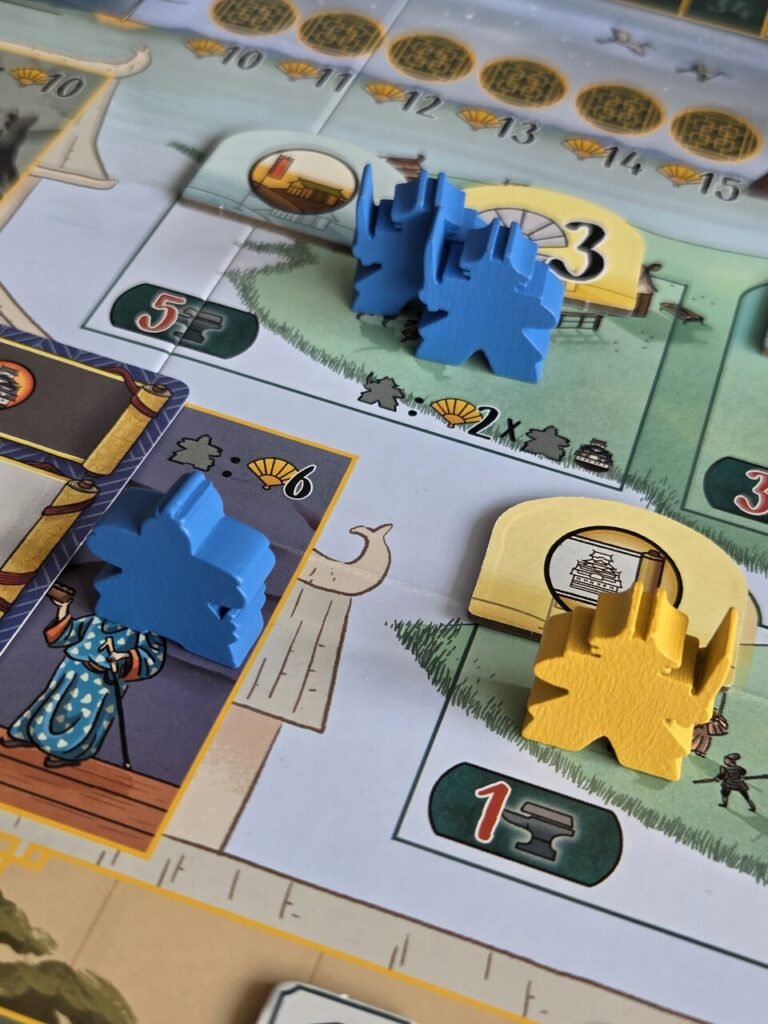
I’d call playing solo a sort of training for young Jedi. Because you have to anticipate the automa’s moves and still avoid getting killed by Anakin. Because everyone would love to star in a new Disney series set in the Star Wars universe.
Game Duration and Number of Players
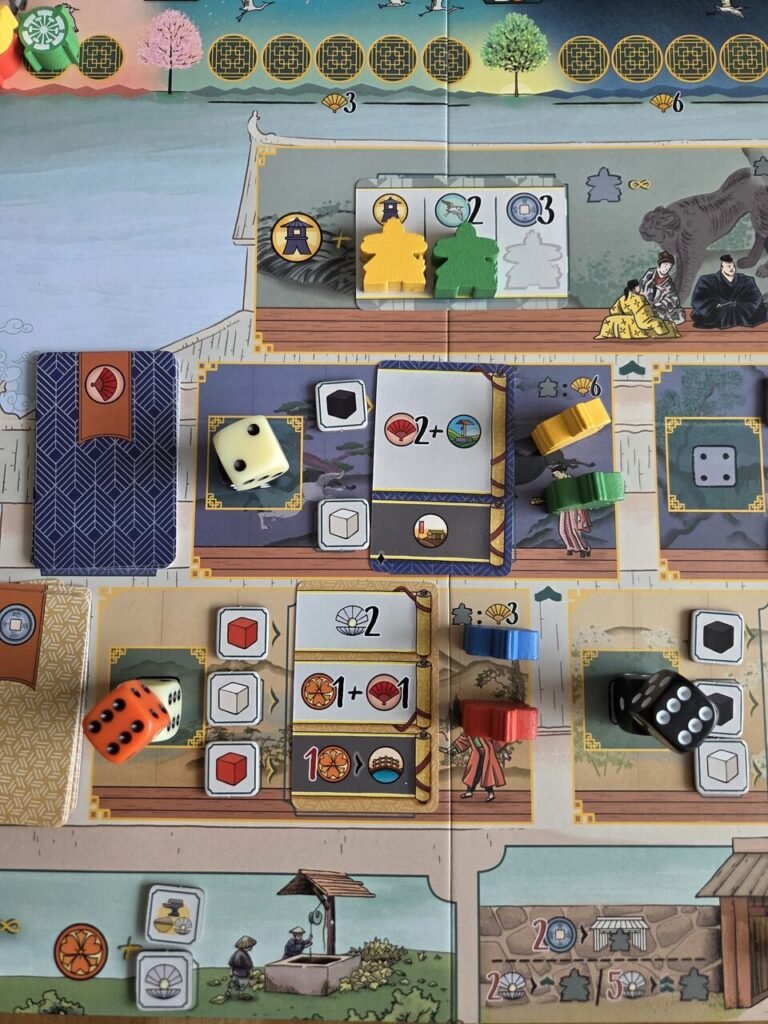
The number of players significantly affects one aspect of the game, namely the ability to place dice. In the solo or two-player variant, players more often block each other’s available spaces and limit their actions, since only one die can be placed on a single space. In contrast, in a three- or four-player game, you can place up to two dice on a single space. Interestingly, in these cases, the cost or cash gained depends on which die was placed first. This significantly changes the approach to strategic planning of moves.
The game itself is very fast-paced and intense. It should wrap up within an hour and that hour will truly put our resource management skills to the test.
Quality and Components
Devir Publishing has gotten us used to very tight-fitting boxes, which can be quite a challenge to repack. Thanks to this, I’ve become a master at packing my suitcases for every vacation.
In terms of quality, it’s absolutely fine. Inside, you’ll find plenty of components, but the bridges for our dice make the biggest impression. They’re what really set the tone for the game.
Summary
I have to tell you that I got really hooked on playing the White Castle. My obsession was mainly focused on online games on Board Game Arena. I played nonstop: in the morning before work, during my commute, during my lunch break, and a few more times in the evening. The desire to beat my own record became downright obsessive. I tried to combo my turns as much as possible and chain as many actions as I could. So far, I’ve managed to score 89 points, and for some reason, I just can’t seem to break that 90-point barrier. Maybe someday I’ll finally make it.
This unhealthy obsession made me a bit sick of the game, so I had to take a break and didn’t get back to writing this review until a few months later. After that break, I played a few more games, and I can confidently say that I still consider White Castle a great euro game. The game is simple and fast-paced, yet it forces you to think through every move to get the most out of placing dice. It’s supposedly only 9 turns, but they’re so intense that I’m hyper-focused on navigating the castle’s cramped walls the entire time.
Final verdict: Breaking One Wish Willow for White Castle was definitely worth it!
Pros
- Turbo tight
- Chaining together actions
- Sharp euro analysis
- Every action counts
- Breaking your own records
- Obsession
Cons
- Some lanterns shine brighter
[self bought]