Revenant
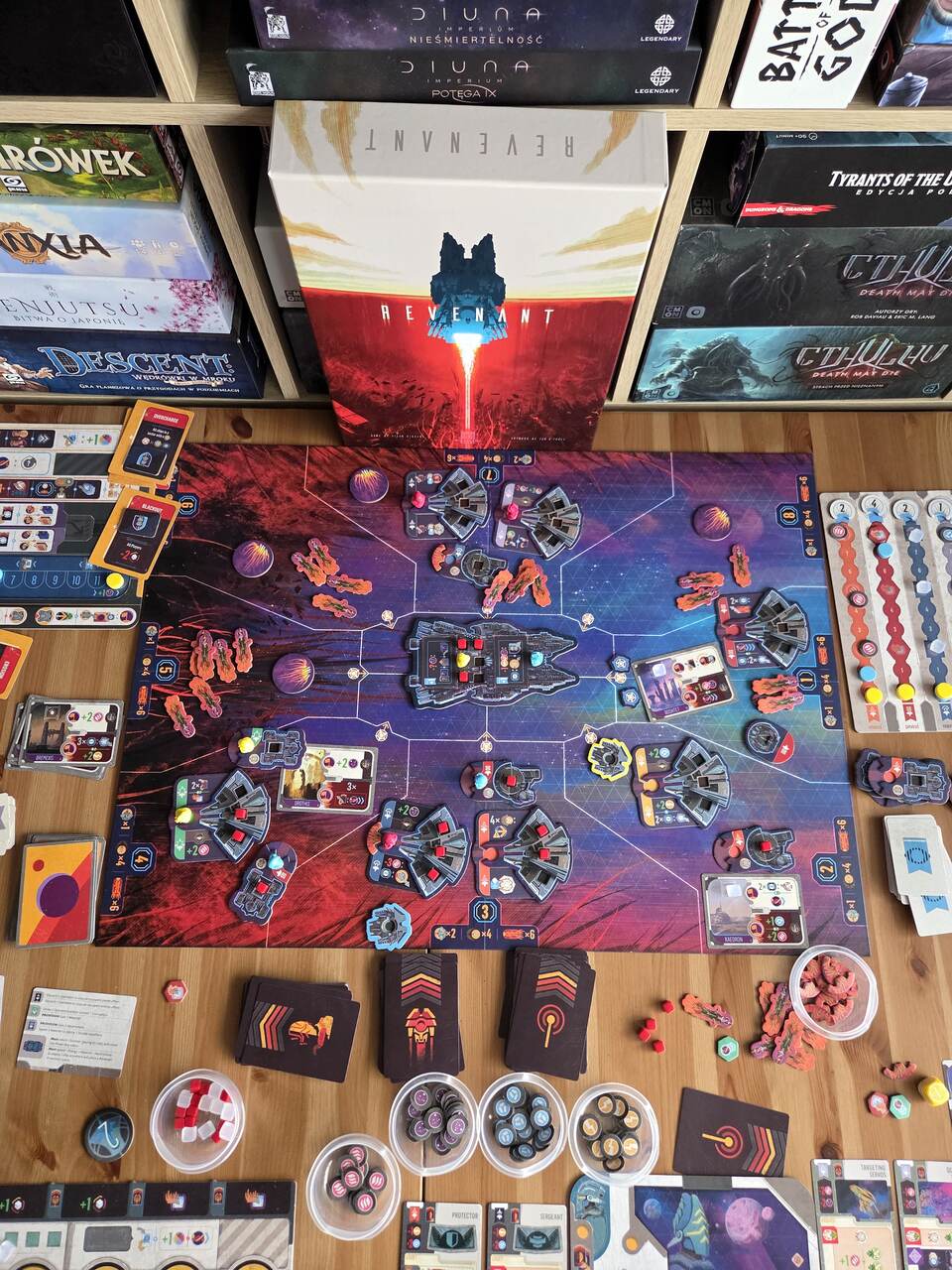
Voidborn have corrupted the Voidfall galaxy. The great houses have joined forces and sent the Revenant into space, which offers their inhabitants last hope of survival. Players will take on the roles of brave captains, tasked with escorting this vessel to safety far from the destructive power of the Void.
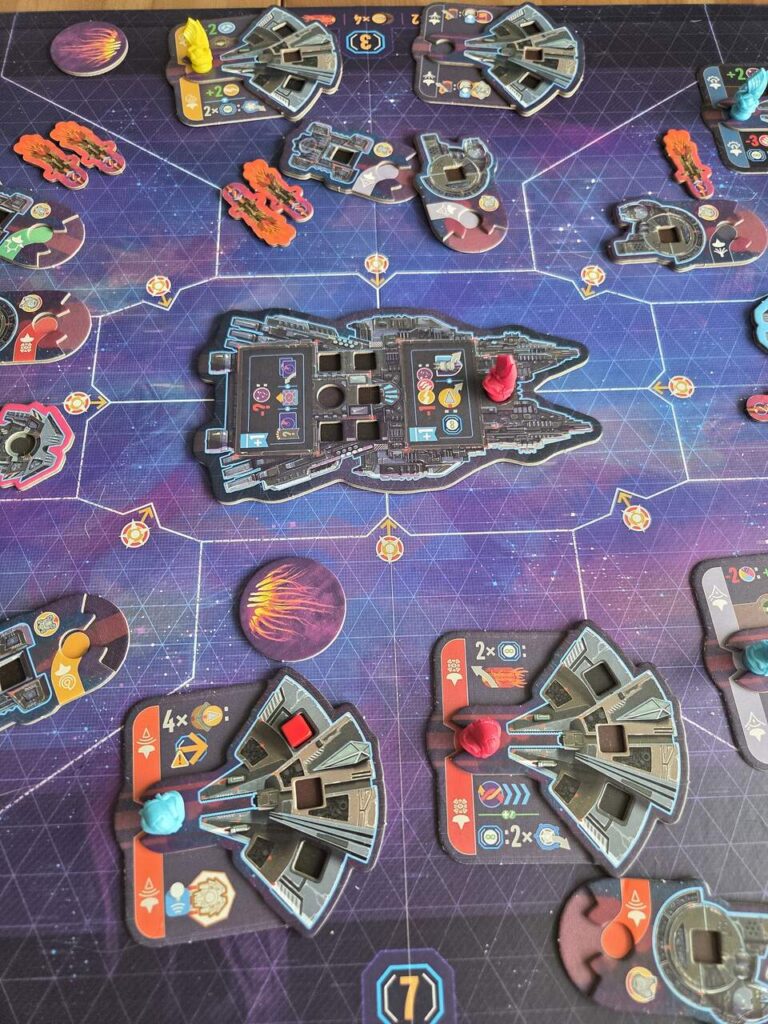
Throughout the course of the game, we’ll expand our own fleet, support the various houses, visit various planets and repel Voidborn attacks. All of this is to earn the title of the next Revenant Supreme Commander.
I invite you to my review, in which I’ll recount my legendary battles in the skies and answer the question of whether there’s still any hope for Euro gamers.
Why It Was Worth Fighting the Voidborn
First off, I’ll point out that Revenant isn’t a fully cooperative game (something I’ve had to repeat a few times). Even though we work together to weaken the Voidborn’s forces, only one of us will win the game. The one who handles this task best, meaning the one who scores the most points.
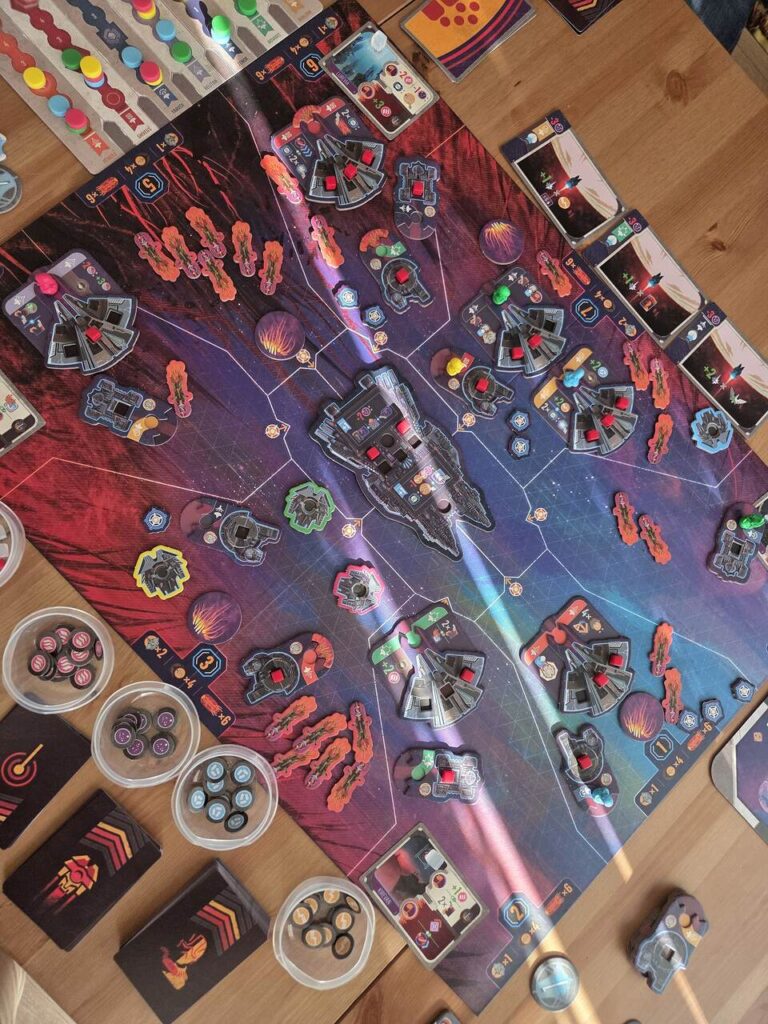
This aspect of semi-cooperation works absolutely brilliantly here. The enemy destroys the ships of the great houses, weakening their influence on the board. This limits our actions and significantly impacts the situation at the end of the game. For this reason, we must work together to fend off the attacks of this orange invader. We also need to make sure that Voidborn’s forces don’t attack the flagship. While its destruction doesn’t result in an immediate loss, it does have very unpleasant consequences for all of us.
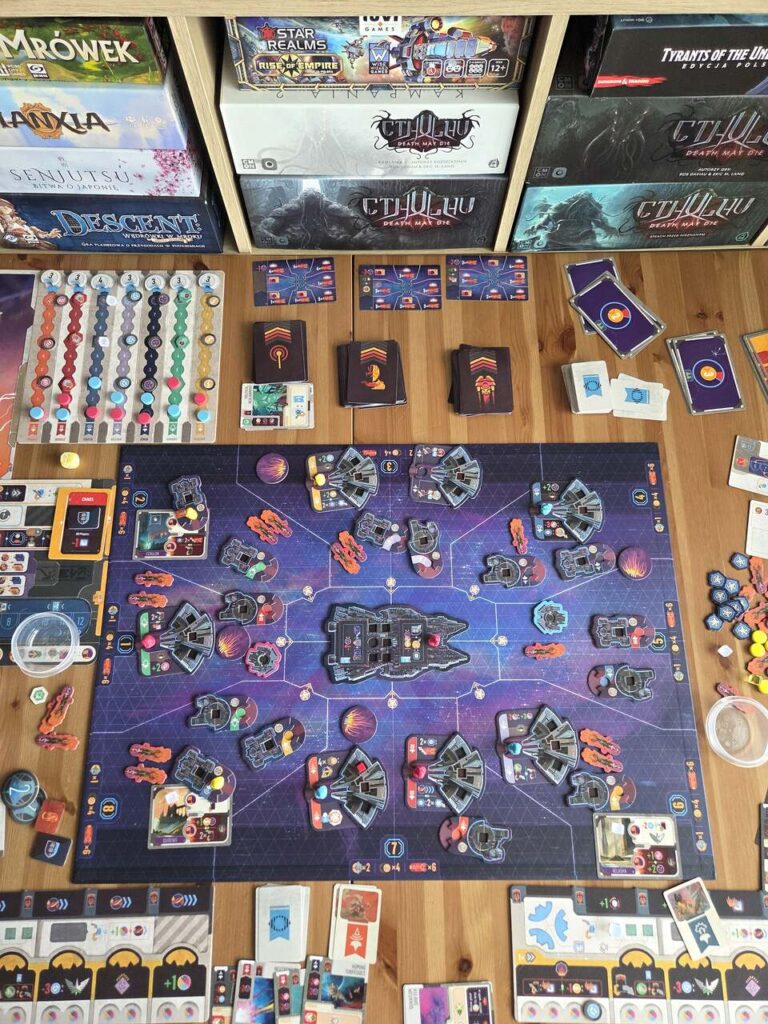
That’s why, during a game, we’d often make deals like this: “Okay, you head to Sector 4 and take out those ships, and I’ll set up a shield to protect Sector 7.” I love moves like that! Even though we’re ultimately competing against each other, that hint of cooperation really ramped up the excitement during the game.
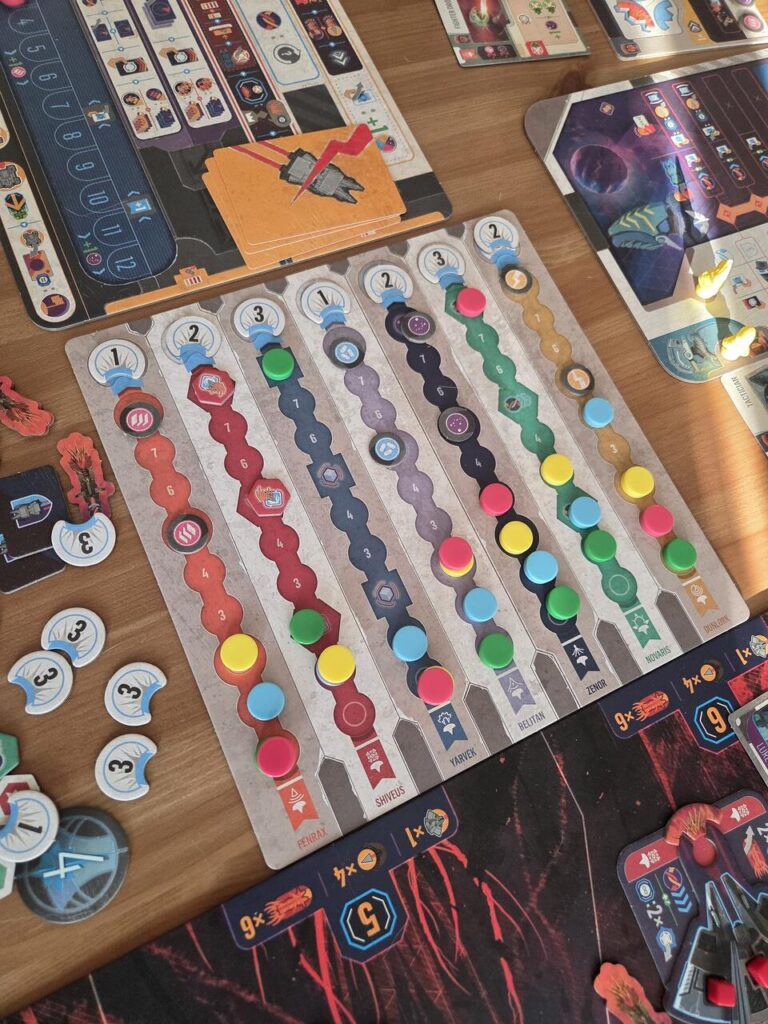
Another element that made it worth facing the forces of Voidborn was the competition for the favor of the great houses. There are seven of them, and each provides different benefits as you gain influence on the tracks.
This is where the most interesting element of the game comes in. Our battle for influence will take place in secret. Both at the start of the game and throughout its course, we’ll acquire secret influence cards. These increase our point multipliers at the end of the game and indicate which house we should focus on. Since most of the scoring is based on supporting factions, the fact that we do this in secret forces other players to strategize. They’ll do everything they can to promote their own houses and, in the process, thwart the plans of others.
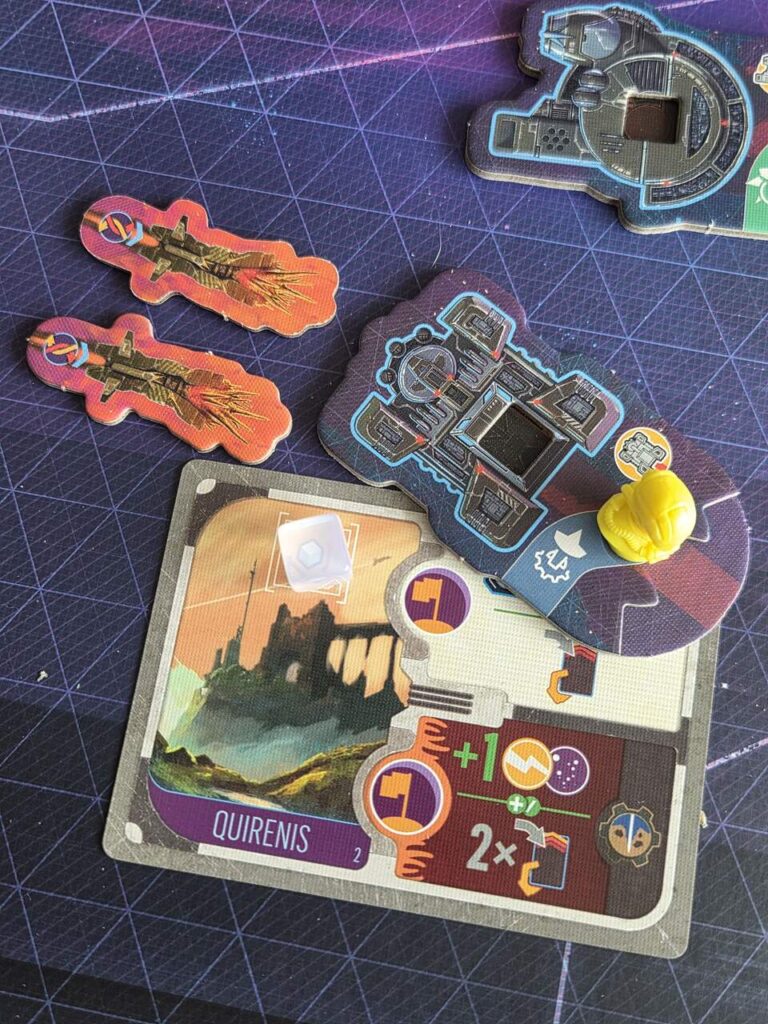
There’s no shortage of little mischief here where we can deliberately weaken a specific house. That’s why it’s worth keeping a close eye on what other players are doing and who they’re supporting. It might also be worth teaming up with them to bring a house to greatness together and earn a ton of points.
Another aspect of Revenant that made me eager to take control of the crew was that I could keep developing them all the time. Our cadets could gain many special abilities that boosted their power, and the captain leveled up, improving his unique ability. We could also increase the strength of our frigate by adding new cards to it. All these asymmetric mechanics made every game we played unique. There were really a lot of development paths, and each one guided us in shaping our strategy. Sometimes we could also create great synergies that made our turns highly combo-heavy. I especially remember once when I destroyed 6 Voidborn ships in a single turn, which allowed me to surge ahead on the tactics track.
What Didn’t Keep Me Going
The Revenant’s setup was definitely a major hurdle. I had to learn a lot of symbols that weren’t always as intuitive as I would have liked. Fortunately, the glossary came to the rescue, explaining how virtually all the cards and actions worked. It’s just a shame that the rulebook lacked information on how the frigate boards work. Though that part is actually pretty intuitive. To streamline gameplay, I printed out a glossary for each player, since having just one copy constantly circulating among friends was definitely not enough.
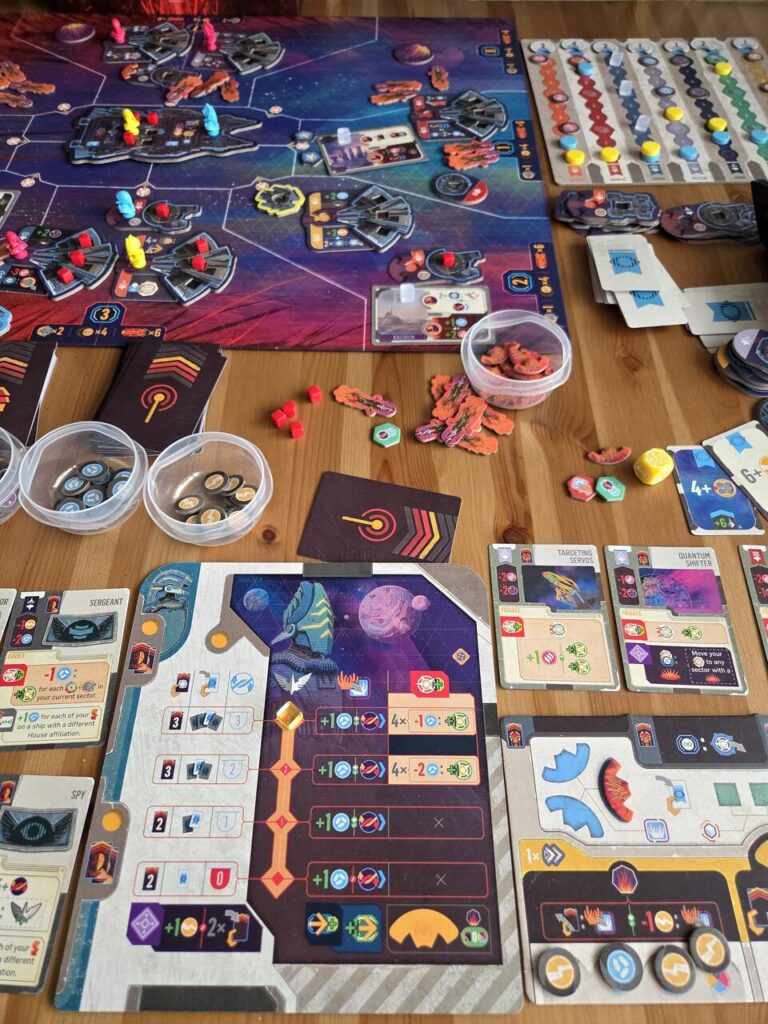
Another minor drawback is the tactics track. As we eliminate more Voidborn, we move up this track, which determines the order of play in future cycles or sometimes grants us additional resources. The problem is that once we reach the very top, further battles become theoretically unnecessary. It’s not that fighting and defending the great houses stop being worthwhile. I just wish the rewards for battles were more substantial. I’d like the game to constantly motivate me to destroy enemies and for this aspect to be designed in a more encouraging way.
Game Duration and Number of Players
I managed to play with every possible combination of players, and I have to admit that Revenant works well in each one. However, I enjoyed playing the most with four players. In that case, the players supported different houses, which made the game much more interesting. There was also more going on in terms of eliminating the Voidborn and protecting the entire fleet. With two players, an automa joins the game, but its only task is to occupy available spots on the ships. Controlling it is child’s play, so you don’t have to worry about any complicated additional rules.
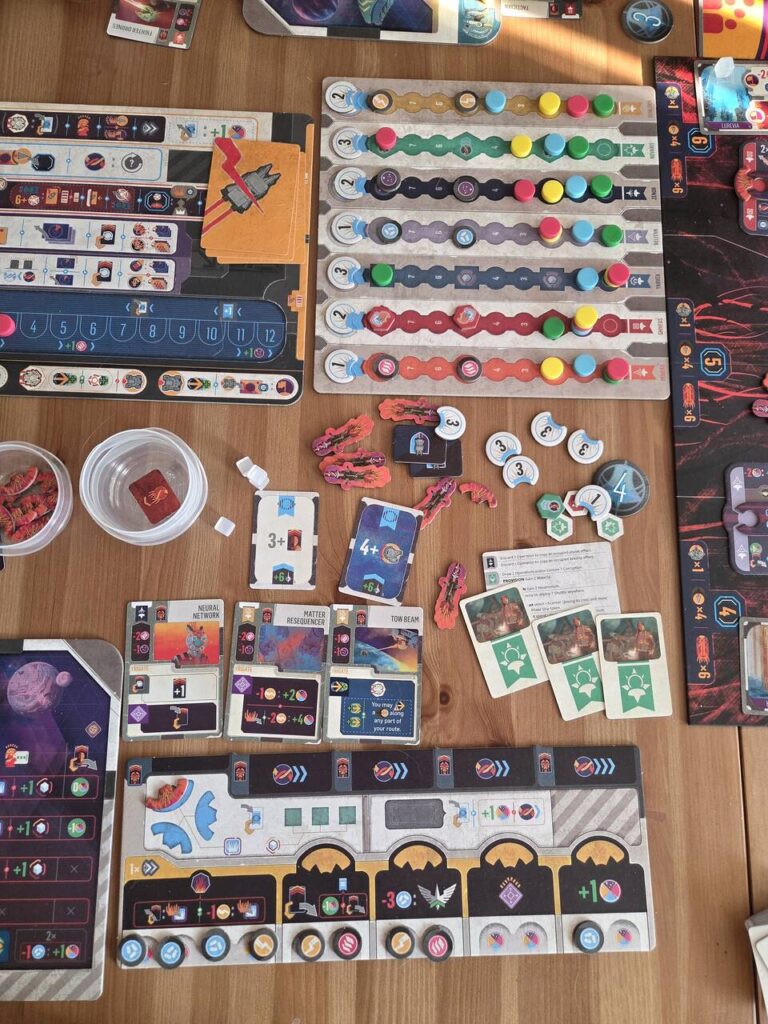
In my opinion, the playtime in Revenant is spot on. You can feel the pressure and the tightness that come from playing just 12 turns, but after every game, I felt both satisfaction and a slight sense of wanting more. The entire game ends at just the right moment, and with two players, it simply flies by.
Fortunately, the setup isn’t as long as in Voidfall. Although preparing the game still takes some time and, in my opinion, teeters on the edge of being worth the effort, it ultimately still falls on the good side.
Graphics and Component Quality
In terms of graphics, this is a game for Voidfall fans. I like it, and I was able to get used to the symbolism featured in this game.
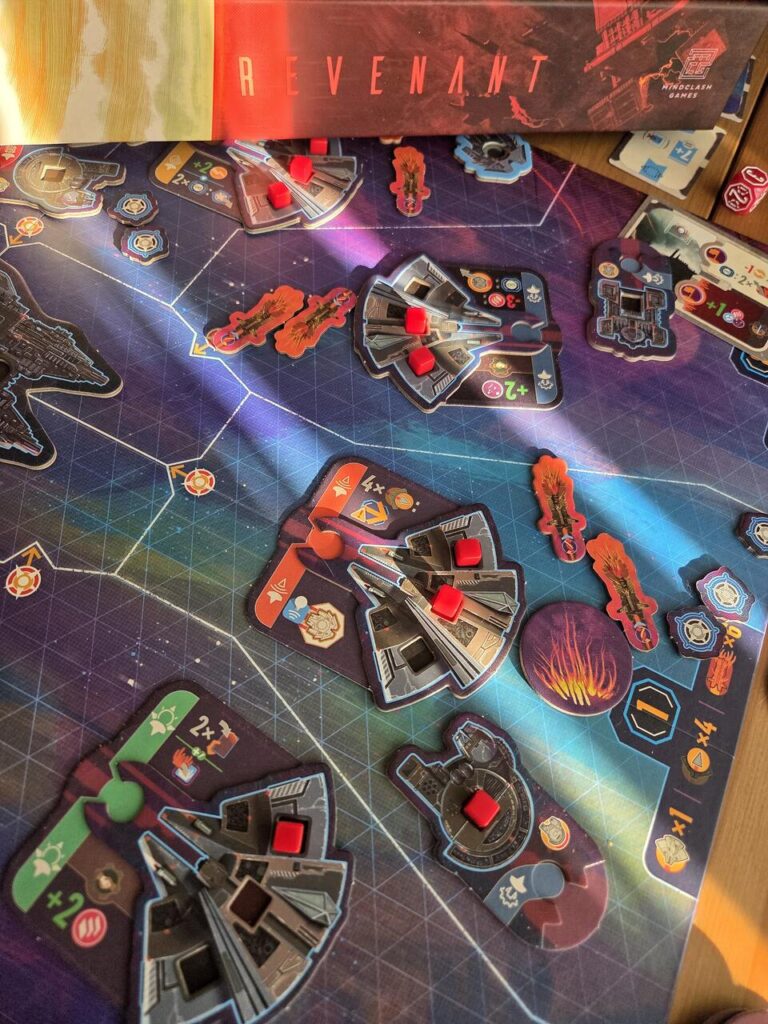
As for the components, there’s nothing to complain about except, as always, the insert makes gameplay a bit of a hassle. Whereas in Voidfall everything was secured with zip-top bags, here I have trouble closing the box properly. Something always sticks out.
Summary
It’s been a long time since I’ve played something as interesting as Revenant. The game skillfully blends Euro-style elements with a subtle touch of Ameritrash. Because even though we collect resources, climb tracks, and score points, it’s the battle against the Voidborn that makes it unique. This isn’t just another dry Euro game where the atmosphere is merely a facade. The fact that we have to work together to fend off enemy forces strongly reminds me of Tianxia, and those associations are very positive indeed.
I also really liked that I focused on something different in every playthrough. In one, I upgraded my frigate to destroy the Voidborn, and in the next, I ignored that and collected the secret influence of the great houses. Even after just a few playthroughs, I still can’t say for sure which path is worth pursuing and that actually speaks highly of this game.
Our games were also full of twists and turns, because sometimes someone would deliberately weaken a specific house, and other times a player would selflessly save the galaxy’s inhabitants by shooting down enemy ships like Maverick in Top Gun.
However, this uniqueness comes with a price you have to pay for playing Revenant. That price is the learning curve and the need to familiarize yourself with all the symbols. It’s not an easy task, and you have to be highly motivated to master all the possible maneuvers.
Final verdict: It was worth jumping into hyperspace to escape the void of boring Euro games and play something with real atmosphere.
Pros
It’s supposed to be cooperation, but it’s not
Euro-style game with atmosphere
Developing Mavericks
A secret battle for influence
Beating the Voidborn
Cons
A universe of symbols
Just one glossary
Hey, your box is sticking out!
[Game provided by Mind Clash Games]