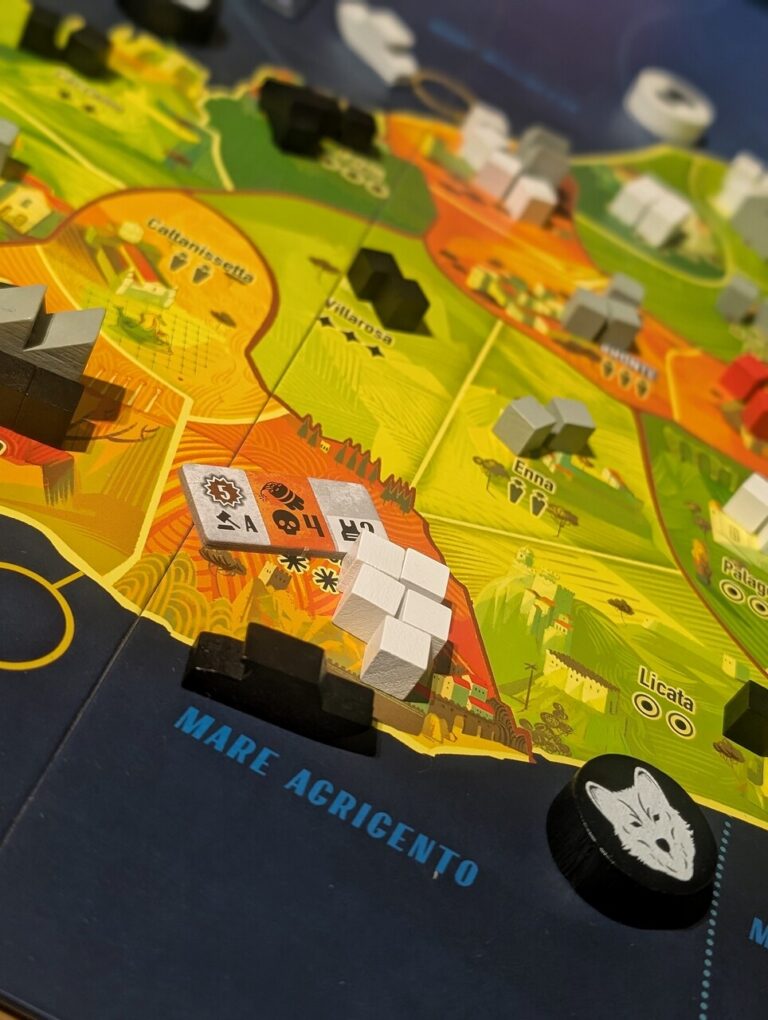
Great Western Trail New Zealand
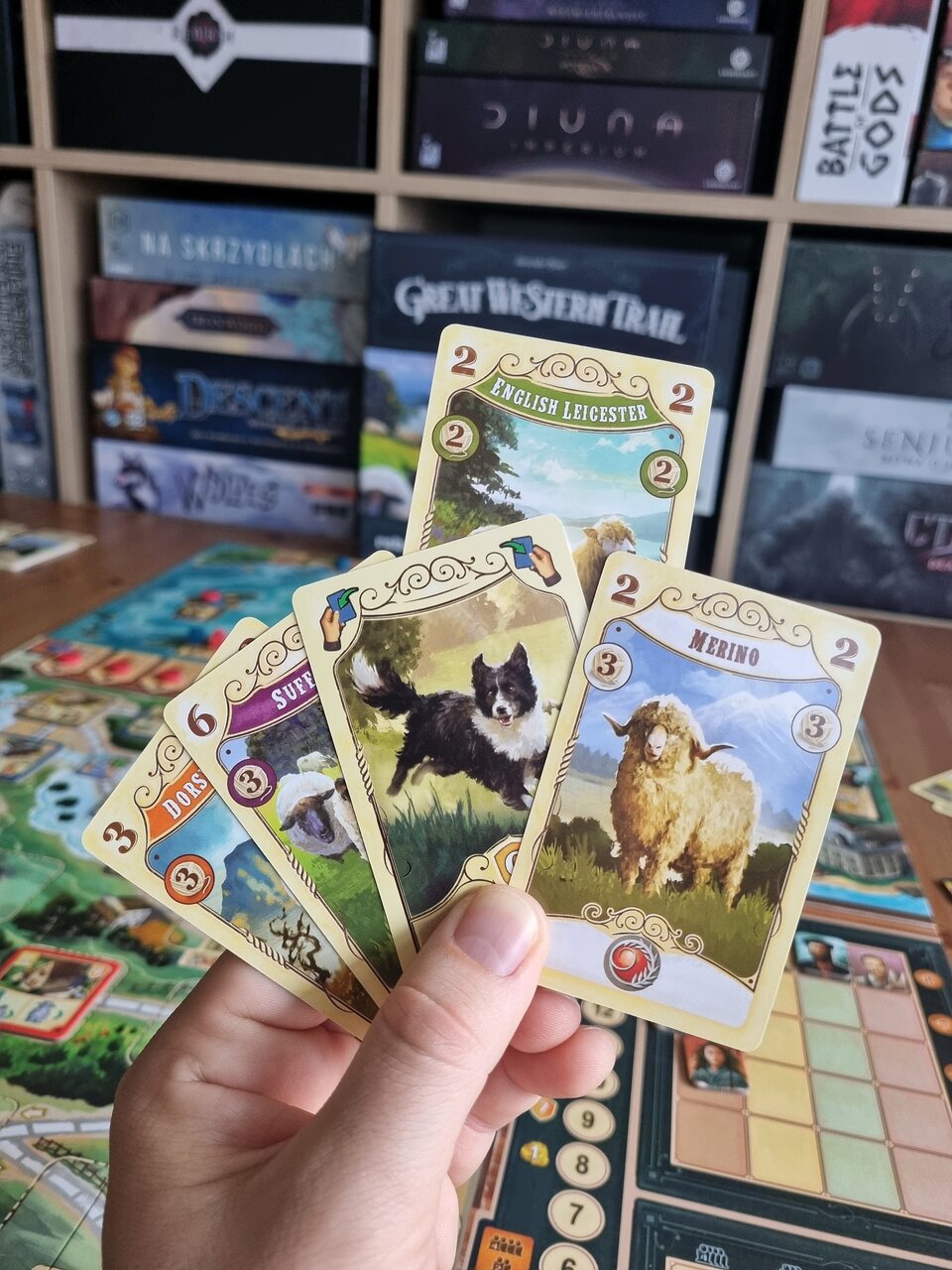
Was swapping cows for sheep a baaaad decision ?
Now that you’ve recovered from my corny joke, I invite you to read my review of the latest version of Great Western Trail. This time, the cows have been replaced by sheep, and the setting is the Land of the Hobbits, otherwise known as New Zealand.
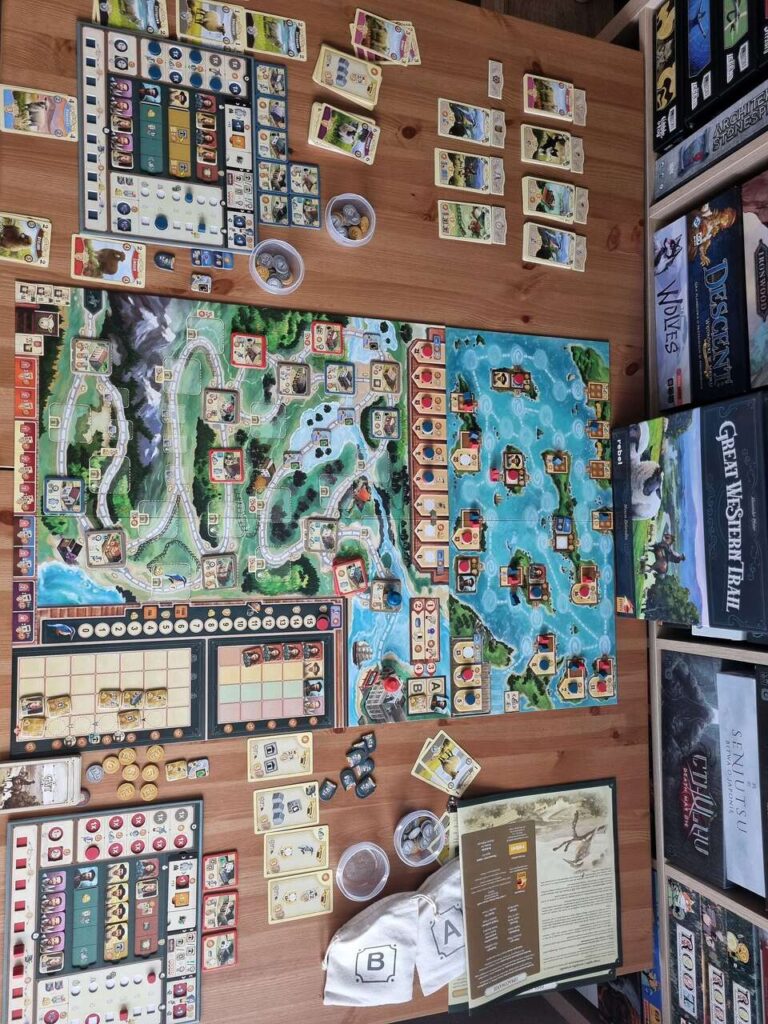
Essentially, in this instalment of the Pfister saga, we’ll be doing exactly the same as in the previous games. That is, we’ll be travelling to a single location to sell our hooved livestock. We’ll still be building our decks, constructing new buildings and fulfilling goals. However, as I mentioned earlier, we’re in for a slightly different livestock selection and some minor mechanical tweaks.
The sheep of our labour
The first major change is the replacement of cows with sheep. Sheep are fluffier, have more graceful poses, and have rather fancy names that I’ve never heard of before. As usual, we’ll use them to perform various actions and make deliveries. Thanks to a new action, we’ll be able to shear our sheep. This will give us a nice cash boost. We’ll also be able to develop this activity, and just like with deliveries, we can earn points for it.
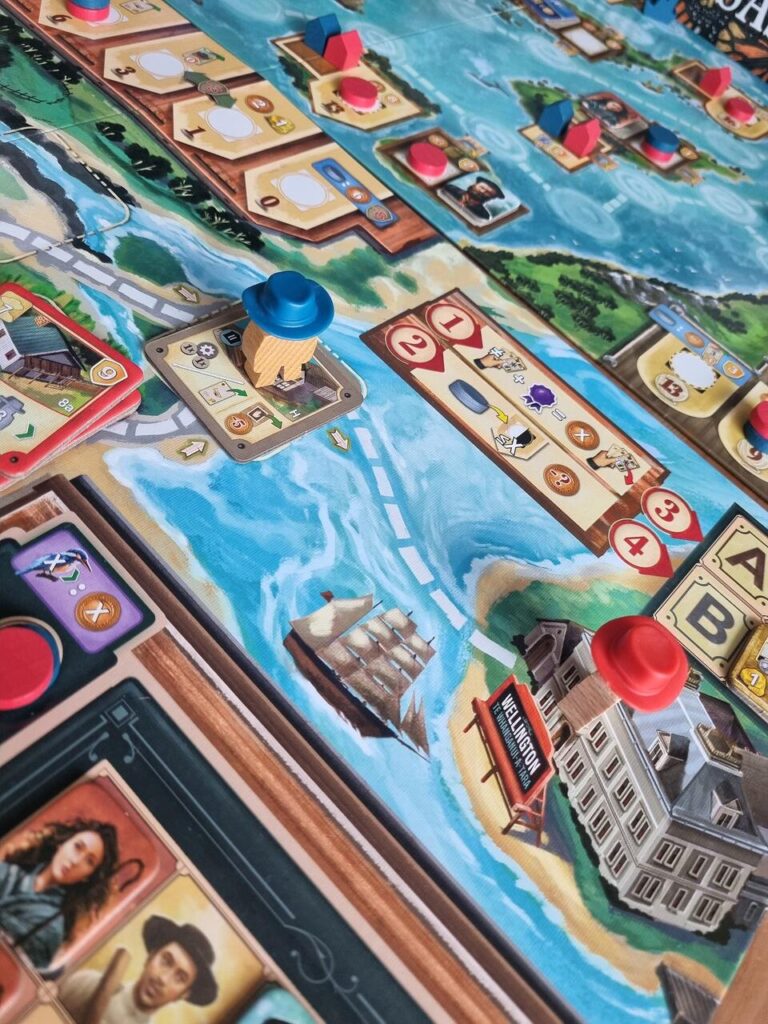
The shearing mechanic itself fits perfectly into the gameplay and acts as a counterbalance to the constant drive to move forward. This is because it also allows us to earn points and develop our discs. It also fits the theme very well.
This new feature also has a significant impact on the game’s economy. Whereas previous instalments were a bit tight on cash, here players won’t have any trouble with it. I wish it were like that in real life with board games, but unfortunately I’m not a sheep that can be sheared over and over again.
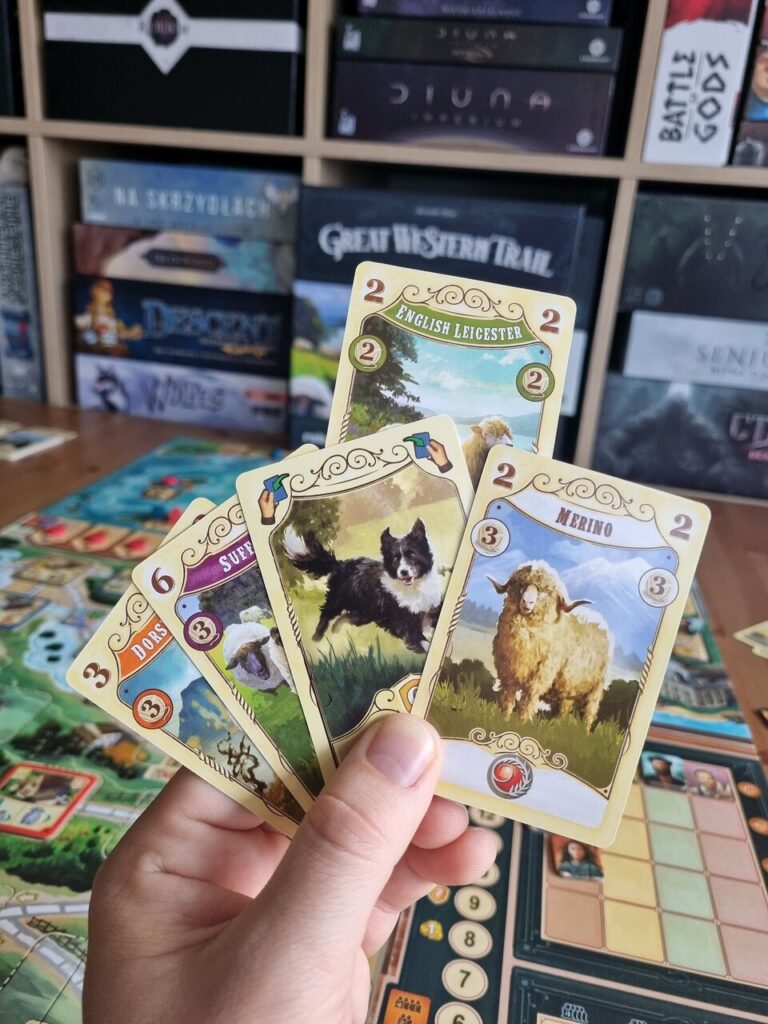
Shearing makes the game much easier and means we’re more likely to stop and make new purchases. On the one hand, it’s nice not to have to worry about cash, but I was used to making those tough decisions before whether it’s better to have a cow in the hand or one in the city.
Great Deck Building
In Great Western Trail, deck building has always been a very important aspect of the game. This is because managing our cattle efficiently allowed us to increase our earnings during deliveries. We also had several options for removing weaker animals to streamline our decks.
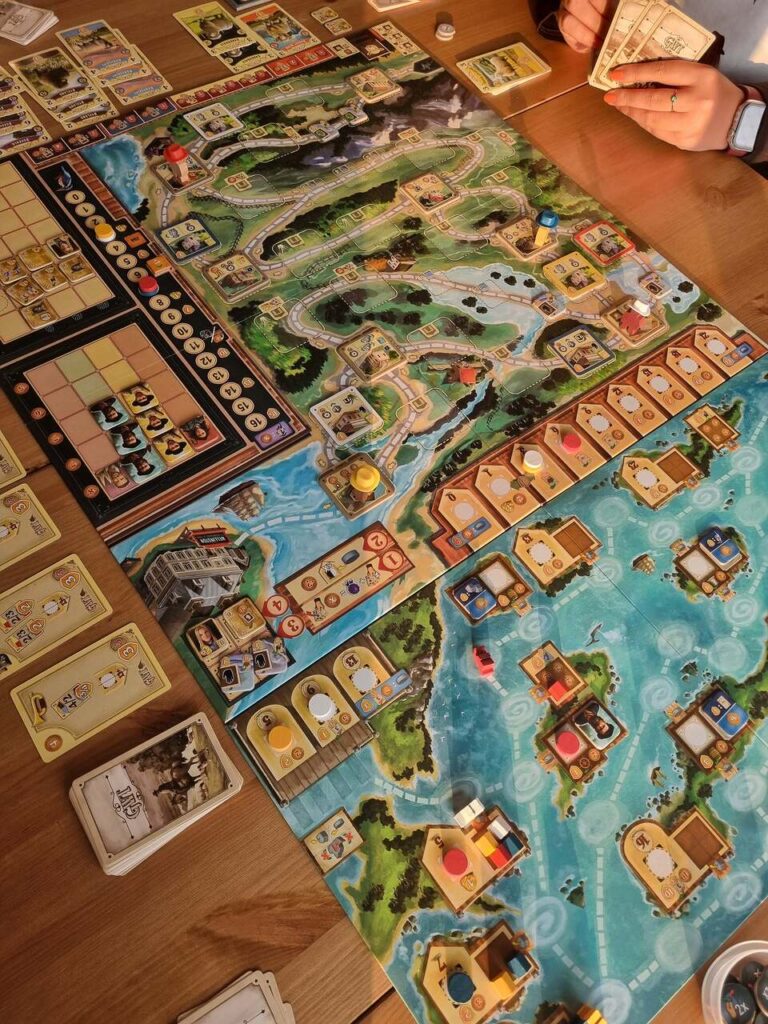
In New Zealand, it was decided to expand the deck-building options a little. Because, in addition to acquiring new sheep, we’ll be able to add special deck-building cards to our decks.
They provide free actions that let us earn cash and other bonuses. The great thing is that once you play one of these cards, you immediately draw a new one from your deck. This means they don’t take up space and let you cycle through your deck faster. If you play a few of these cards in a row, you can pull off some decent combos. Just like in Magic: The Gathering.
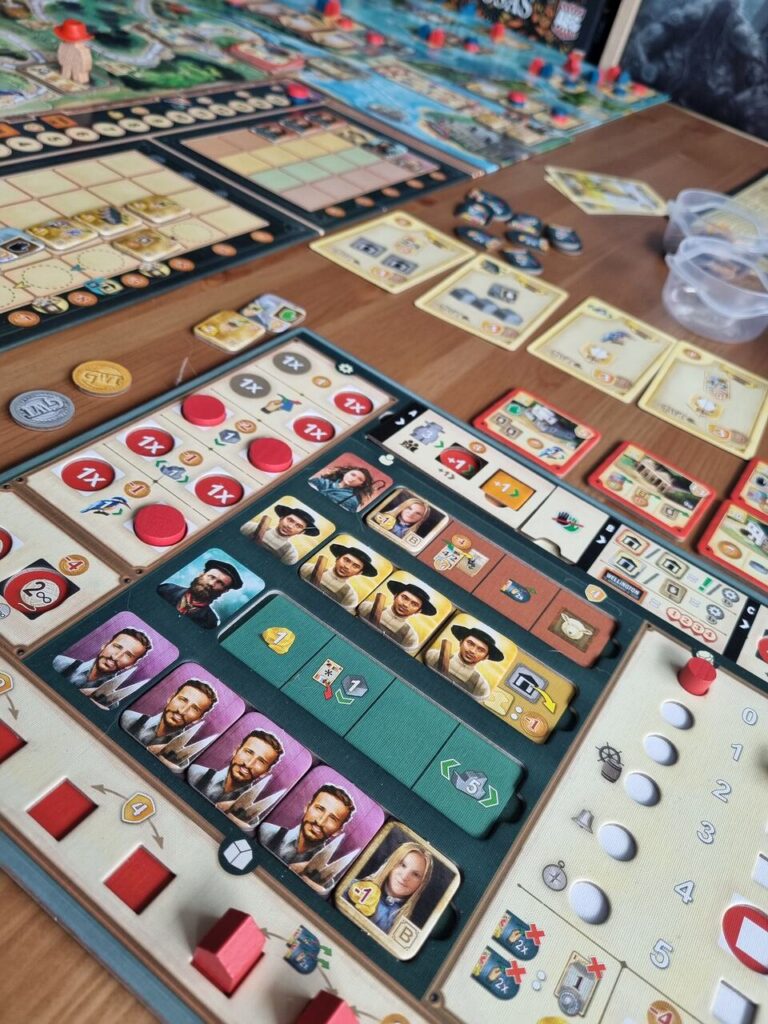
As for deck-building, there’s a slight downside in that it’s become a bit harder to remove weaker cards. To do so, we have to collect special tokens. We no longer have that option on our board.
Boat you play
Another major change is the replacement of railways with ships. This has significantly altered our travel plans, as we now have the option to sail in several directions. We are no longer restricted by railway tracks.
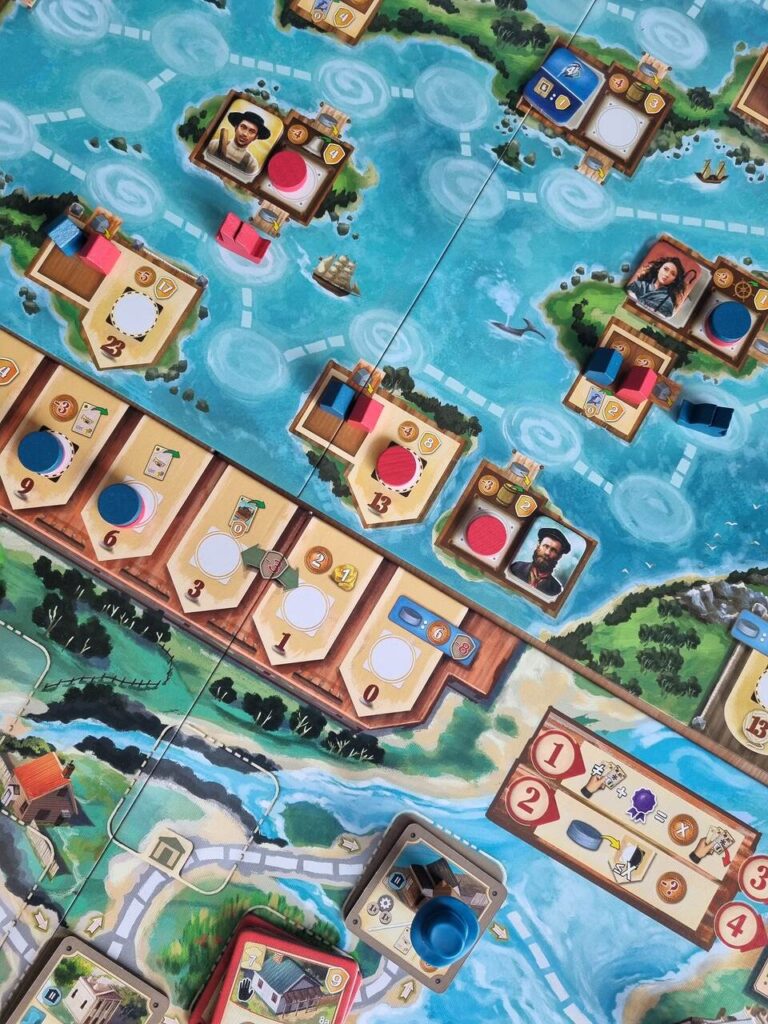
With our ships, we’ll be able to dock at ports to collect new scoring tokens and deck-building cards. At some ports, we’ll also be able to build warehouses, which, once constructed, will grant us various bonuses. This will also mean that during delivery or harvesting, we’ll be able to place our development discs in completely new locations.
Tracks of change
There are a few other new features in the game. A kingfisher track (sometimes referred to as a hummingbird track) has been added, which players climb to unlock the ability to construct buildings in certain areas of the board.
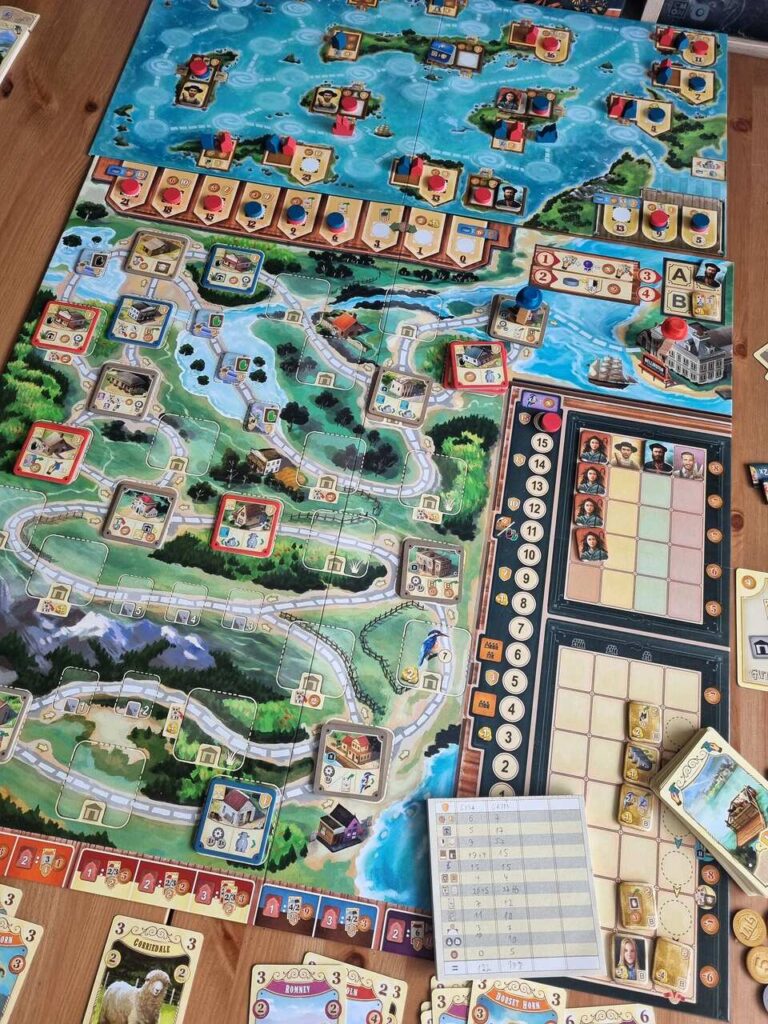
We also gain the ability to purchase bonus tiles that provide points, one-off actions, and the recruitment of a new universal worker.
A new currency in the form of gold has also been introduced, which we can spend to acquire deck-building cards and bonus tiles.
Number of players and playing time
Thanks to the changes introduced and the steady flow of cash, the game takes a little longer. We’re more motivated to stop regularly and reap the benefits. Whereas I used to finish a game in two hours, I now need to set aside at least three for the full experience. I’m talking, of course, about playing with a group of four. In my opinion, this game works well with any number of players, and a full team simply means a denser layout on the board.
Quality and components
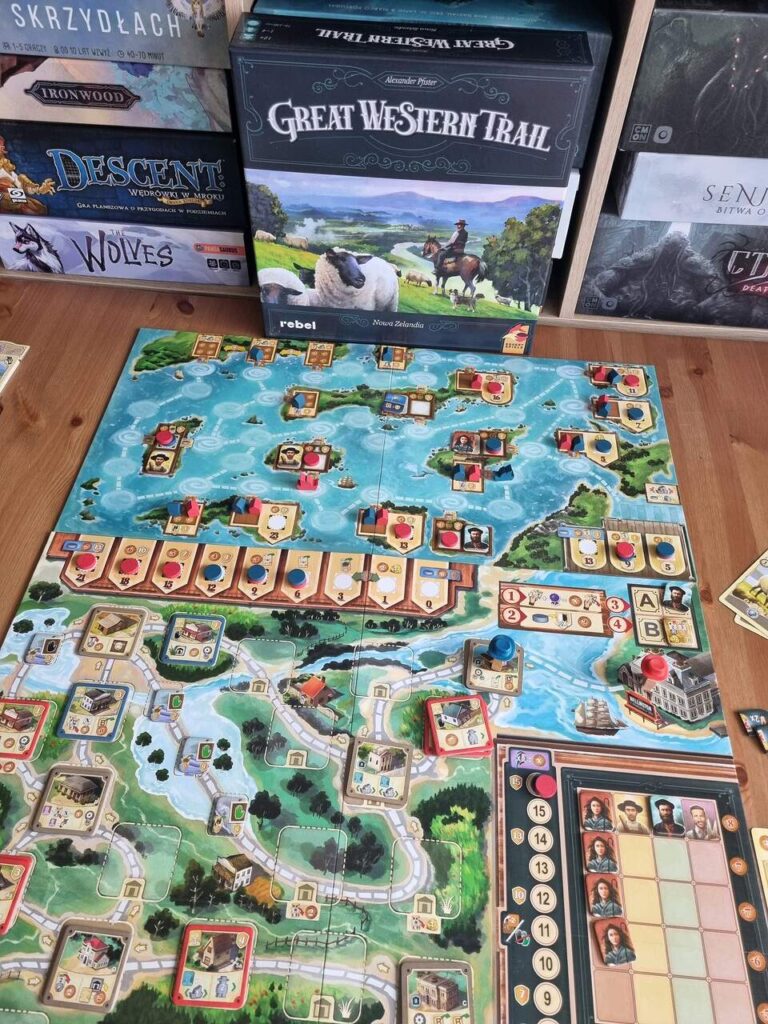
In terms of quality, the game is similar to the previous edition. In other words, there isn’t much space in the box, so you have to cram everything in somehow, and we’re still in for a bit of a Tetris challenge. My only complaint is that, because of this ship expansion, the game takes up far more space than I’d like.
Summary
I love playing Great Western Trail because I think Pfister has put a cool twist on worker placement by having us move our cowboy around, and he’s added one of my favourite board game mechanics: deck building.
To answer the question I posed at the start of my review, I can say it was a Great decision. While the previous instalments ran like a well-oiled machine, it is New Zealand that has taken the whole saga to a new, higher level. Because deck building gives us more options and is more complex. Travelling by ship allows us to take different paths. The sheep-shearing mechanic is very thematic and, thanks to it, we’ll be able to do more on our turns.
So, in accordance with Pfister’s First Law:
“If something is already good, make it even better”
Final verdict: This Great Western Trail Wellington is well done.
Pros
- More elaborate sheep building
- Different travel paths
- Shearing as a new action
- Bonus tiles
- The same game, only even better
Cons
- Where am I supposed to fit all this in?