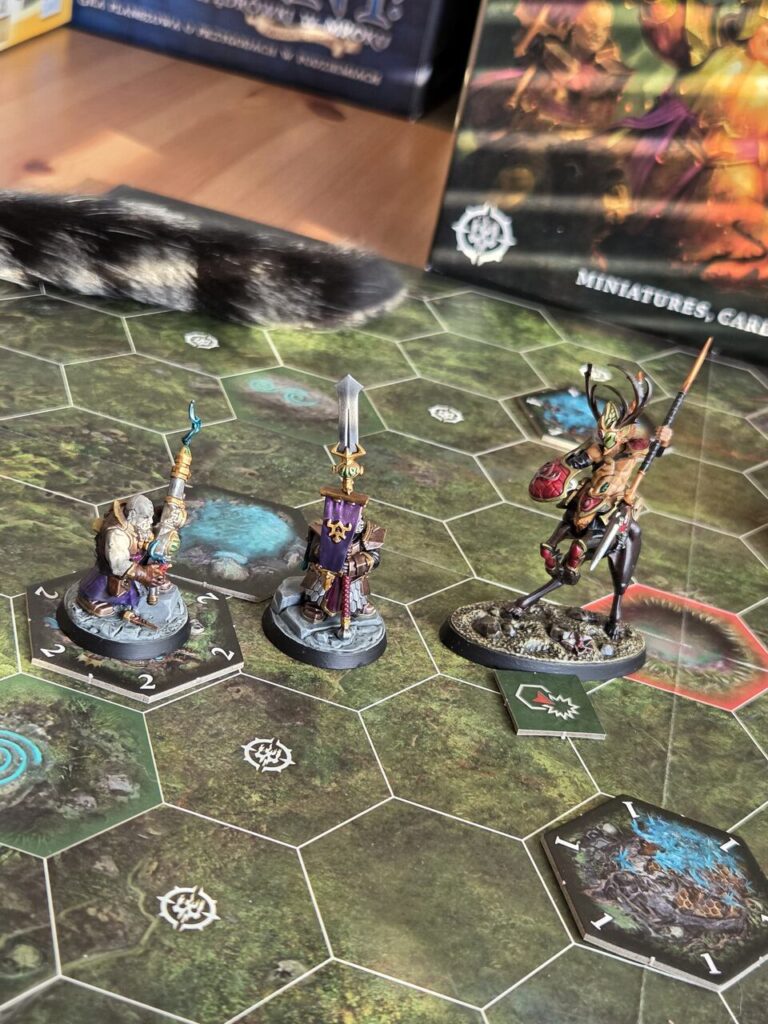
Horizon Forbidden West Seeds of Rebellion
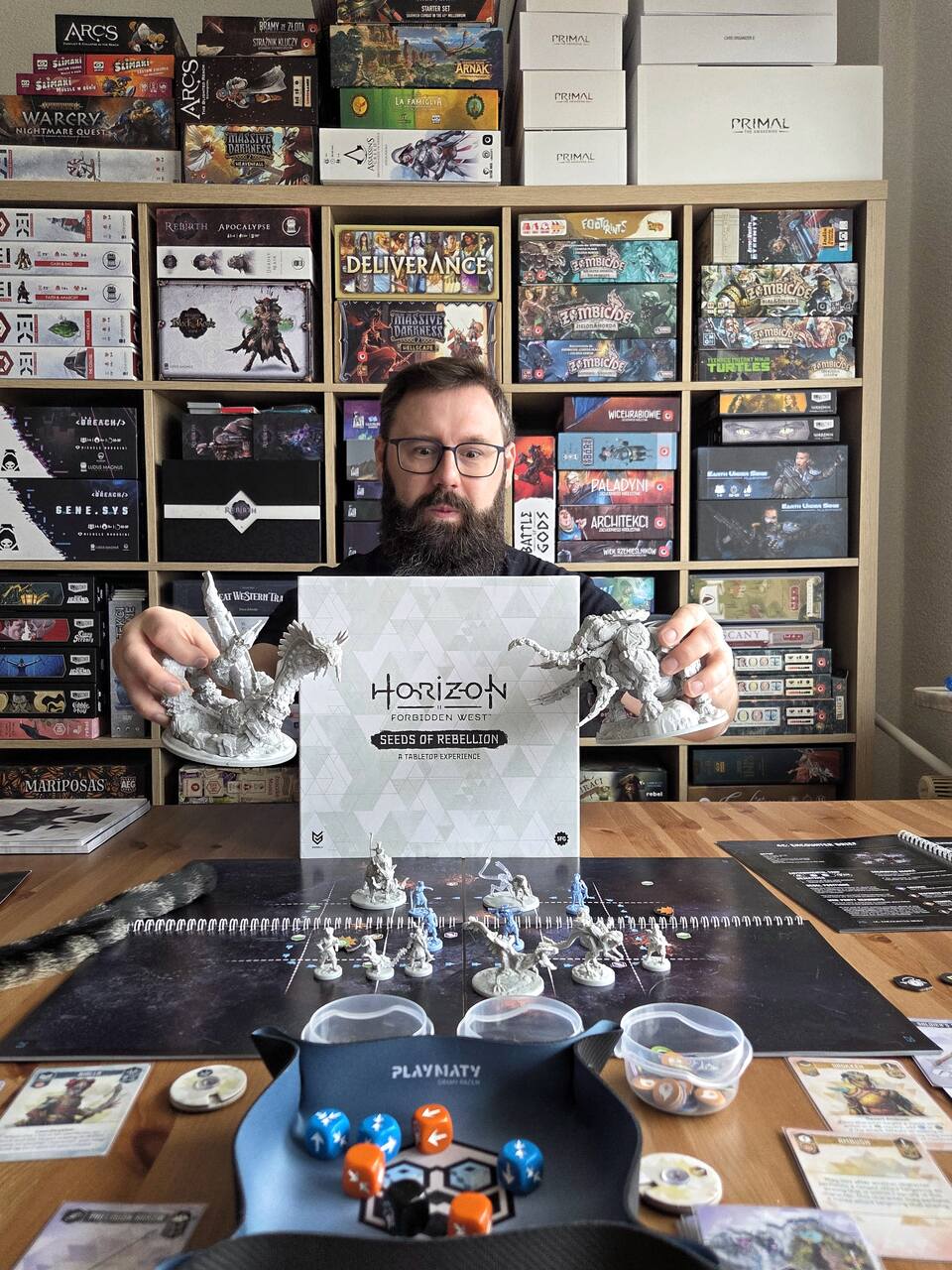
How can you defeat a Mecha-Mammoth that weighs several tons?
a) With a primitive bow
b) With a handful of dice
c) With the power of friendship
d) All of the above
Regardless of which option you’ve chosen, I invite you to read this review, which will broaden your horizons.
Beyond the board game Horizon
Horizon Forbidden West Seeds of Rebellion is a campaign game that takes us to a world overrun by mechanical beasts. In it, we’ll play as a team of brave Marshals whose mission is to uncover the mystery of the disappearing people and the source of the corruption plaguing the machines.
The gameplay is divided into two phases. In the first, we’ll focus on learning our team’s history and making crucial narrative choices. This is where we’ll develop our characters and visit numerous locations familiar from the console original.
The narrative of each chapter culminates in a combat phase. We’ll then head to the arena to hunt down powerful machines. To take them down, we’ll use traps, arrows, spears, and the power of friendship, which will be amplified by our mutual cooperation.
Forbidden History
We’ll explore the game’s storyline by reading paragraphs from the storybook. There, we’ll also make many choices that allow us to take different paths while completing quests. This will grant us various bonuses and advantages during combat.
The most interesting element of the story layer is skill checks. We use the same pool of dice for these as we do in combat. The book specifies the number of successes needed to pass a check, but we decide how many dice to roll.
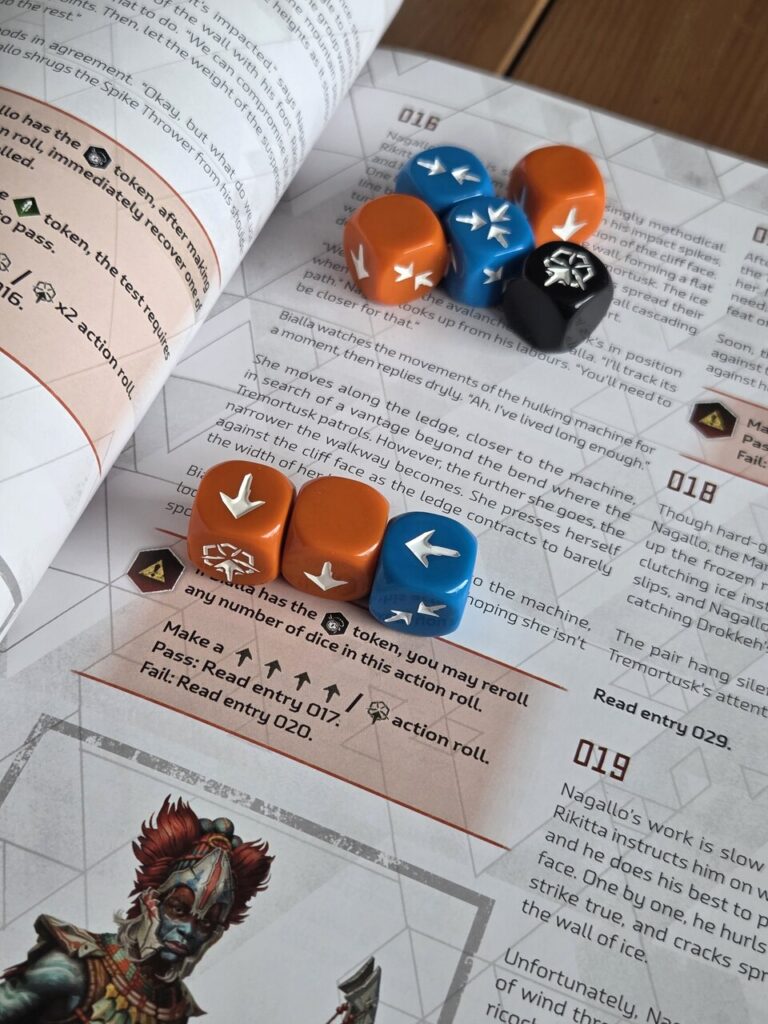
There is a catch, however, because the dice used are locked until the end of the chapter. The more we use at the beginning, the harder it will be to pass subsequent challenges. If the pool runs out, every next test ends in automatic failure, which had painful consequences for our party. Every test was tense, and we often debated among ourselves which dice to use for a given test.
I rate the storyline very highly, as it did a great job of immersing us in the world of Horizon. We particularly enjoyed the interludes featuring the characters’ commentary. This allowed us to better connect with their story and the events they experienced.
The only slight disappointment was the ending. The game offers three endings, but I have to admit that the epilogues didn’t differ much from one another. That was a bit of a letdown for us, especially since we spent many hours completing the entire campaign.
Character modification
During the story phase, we’ll regularly level up our party members. The game lets us upgrade our weapons, buy new armor, and add additional action cards to our decks.
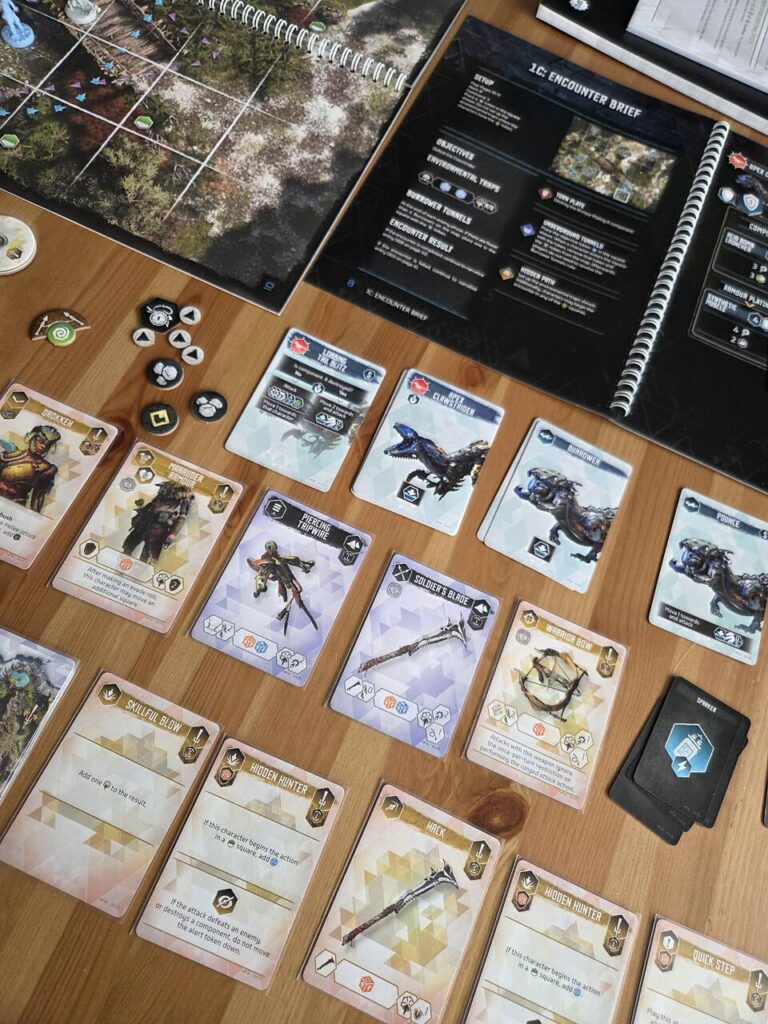
The developers deserve a round of applause here, because the modification system is incredibly robust. We can freely change weapons and equip upgrades, which significantly impacts our playstyle. I started the campaign with a character focused on sneaking through thick grass, only to eventually don heavy armor that allowed me to absorb the brunt of enemy attacks.
The action cards we add to our decks will also significantly influence our attacks and capabilities. There are truly many options for customizing our characters. For me, this is another strong point of the game.
Building the Die Pool
In the original digital version, combat was simply epic. It wasn’t about mindless shooting, but about methodically weakening opponents by destroying their components. Applying various conditions made our attacks deadly effective, and the entire mechanics created satisfying synergies.
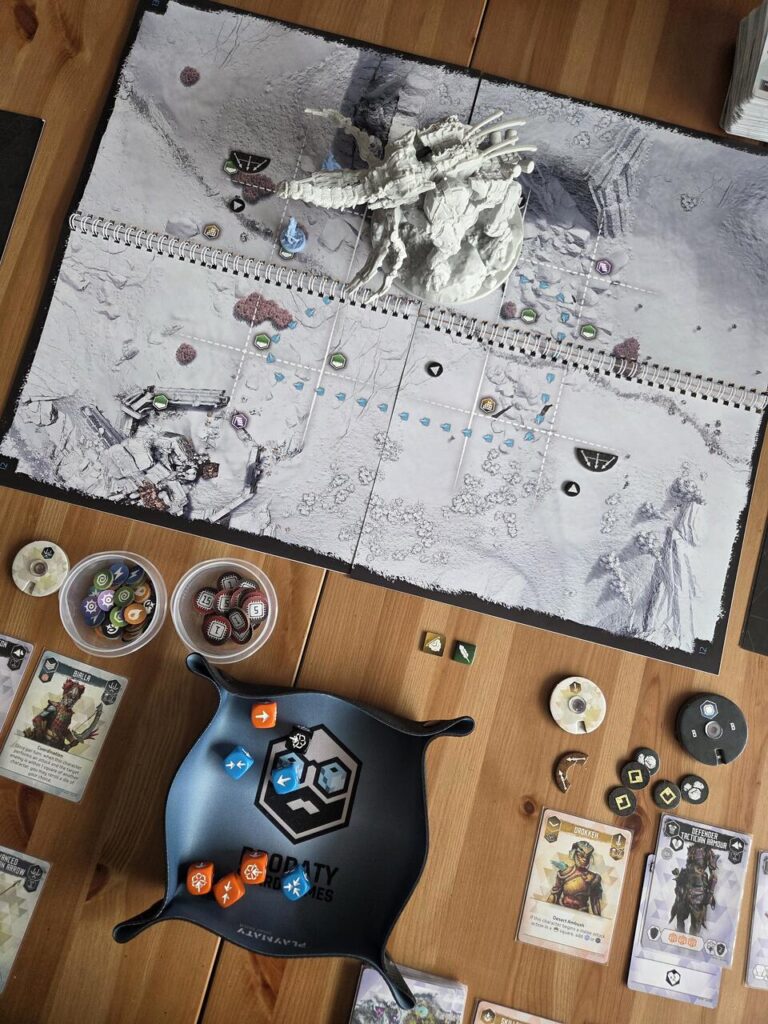
We get very similar capabilities in the board game version. Our opponents often have armor that’s worth destroying first to increase the power of our strikes. Dismantling machine components not only damages them but also significantly weakens their combat potential. Additionally, we can apply conditions to enemies that make subsequent dice rolls much easier for us.
The combat mechanics themselves remind me of Massive Darkness 2. When launching an attack, we build a dice pool whose composition depends on the weapon used. We can add cards from our hand to the roll, which add more dice, allow for rerolls, or activate powerful special effects. Everything comes together to provide immense satisfaction when we execute an attack that results oneshoting our enemy.
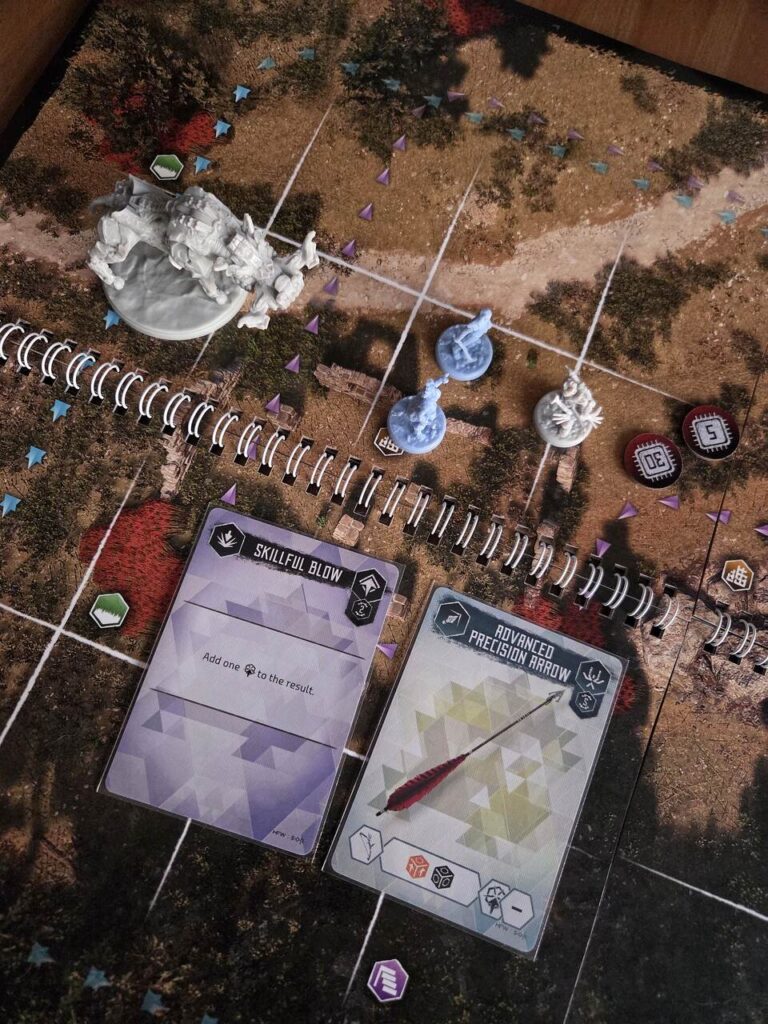
But let’s not get used to things being this easy. After all, our enemies aren’t just plastic bags designed to take our damage. Each one has its own behavior and special attacks. Just like in the game, we’ll be able to read their intentions by checking the back of their activation cards.
Another thing I like about Horizon Seeds of Rebellion is that combat is very dynamic. It will require us to constantly move and take advantageous positions for attack. Especially considering that we’ll have special squares that modify our attacks and defense.
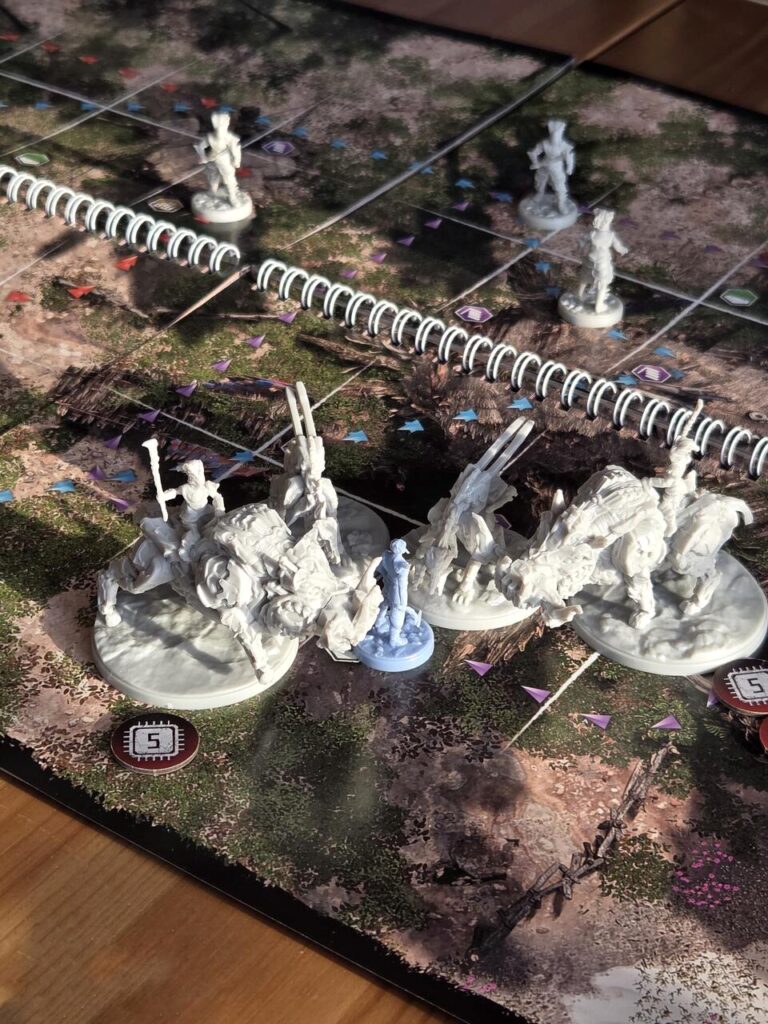
The battles themselves aren’t just about clearing the map of enemies. Each fight was spiced up with additional rules and objectives to fulfill. It definitely wasn’t stereotypical, unlike what I’m used to in such games. The boss fights also took everything to a whole new level. Man, we really had to work hard to take down those powerful beasts. But once we succeeded, you could hear the sound of a loud cheer erupting at our table.
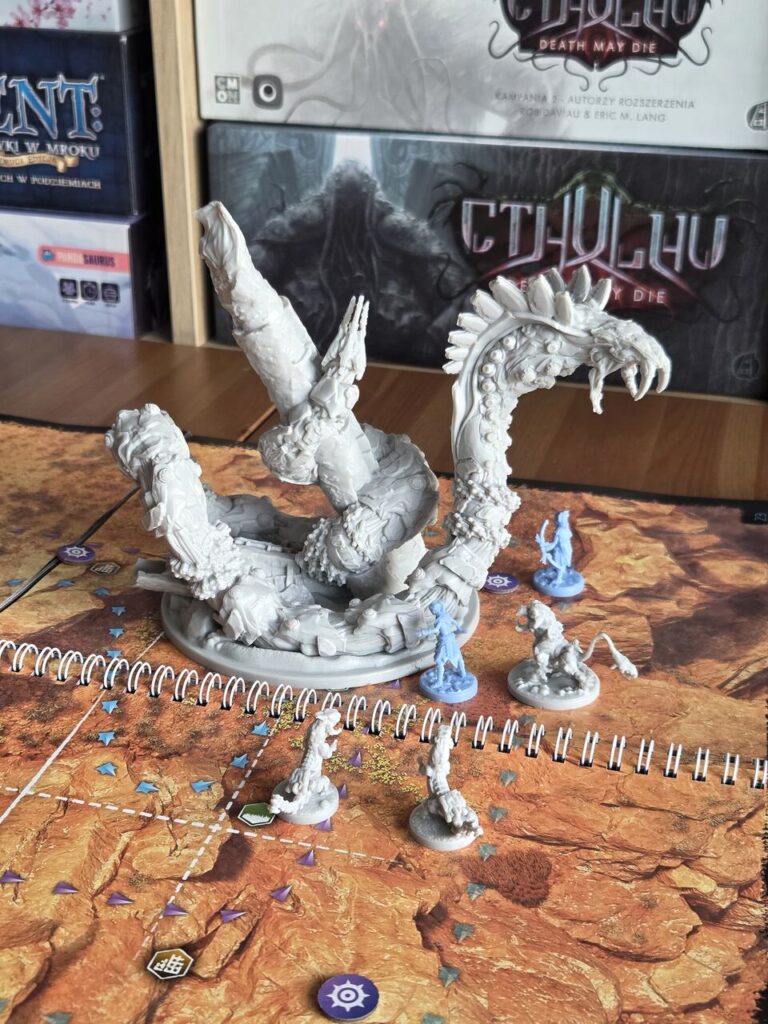
Before the fight, we could also set traps and check the path of our enemies’ patrol. Although we couldn’t stack 15 explosive lines here hoping for a grumble from the Thunderjaw, it still worked really well.
The only downside to the combat system is that the difficulty of battles can be heavily dependent on dice rolls. There were instances where a few critical hits in a row, combined with a successful roll on a command token, caused the main boss to fall almost instantly.
Unfortunately, this randomness worked both ways. When a mighty mammoth fired a 12-damage projectile at me and my defense rolls came up all blanks, I had no choice but to watch my wife continue the game. While we can influence the results of rolls using cards, you still have to be prepared for such extreme scenarios.
Atmosphere
I spent dozens of hours with Aloy on the console, getting to know her story and earning platinum trophies on each playthrough. I even completed those stupid challenges that tested my patience and the endurance of my thumbs. Most importantly, though, the board game really captures the atmosphere of Horizon. This is thanks to the brilliantly designed combat, which faithfully recreates the spirit of the battles from the digital version. The story also ties everything together nicely, presenting events related to the second part of the game. Even though I didnt meet my favorite red-haired warrior here, I still had a great time in the world of mechanical beasts.
Quality and Components
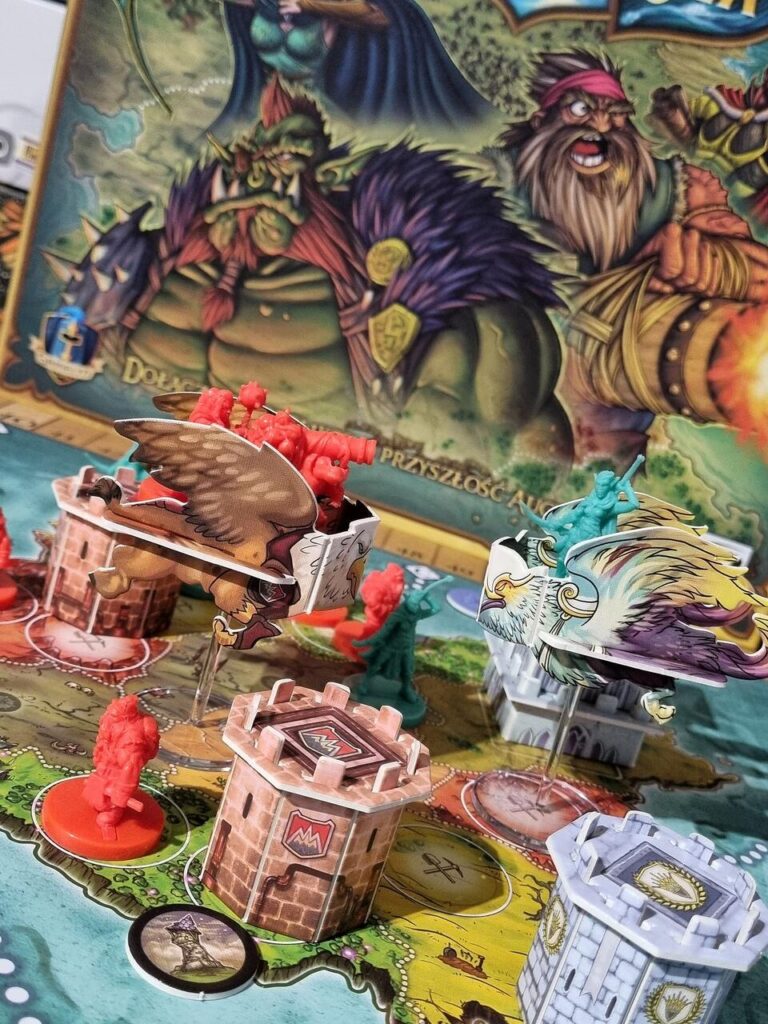
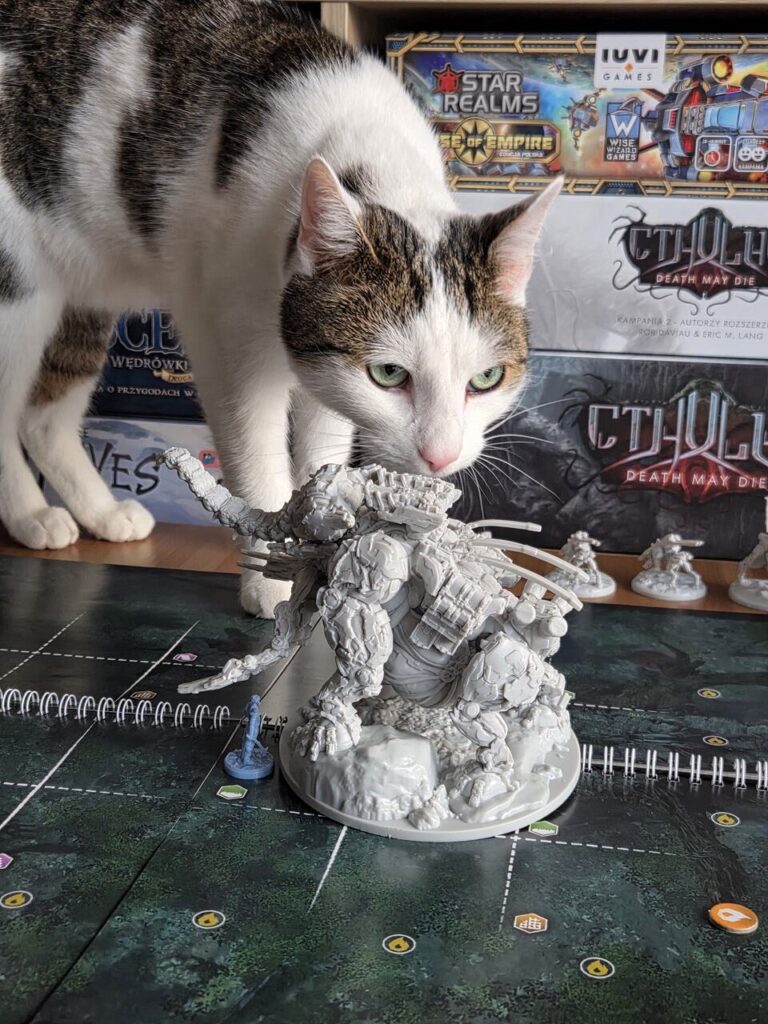
Have you seen those “expectations vs. reality” memes after shopping on Temu? I have to admit that I have similar feelings about the new Horizon. Let’s be honest the miniatures could look a bit better, and the smaller enemies could be a bit bigger. Though I won’t complain about the bosses, since they’re almost as big as my cat. It’s just a shame that the hero miniatures are so small that painting them is pointless. The details on the models also leave a lot to be desired.
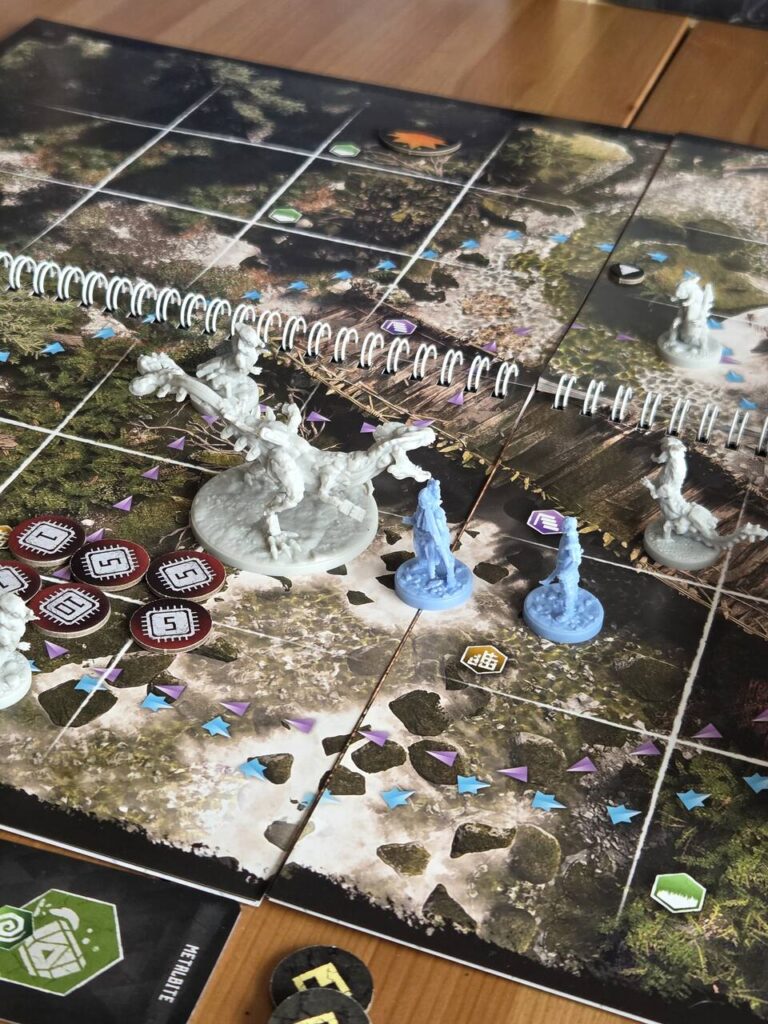
The insert itself could use some refinement. What’s the point of being able to easily cram the miniatures and dice into it if we can’t fit all the sleeved cards inside? In the end, I was only able to sleeve the character cards. The box also includes dividers meant to separate different types of cards, but they’re so small that they get lost in the deck, completely failing to serve their purpose. It’s just bad design.
Pulling out that huge snake can also be a hassle, because it gets caught on the mechanical mammoth and I have to pull it out at an angle. I never thought I’d write a sentence like that, but as you can see, I’m broadening my horizons.
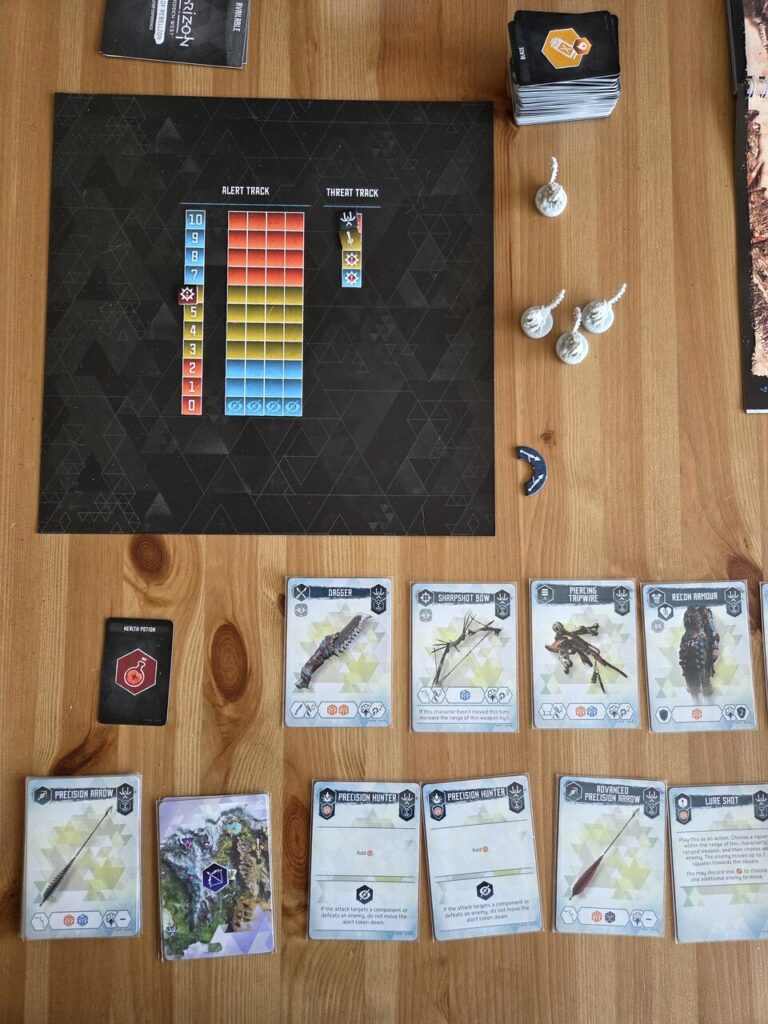
I saved the worst component of the game for last. I’m talking about the alarm board, which is as thin as a sheet of paper. It’s also unnecessarily large it could easily be cut in half. To me, this is absurd, and it definitely wins the title of the worst possible game component ever.
Bonus
In addition to the campaign, the base version of Horizon also includes several additional game modes. You can battle against each other, and there’s even a team-based version of capture the flag waiting for you. So even after beating the game, there’s still plenty to do.
Summary
I promised myself I wouldn’t write such long reviews anymore, but in the case of Horizon, I just couldn’t help myself. Right after The Witcher, this is my favorite game series, so I’ll keep this summary short.
Epic battles, arrows, traps, dice, cards, the story, the atmosphere, choices, and diverse scenarios all of these are ENORMOUS PLUSES. Only the miniatures could have been better, but that’s just how it is with crowdfunding games you never know what you’re going to get.
Final verdict: Horizon Forbidden West Seeds of Rebellion was more absorbing than Widemaws jaws!