Shackleton Base
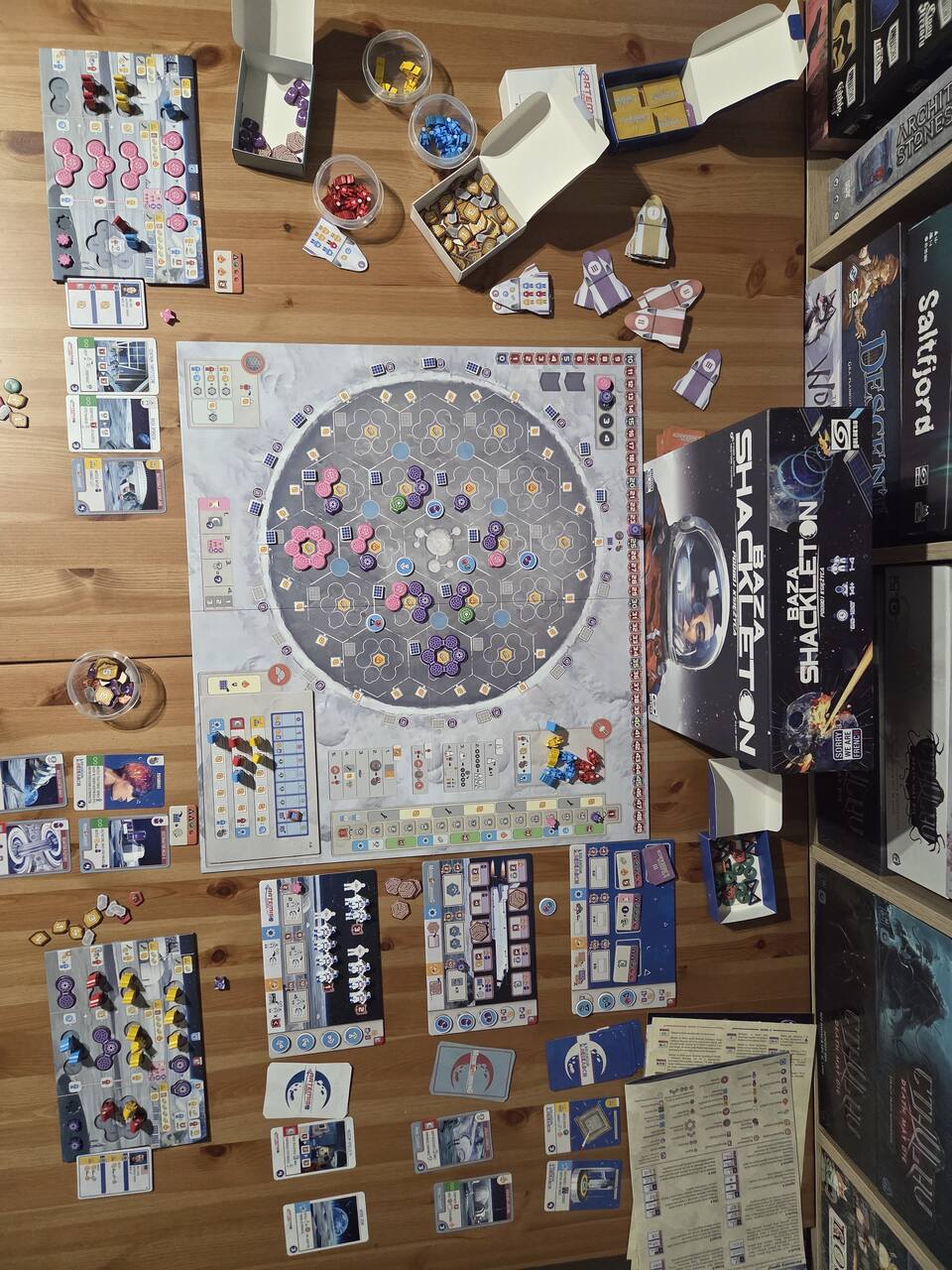
Can you combine area cratering with euro points?
Shackleton Base takes us on a tasty snack. In this game, we will expand lunar craters, collect colorful astronauts, enjoy “clear graphics,” and engage in a little area control battle. However, the most interesting thing is the competition for influence in three different corporations, which will diversify each game and provide us with additional methods of scoring points.
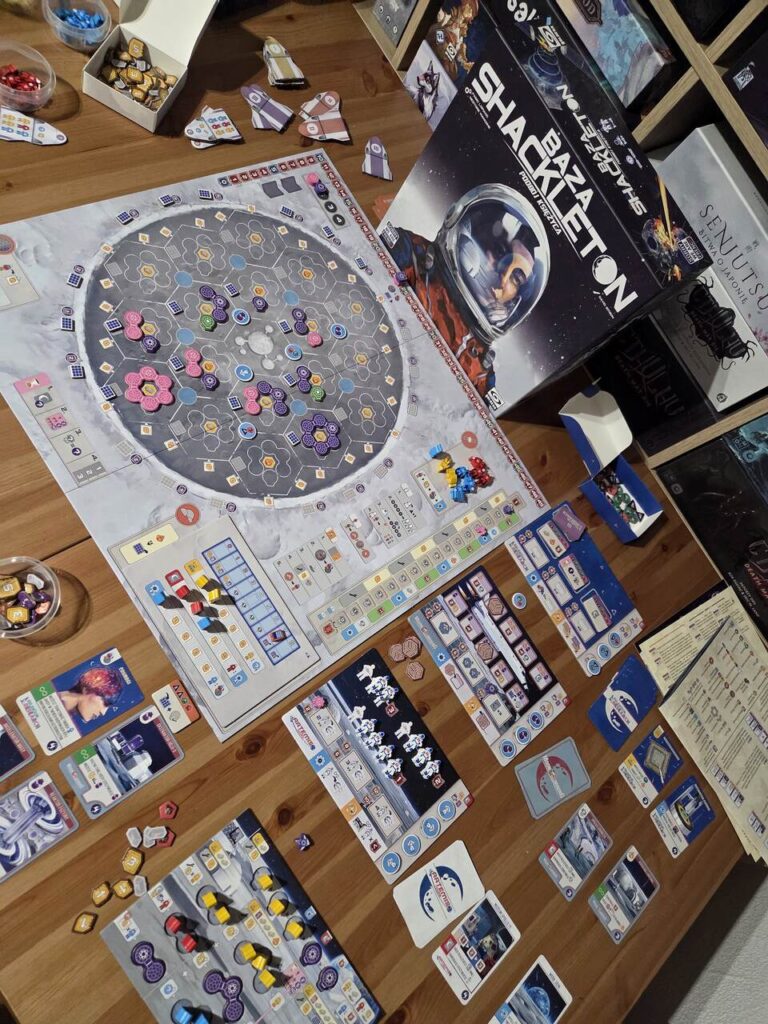
What was my experience with Shackleton Base like:
I’ll tell you, the beginning wasn’t easy. It’s not that the instructions are poorly written. In my opinion, they describe everything in detail and have lots of illustrated examples. The problem is that even though there are only three actions, each one changes slightly depending on the color of the worker we use. The same was true for the corporation actions, considering that each one did something different.
However, this initial confusion quickly disappeared in subsequent games.
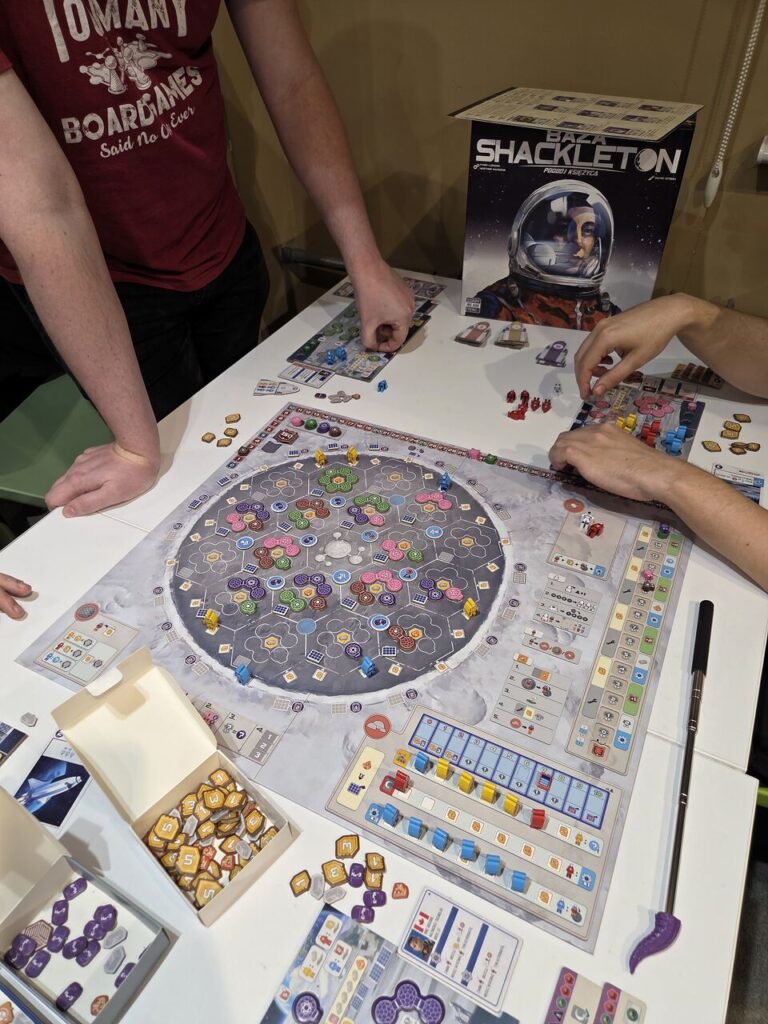
Teaching the rules for the Shackleton Base was also easier for me. I simply told the players that by performing actions in craters, they would receive resources, money, or supplies from a given corporation. In the command action, they would spend what they had gained from the previous action. Visiting the Gateway Station, on the other hand, was a support action that would allow them to find inhabitants for our base. This introduction definitely helped the players get started more quickly.
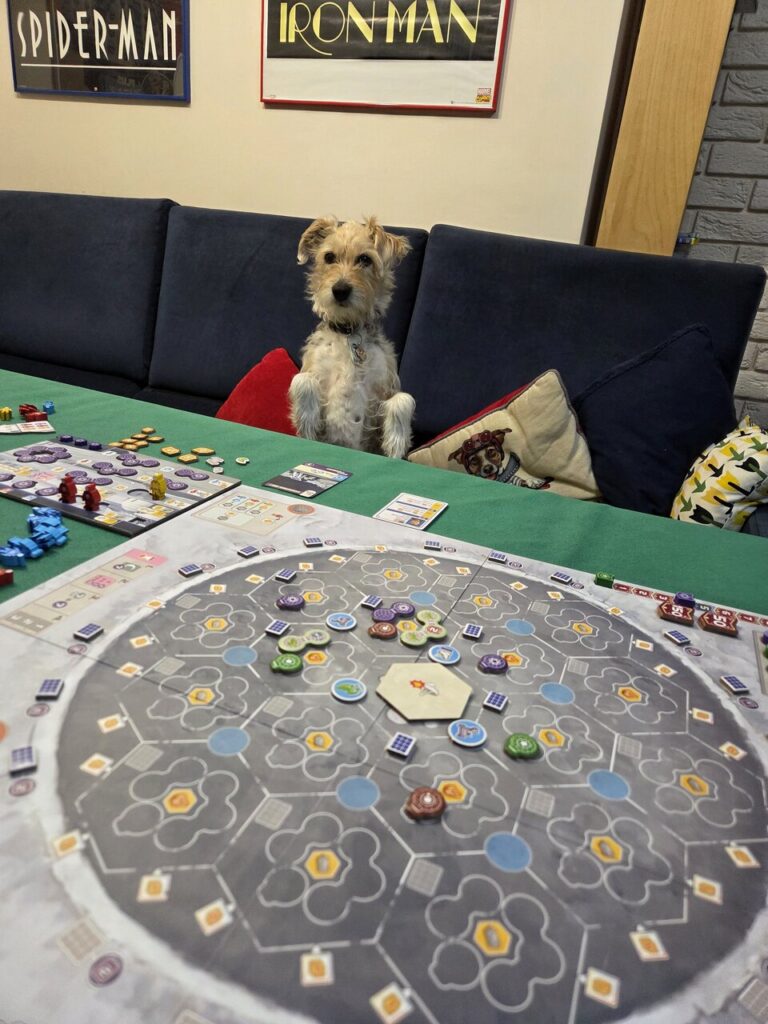
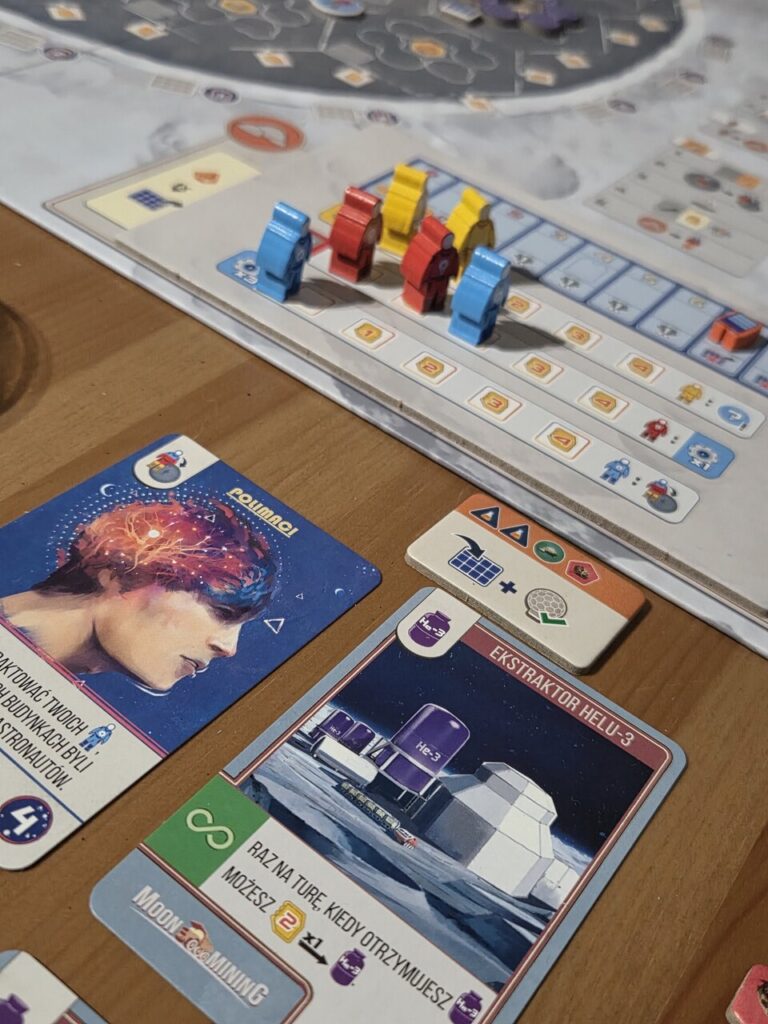
The thing that complicated our lunar experience a bit were the corporations themselves. Each of them provided us with additional points, had their own resources, their own projects to build, and mechanically introduced something unique. Artemis, for example, invited tourists to visit our bases and the attractions we had built there. Selenium allowed us to obtain helium, which we could spend on points and other bonuses. Evergreen Farms worked a bit like Eco Line from Terraforming Mars.
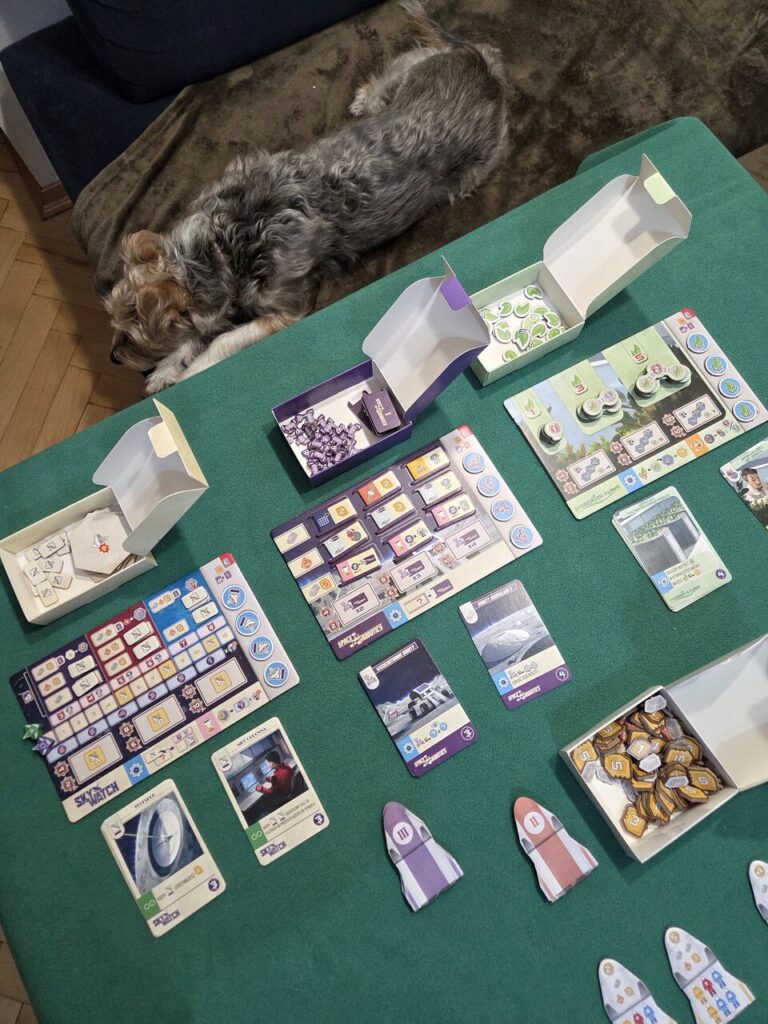
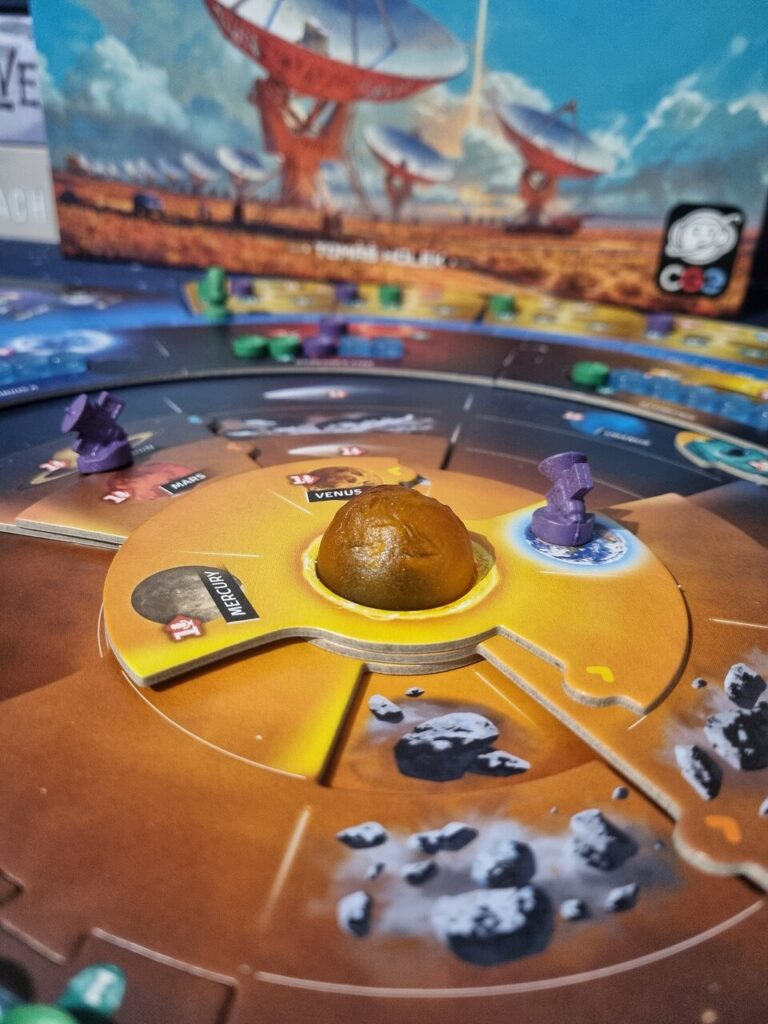
The best one is Sky Watch. At the beginning of the game, we place a face-down token in the middle of the board. At the end of the game, we reveal it and check where the asteroid will hit, destroying buildings in craters. During the game, by increasing our influence in this corporation, we will be able to check where the impact will occur and even prevent it. This turned the game into a kind of pseudo-cooperation, as the players were quite motivated to prevent this disaster.
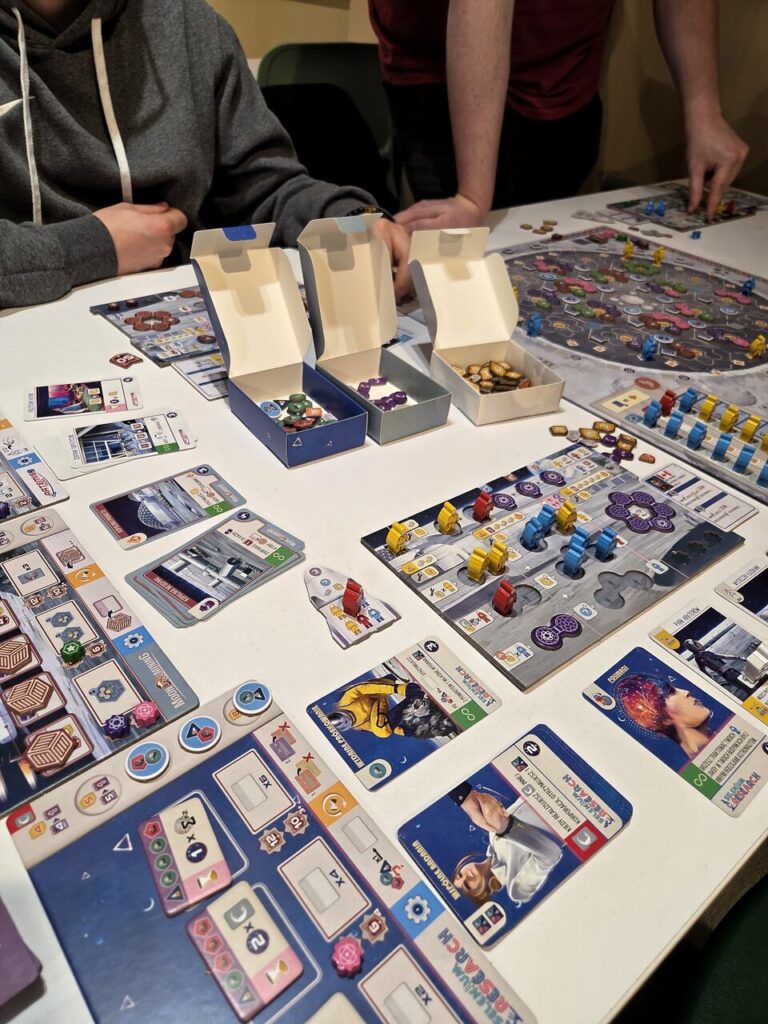
Each of these factions greatly diversified our gameplay. It’s also cool that we can freely mix these corporations with each other, and their choice generally affects our actions. Thanks to this, each game felt like a breath of fresh air.
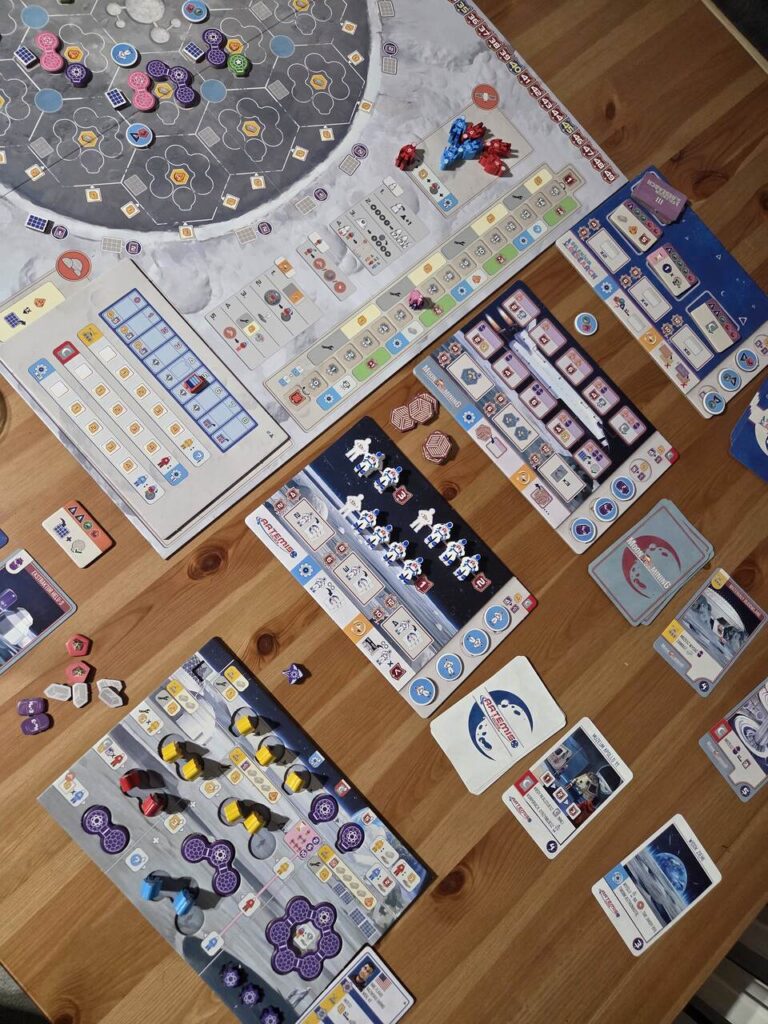
Another aspect I like about Shackleton’s Base is area control. We will fight for advantages in sectors and rows, taking into account the size of the buildings we have constructed. You can feel the rivalry between players, especially during the maintenance phase, when we collect most of the workers from the board, taking them away from other players. Sometimes, placing a single building in the right spot could cause quite a stir in the moon craters. Everything works very nicely here and is well thought out.
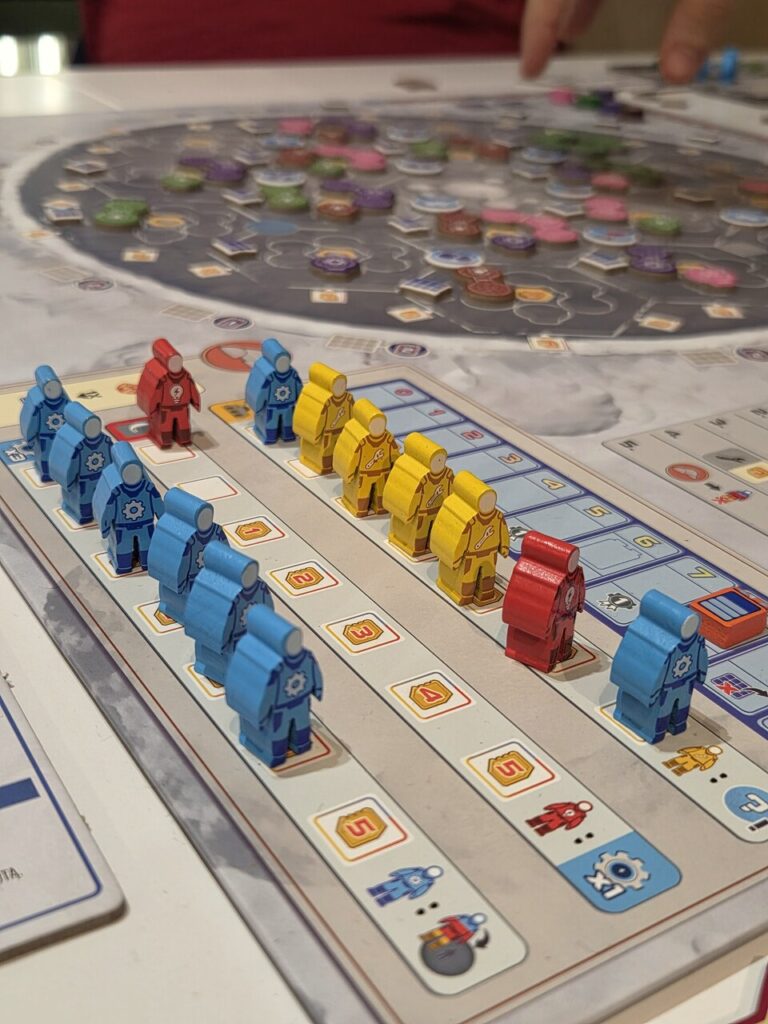
By expanding on the board, we also increase the number of resources obtained by all players. Because when someone places a worker on the craters, they get all the resources in a straight line from that worker. However, if we don’t have a building in a given sector, we have to pay other players. The number of credits we have to pay depends on the field we use. There are quite a few such small dependencies, and it’s just awesome.
Game duration and number of players
The playing time is very reasonable for this type of game. Our first game with two players took 2 hours, and subsequent games were much faster. With 4 players, you can expect to play for about 150 minutes. This is still not bad for this type of game.
The game is also better with more players, considering the area control aspect. This is because we can counter each other more in terms of building placement and gaining advantages. However, the game also works well with two players.
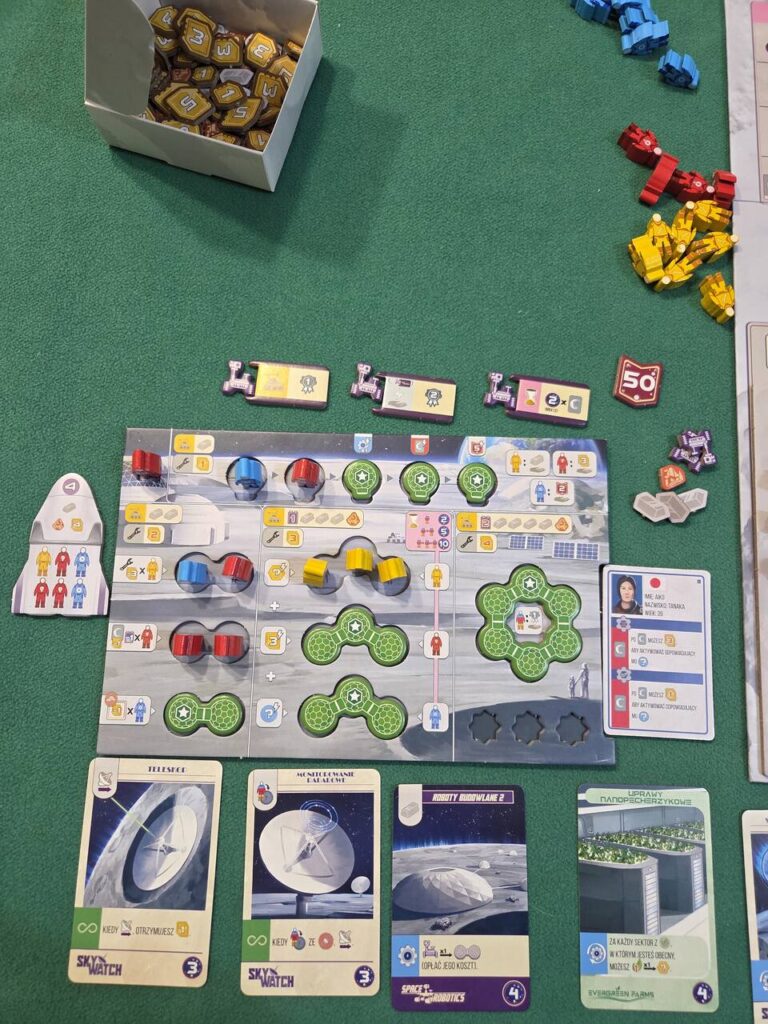
Sometimes, however, you could feel the downtime with four players when everyone was using their corporate command actions. Suddenly, you had to perform three different actions, which could be quite complex.
Quality and components
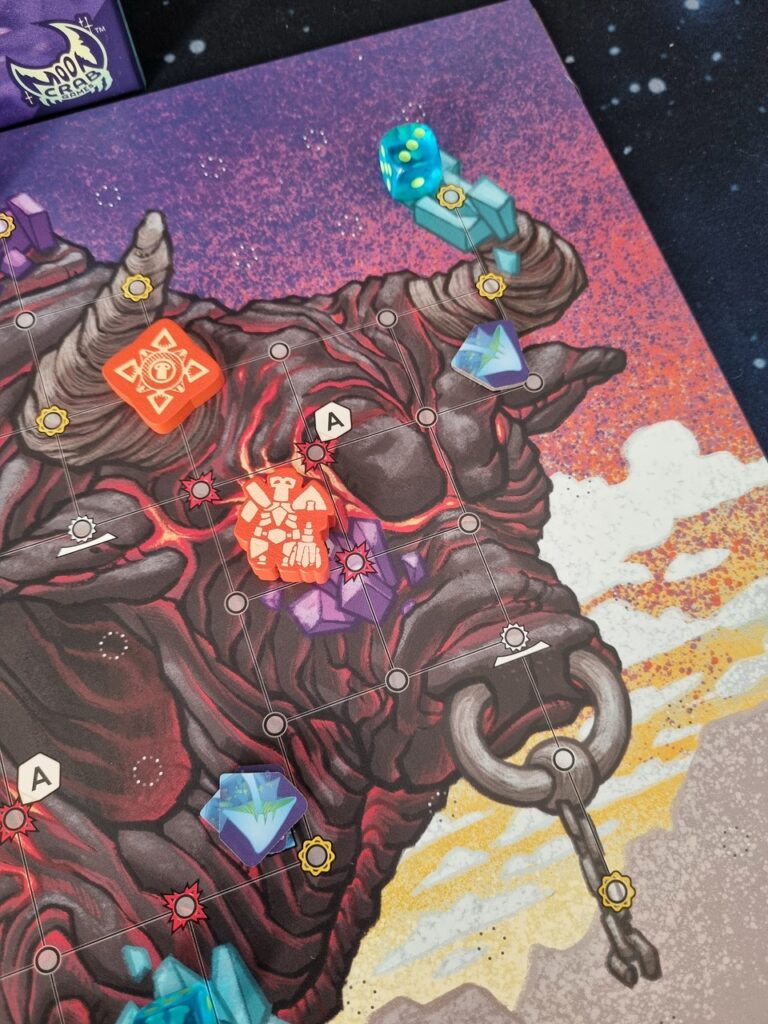
My little joke at the beginning about “clear graphics” referred to the fact that the board looks quite sparse and very gray. However, this is actually a plus, because we add color to it by placing our structures on it. I also really like how the game is packaged. All components are placed in special lockable boxes, and we do the same with the elements of each faction. This significantly speeds up the time needed to prepare the game.
Summary
At first, Shackleton Base surprised me a little with its entry barrier. I had to prepare myself well to play so that I could explain it properly to other players. However, the more I played, the more efficient I became at introducing other astro-players to the development of lunar infrastructure.
The gameplay itself efficiently mixes worker placement with area control. I really like that there are only three actions, and everything depends on the color of the worker we use. The aspect of controlling areas provides a lot of interaction between players, something that is rarely found in euro games.
For me, the essence of Shackleton’s Base is the various combinations of corporations that we can add to our game. Each one provides something different during the colonization of the moon and works very well with the game mechanics. They are modules that we can freely mix and match. This also gives the game potential for future expansions, which I would love to see.
Final verdict: Shackleton’s Base is a top-notch party mix.
Pros
- Area cratering
- Seemingly 3 actions, but everything depends on the color of the worker
- Different corporations mean 7 different modules that diversify the gameplay
- The more players, the better it gets
- Large hints
Cons
- Downtime with 4 players during corporate actions
[Game provided by Galakta]