Slay The Spire
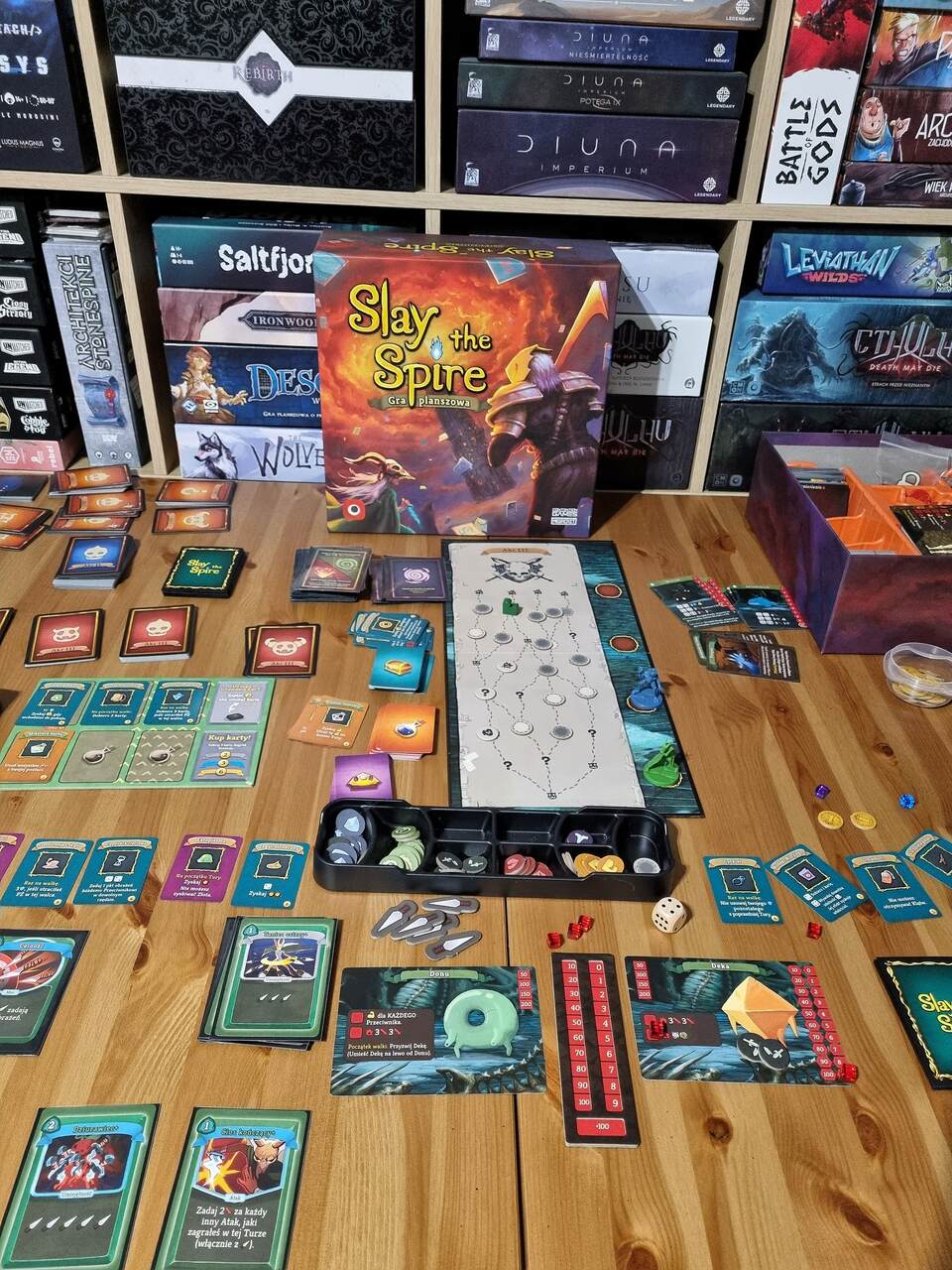
I have spent hundreds of hours playing Slay the Spire on both my console and PC. I was really hooked, and whenever I played, I always felt the urge to fight just one more battle.
Was the board game version also worth staying up all night for?
Climbing the Spire
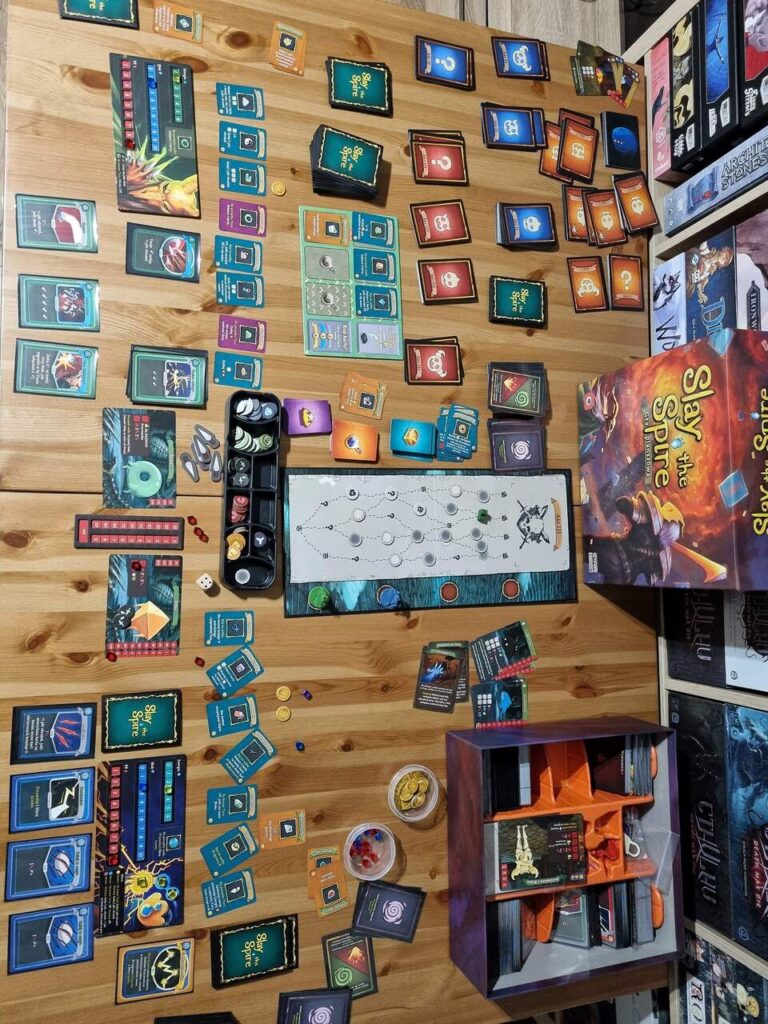
Slay the Spire is the story of our climb up the titular Spire to defeat the final boss. We start the game at the very bottom of the tower. As we climb to the next floors, we will have to defeat new enemies, encounter various events, go on a little shopping spree, and rest to regain our strength. At the top of each floor, a powerful arch-enemy will be waiting for us. It will be a test of our deck-building skills and everything we have done on that floor.
You fell, rise up
That’s why you need to plan your journey carefully to make it as optimal as possible. Because when we lose any battle, we have to start our climb all over again.
However, here the game uses the well-known and popular rogue-lites. You fell, rise up and start all over again. Even though we failed, we will still unlock content for our future attempts. It should help us, but you know how it goes.
Deck building
The main feature of Slay the Spire is the deck building mechanic. I don’t know if you also got excited when I mentioned deck building?
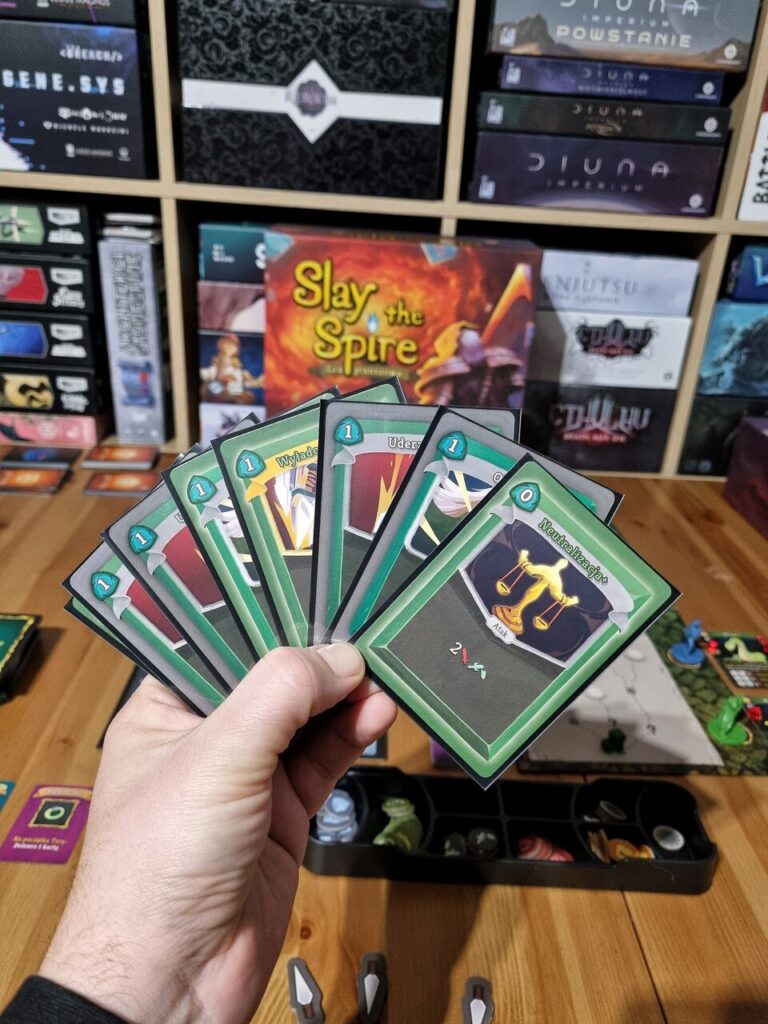
At the beginning of the game, we start with a basic deck of cards. As we defeat enemies, we gain new cards for our deck and even upgrade the cards we already have. The trick is to do it right and find as much synergy as possible between our character and the new possibilities.
Unfortunately, we can’t plan 100% which cards will end up in our deck. We have to adapt to what we collect along the way and what loot we get from defeated mobs. It’s a bit random, but it also forces us to adopt different builds and test new strategies.
Four Slays
In Slay the Spire, there are four different heroes available. Each of them has their own mechanics and decks to expand.
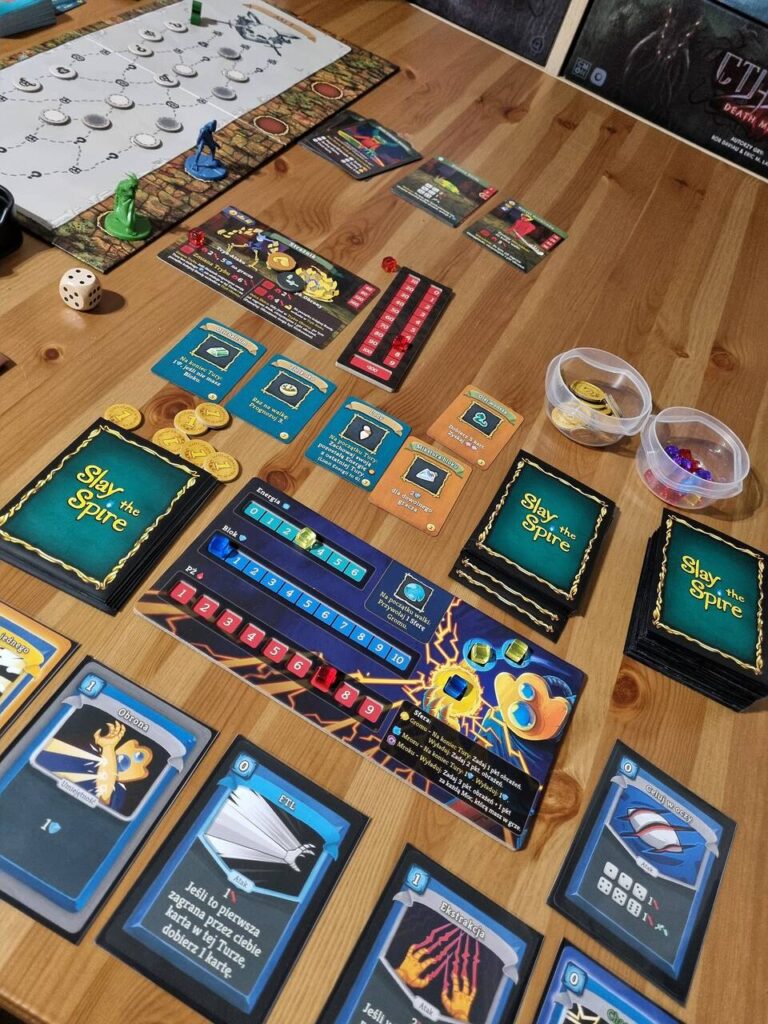
I always forget their names, so please forgive me for using proper nouns.
The Warrior is a typical representative of melee classes from RPG games. He attacks, defends himself, and is quite durable. His main advantage is healing after each fight and excluding cards for the duration of the duel. This will help us grind cards faster in search of stronger ones. A typical vanilla option.
The rogue focuses on poisons and blades. He’s a bit of a glass cannon, capable of dealing significant damage, but he has to be careful with his defensive abilities.
Defect is a robot that juggles different spheres. It can also discharge them for powerful effects. It is one of the more combo-oriented characters and, incidentally, one of my favorites. It has some very interesting builds to make.
I left the Monk for last. Her main advantage is her ability to change stances, which give her various bonuses. I must admit that while I’m not fond of her in the digital version, the board game has added some cool features to her.
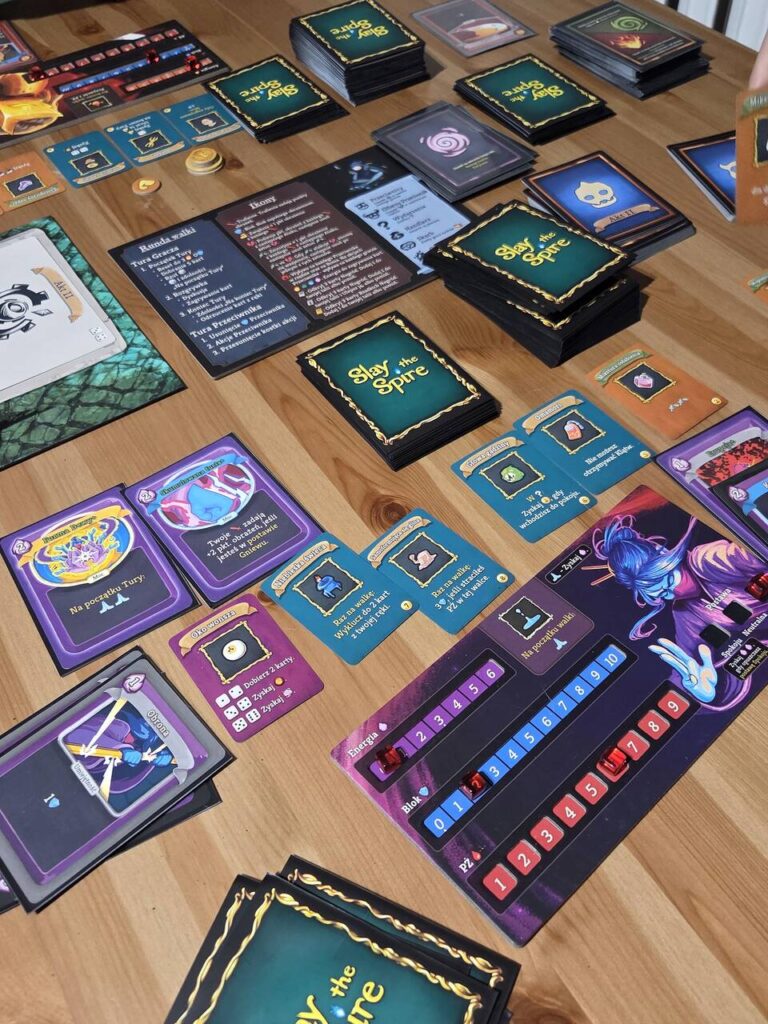
In terms of characters, it has always been interesting. Each of them provided a different feel to the gameplay and offered different possibilities for deck development. It was this multitude of builds that we could make that was the best feature of Slay the Spire.
The inhabitants of Spire
The enemies are also very interesting. Many of them have their own behaviors and can perform various attacks. The same goes for the bosses we will fight. Each of them is a test of our deck-building skills. It is not easy to defeat them. Especially the final one…
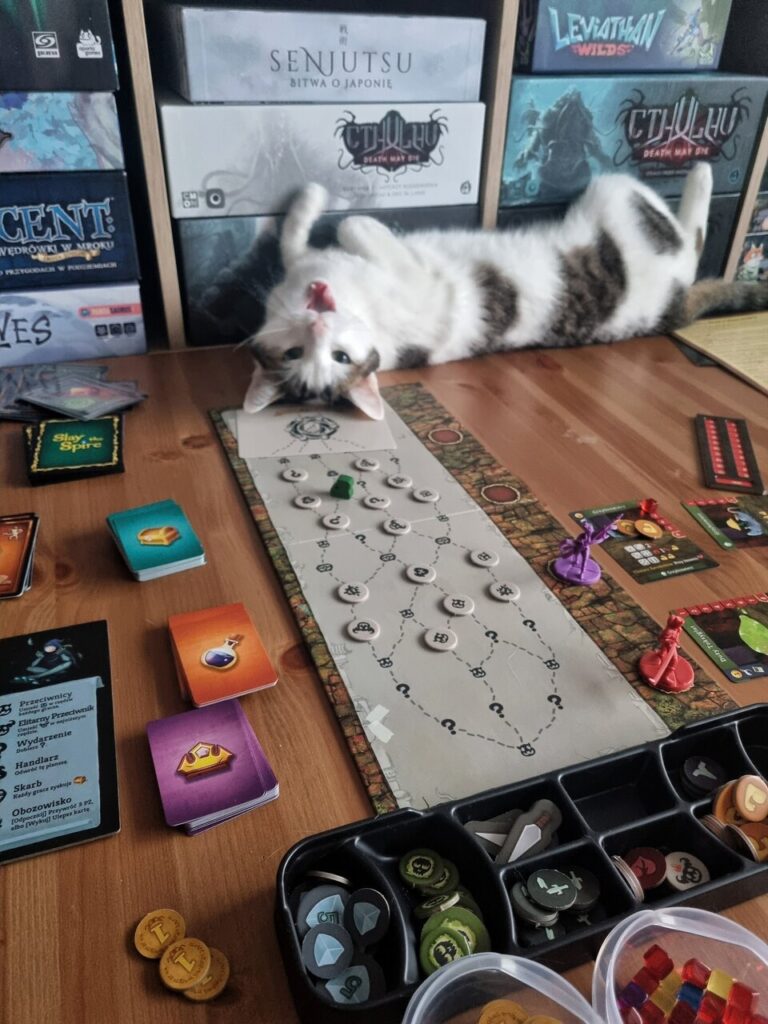
After completing a run, we will unlock content for further gameplay in a positive or negative way. These will be new cards, enemies, and other interesting things that you will have to discover for yourselves. It definitely motivates me to continue playing and developing my Spire.
Cooperative exploration
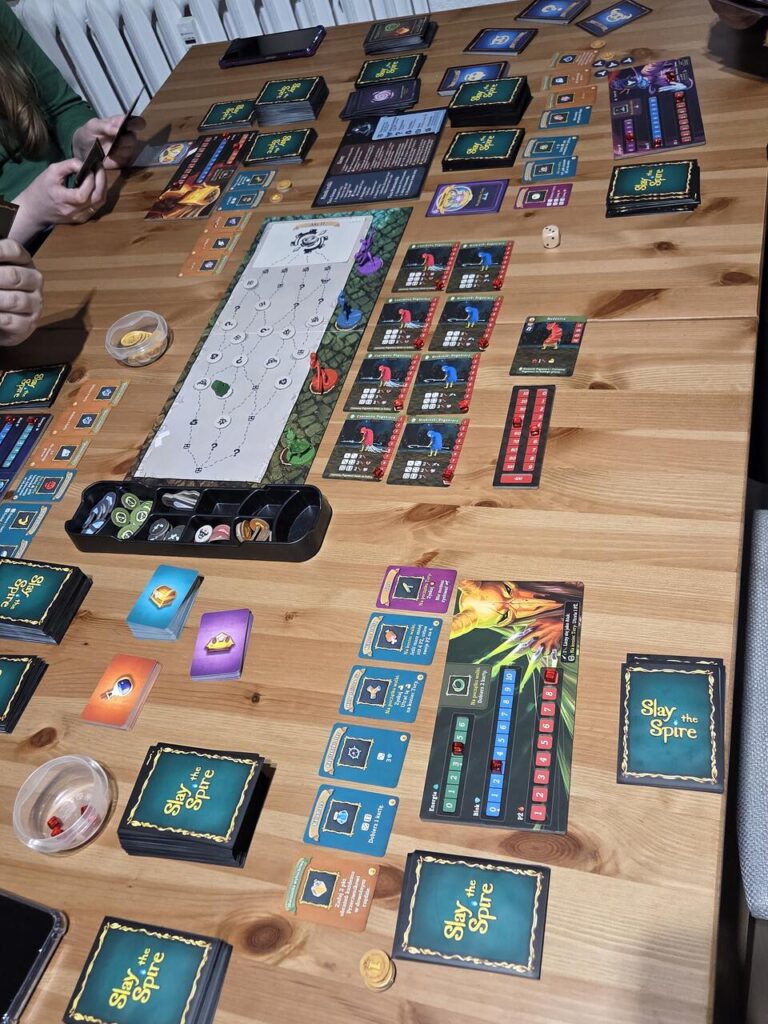
The most important difference compared to the computer version of Slay the Spire is that we play cooperatively. This is a significant change and, in my opinion, makes the board game version even better. We can decide together who to attack, who to help, and how to approach exploring the Spire. Many cards allow us to influence our companions, and I particularly like the monk, who can copy a card played by another player.
Components and Quality
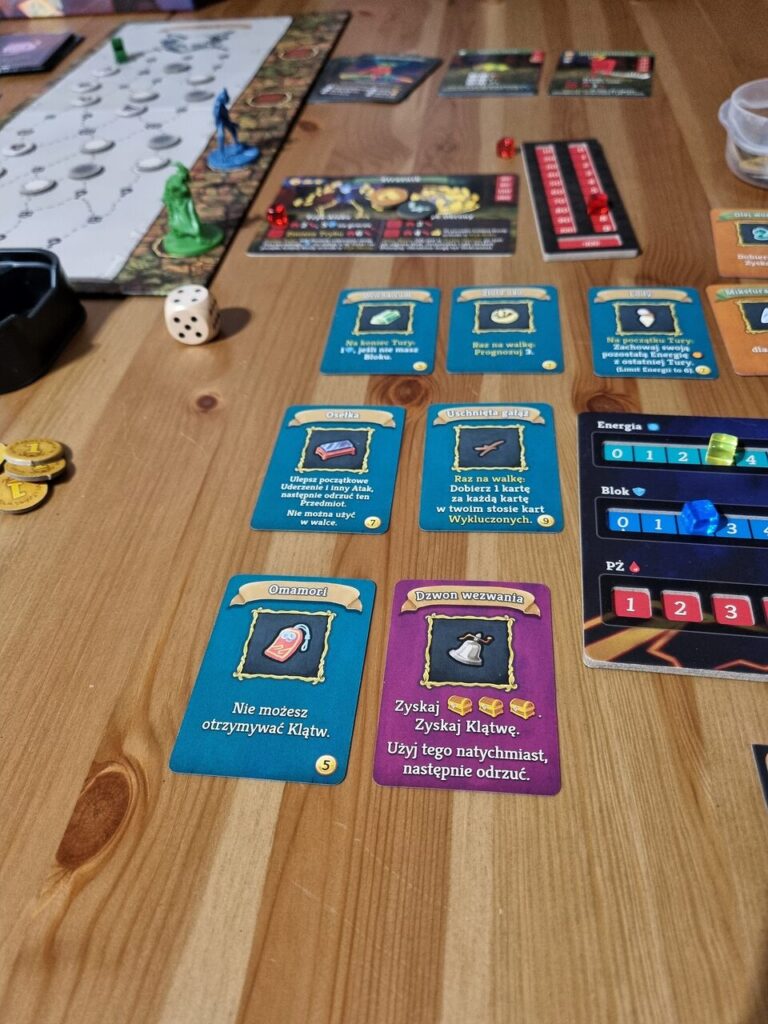
After opening the box, I quickly learned why this game is so expensive. It’s not about the miniatures or the great insert that keeps everything organized. It’s about the specially designed sleeves that allow us to shuffle and upgrade cards safely. There are plenty of them, and I hope they can withstand my magic the gathering shuffling skills.
This is also where the only downside of this game comes in. I am, of course, talking about the graphics in Slay the Spire. It’s not that they are bad. They are just bland. A bit angular, some enemies are made of sticks, and worst of all, I don’t feel any atmosphere here. That’s why, just like in the computer version, I’m here for the gameplay and I’m turning a blind eye to the poor graphics.
Summary
The board game Slay the Spire shows how to successfully transfer a digital hit to the table and even improve it. This is all thanks to the addition of cooperative moves between players and the scaling of damage and certain effects. The game is simply outstanding, and just like the digital version, it completely sucked me in. I love building my heroes’ decks and testing different builds with each attempt.
Final verdict: Slay the Spire is an excellently Slay-ed game.
Pros
- Sensational deck building
- Four diverse characters
- Addictive gameplay
- Planning my journey
- Cooperation with friends
- Huge replayability
Cons
- I’ll never be a fan of these graphics